IT WAS GREEN THERE (cadence)
Nature may at times appear to be a Painter or a Philosopher or a celestial spirit. But deep down she is a scientist.
She is quantitative.
She is logical.
Alan Lightman
Green Gallery
Warning: Undefined array key "id" in /home4/amazing1/krisiden.andropplelab.com/wp-content/plugins/elementor/includes/widgets/image-carousel.php on line 871
Warning: Undefined array key "id" in /home4/amazing1/krisiden.andropplelab.com/wp-content/plugins/elementor/includes/widgets/image-carousel.php on line 1017
Warning: Undefined array key "id" in /home4/amazing1/krisiden.andropplelab.com/wp-content/plugins/elementor/includes/widgets/image-carousel.php on line 890
Warning: Undefined array key "id" in /home4/amazing1/krisiden.andropplelab.com/wp-content/plugins/elementor/includes/widgets/image-carousel.php on line 871
Warning: Undefined array key "id" in /home4/amazing1/krisiden.andropplelab.com/wp-content/plugins/elementor/includes/widgets/image-carousel.php on line 1017
Warning: Undefined array key "id" in /home4/amazing1/krisiden.andropplelab.com/wp-content/plugins/elementor/includes/widgets/image-carousel.php on line 890
Warning: Undefined array key "id" in /home4/amazing1/krisiden.andropplelab.com/wp-content/plugins/elementor/includes/widgets/image-carousel.php on line 871
Warning: Undefined array key "id" in /home4/amazing1/krisiden.andropplelab.com/wp-content/plugins/elementor/includes/widgets/image-carousel.php on line 1017
Warning: Undefined array key "id" in /home4/amazing1/krisiden.andropplelab.com/wp-content/plugins/elementor/includes/widgets/image-carousel.php on line 890
Warning: Undefined array key "id" in /home4/amazing1/krisiden.andropplelab.com/wp-content/plugins/elementor/includes/widgets/image-carousel.php on line 871
Warning: Undefined array key "id" in /home4/amazing1/krisiden.andropplelab.com/wp-content/plugins/elementor/includes/widgets/image-carousel.php on line 1017
Warning: Undefined array key "id" in /home4/amazing1/krisiden.andropplelab.com/wp-content/plugins/elementor/includes/widgets/image-carousel.php on line 890
Warning: Undefined array key "id" in /home4/amazing1/krisiden.andropplelab.com/wp-content/plugins/elementor/includes/widgets/image-carousel.php on line 871
Warning: Undefined array key "id" in /home4/amazing1/krisiden.andropplelab.com/wp-content/plugins/elementor/includes/widgets/image-carousel.php on line 1017
Warning: Undefined array key "id" in /home4/amazing1/krisiden.andropplelab.com/wp-content/plugins/elementor/includes/widgets/image-carousel.php on line 890
Warning: Undefined array key "id" in /home4/amazing1/krisiden.andropplelab.com/wp-content/plugins/elementor/includes/widgets/image-carousel.php on line 871
Warning: Undefined array key "id" in /home4/amazing1/krisiden.andropplelab.com/wp-content/plugins/elementor/includes/widgets/image-carousel.php on line 1017
Warning: Undefined array key "id" in /home4/amazing1/krisiden.andropplelab.com/wp-content/plugins/elementor/includes/widgets/image-carousel.php on line 890
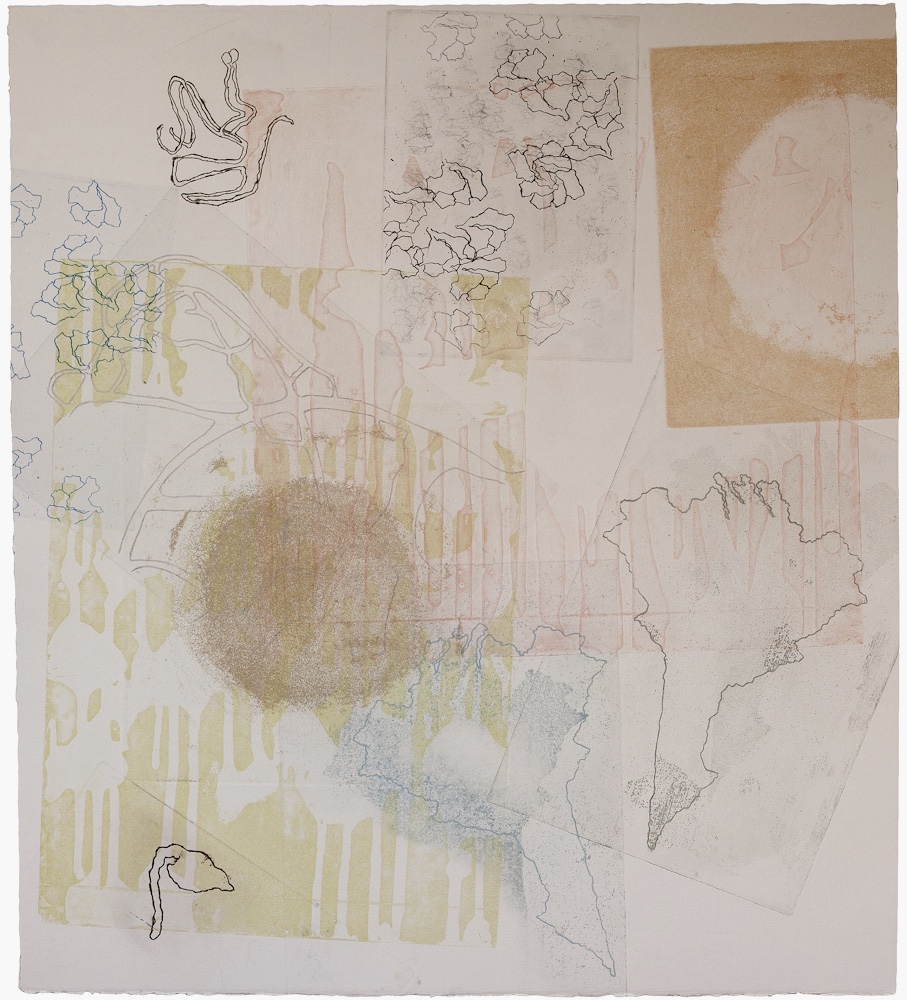
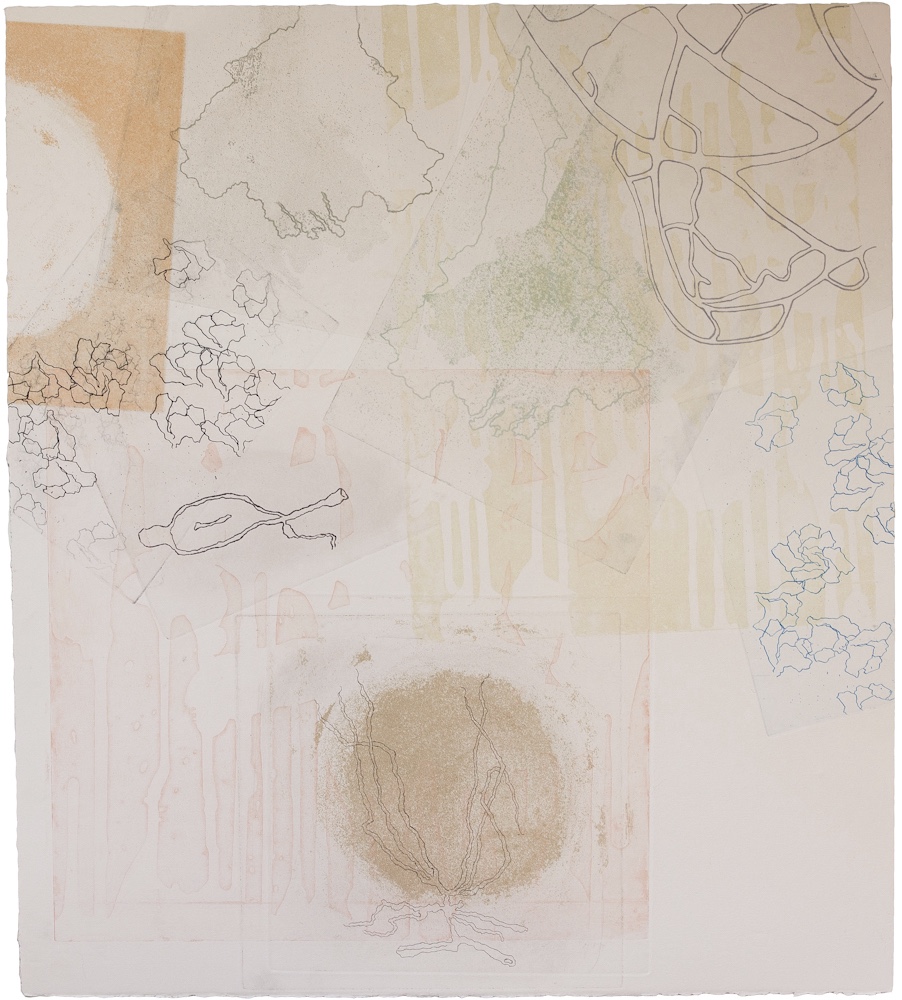
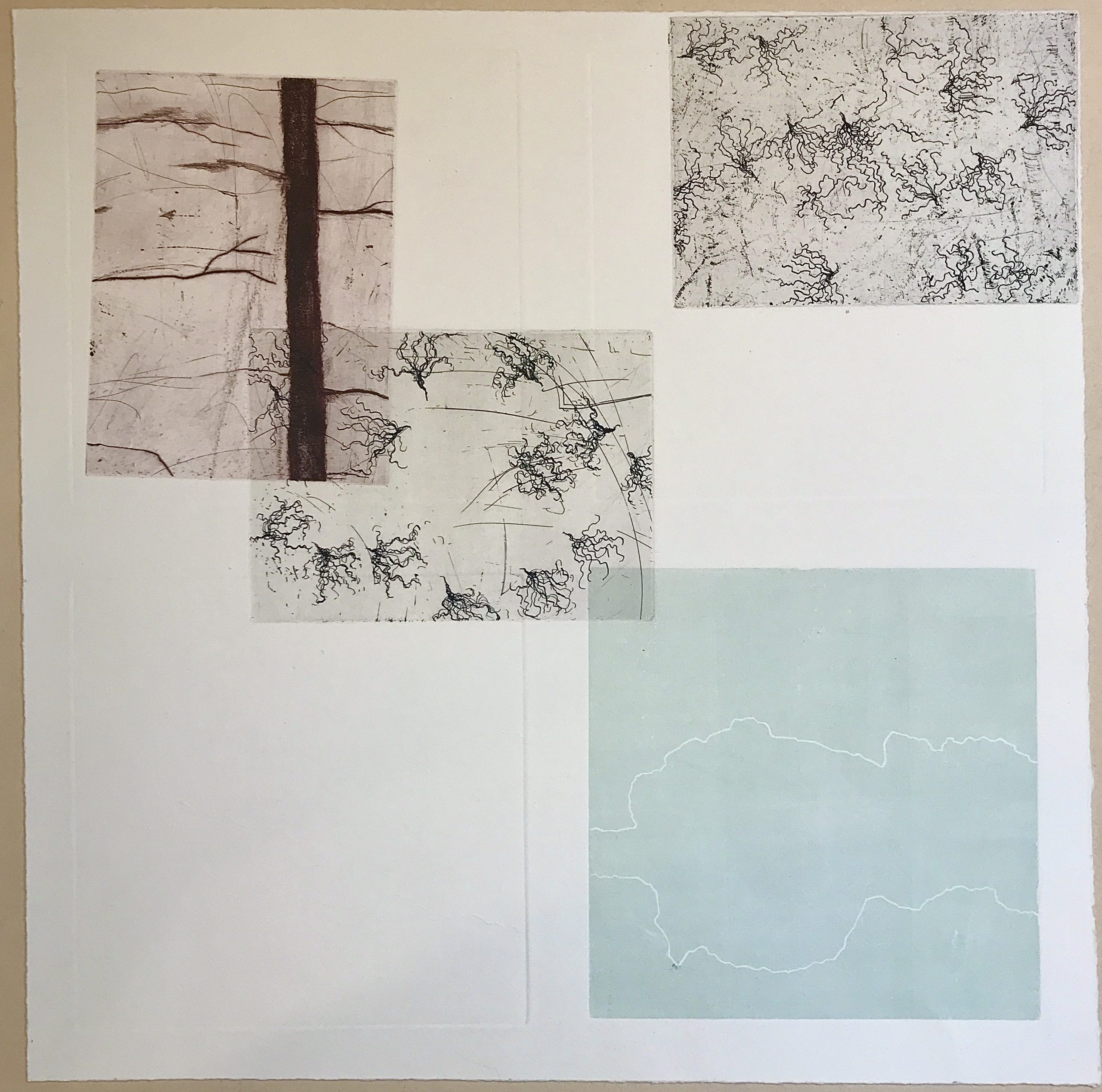
A second, a pearl (1 & 2)
Color: Intaglio
20 x 18 Inches
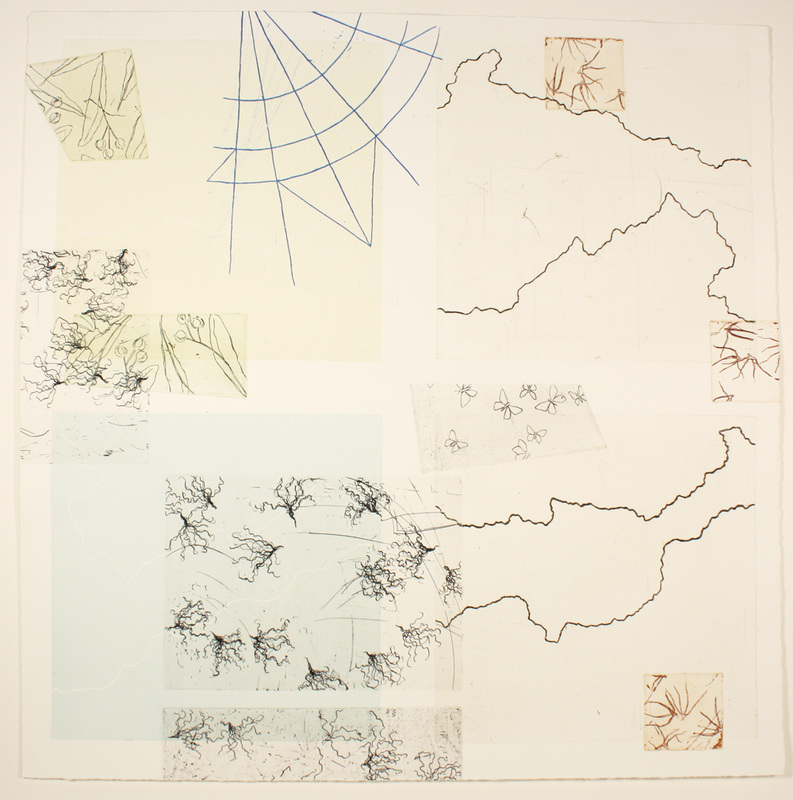
Scarabaeus satyrus, (dung beetle) uses the Milky Way to navigate its way home with its prized and vital ball of dung, swift and straight…. without a view of the night sky, and the dusty starlit band – the beetle wanders aimlessly.
This creamy Fabriano Rosapina paper was a pleasure to return to for these prints, after some years of not having worked with it… the translucent ink-veils of layered images held gently in its gray-pink cast. The beetle-inspired pearl rolls across the twin prints along with the gelsemium floral plates of the Herbarium: locus series, joined by the butterfly imagery from Subtle Anatomy, the map of the Dresden Botanic Garden from …the world is round, and the lily-like mirrored image of Virginia from the Hortus Conclusus series. These prints mark a cadent point in a years-long progression and conversation, which now anticipates an oncoming turn… a slight shift.
The title is borrowed from A Frivolous Conversation, by Czeslaw Milosz, with its poetic view of fluidity that pools into a moment of observation and awareness.
–My past is a stupid butterfly’s overseas voyage.
My future is a garden where a cook cuts the throat of a rooster.
What do I have, with all my pain and rebellion?
–Take a moment, just one, and when its fine shell,
Two joined palms, slowly opens
What do you see?
–A pearl, a second.
–Inside a second, a pearl, in that star saved from time,
What do you see when the wind of mutability ceases?
–The earth, the sky, and the sea, richly cargoed ships,
Spring mornings full of dew and faraway princedoms.
At marvels displayed in tranquil glory
I look and do not desire for I am content.
— Czeslaw Milosz, A Frivolous Conversation,
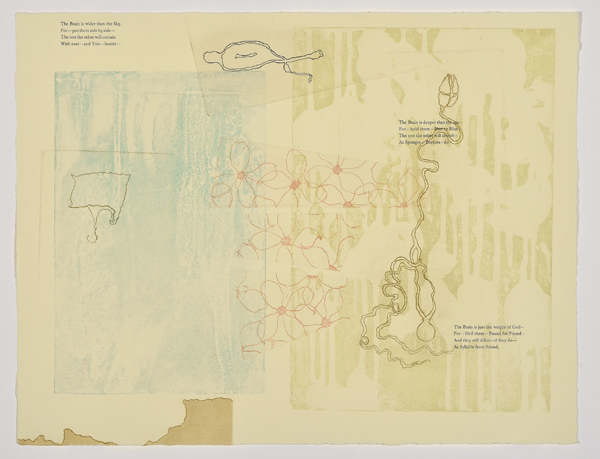
Subtle Anatomy (1 & 2)
Color: Intaglio and Letterpress, Printed with Grafikwerkstatt Dresden
15 x 20 inches
Text from Emily Dickinson
Russian novelist and lepidopterist, Vladimir Nabokov (1899-1977), theorized about particular blue butterflies of the genus Polyommatus, believing they came from Asia to the Americas in five ‘waves’ of migration over millions of years. Only in early 2011 was his previously dismissed theory validated. I read about it in the New York Times. Nabokov developed his theory by identifying species of male blue butterflies according to their genitalia, and was credited by current researchers with having done quite a good job at distinguishing species seemingly not different by using this traditional method of examination.
The anatomical imagery in these prints is derived from Nabokov’s notational sketches along with drawings of butterfly viscera from 17th c. Dutch biologist , Jan Swammerdam who demonstrated thorough his microscopic studies that the various phases of the life of an insect, including the egg, larva, pupa, and adult stages, are simply different forms of the same animal.
The textural colored fields were etched on old GDR-period zinc plates gifted to me from the printers at Grafikwerkstatt Dresden. The plates have a strange coating necessary to their original offset-lithographic purpose, which made the etching process unpredictable and difficult. The botanical images (Linden & Dogwood blossoms) are visual quotes from prints of earlier series. The letterpress text is from an Emily Dickinson poem I’ve worked with once before, it was printed with assistance of Grafikwerkstatt Dresden.
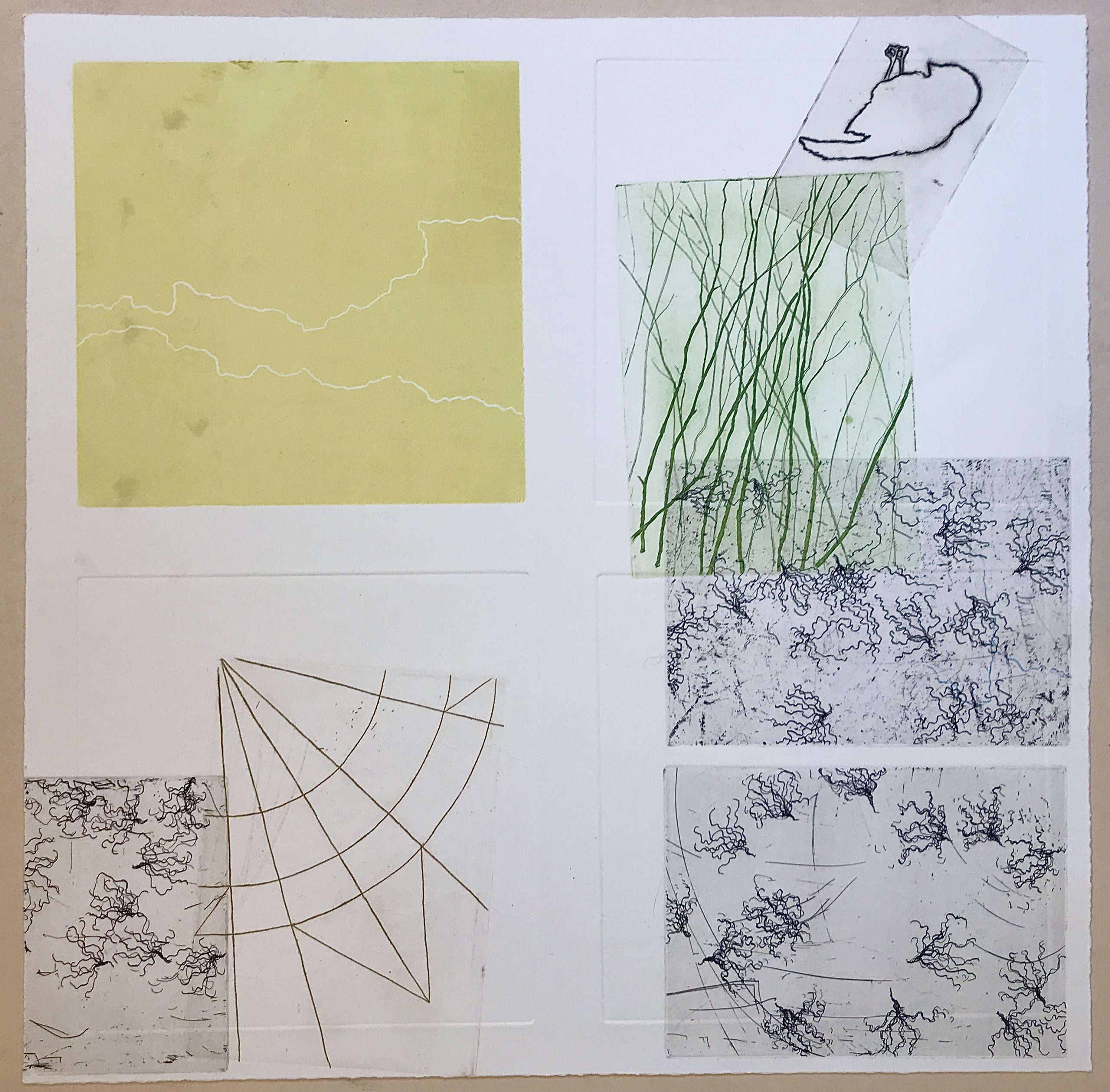
Hortus Conclusus
(Series of prints and drawings)
Color: Intaglio
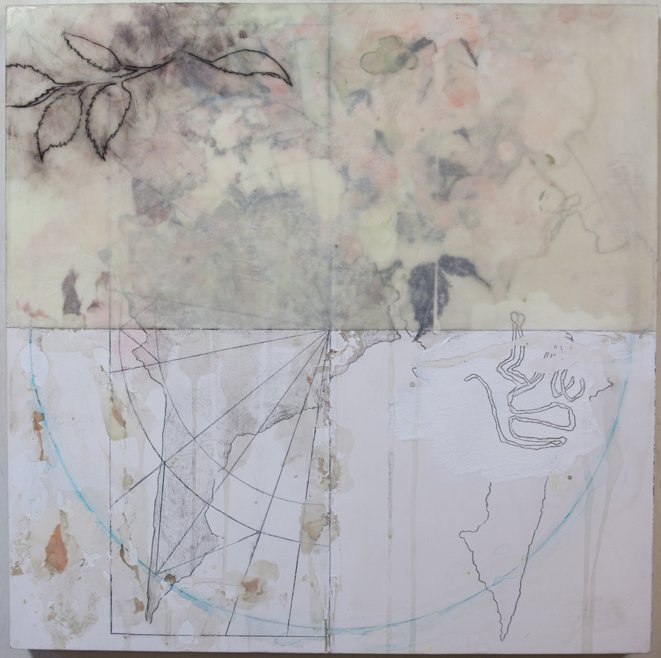
18 x 18 inches Mixed material, silver-point & beeswax drawings on panels 15 x 15 inches
Linguistically, the term Hortus Conclusus refers to an enclosed garden. Historically, in the societies of Egypt, Babylon, Mesopotamia, and Persia, makers constructed walled gardens as far back as three thousand years. The design of the medieval Hortus Conclusus is a European adaptation of their traditions.
In, The Enclosed Garden: History and Development of the Hortus Conclusus and its Reintroduction into the Present-day Urban Landscape, authors Rob Aben and Saskia de Wit describe Hortus Conclusus as a coming together of two worlds: an ‘unworldy’ ideal and that of the real landscape. “The garden gathers the landscape around itself and at the same time shuts itself off from it. It is both inside and outside simultaneously, both endless and finite.”
Aben and de Wit go on to discuss the polarity between the boundless expanse of the sea with its oceanic sense of space that one feels at the shore, and the sensation of walking on the sand with the palpability of the grains and awareness of finite place, time and moment. “In the enclosed garden this polarity emerges as its most distinctive quality: the paradox of the infinite in the finite, two extremes heightened by being present simultaneously.”
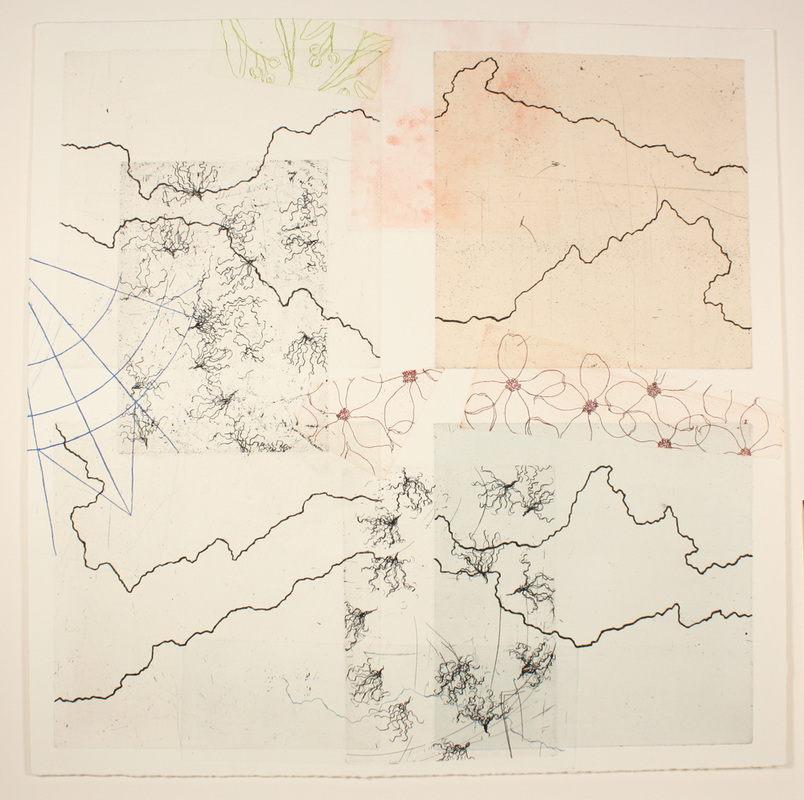
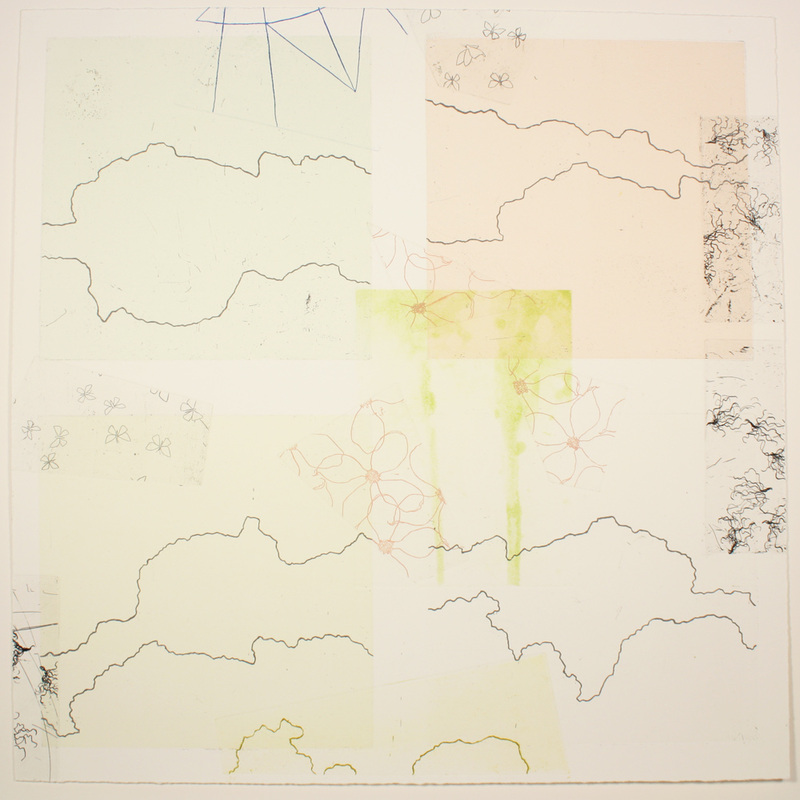
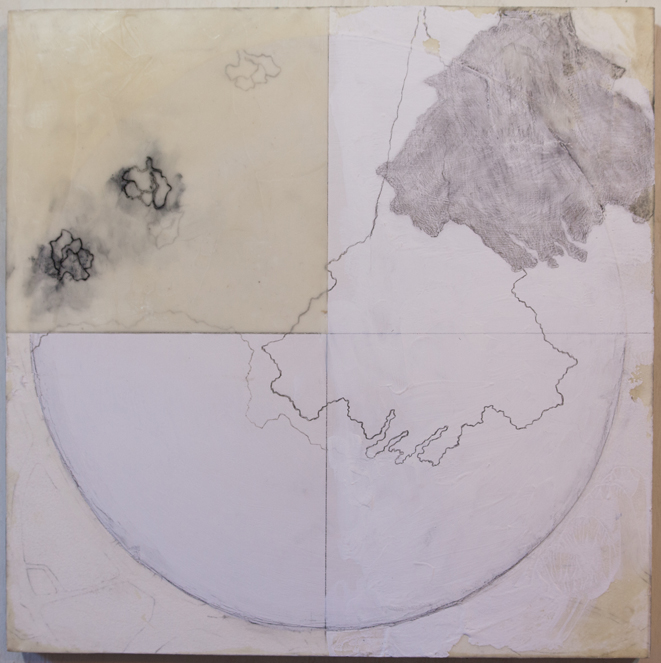
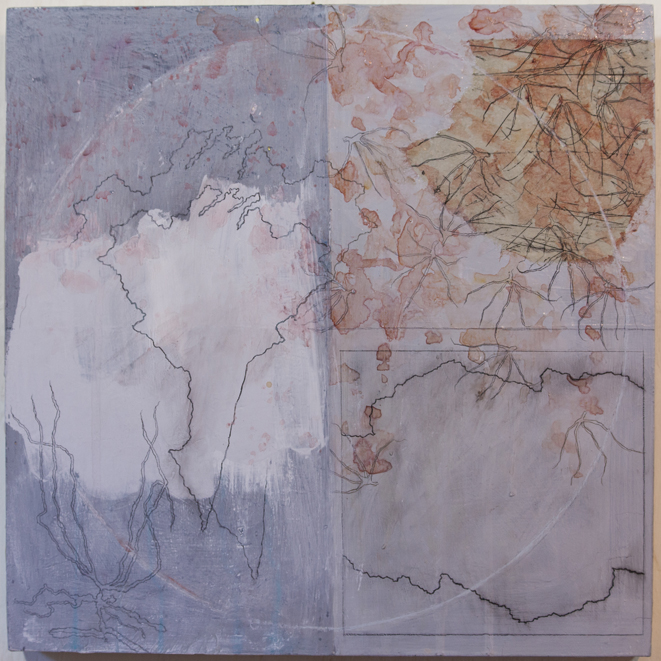
The prints in this series began with the plates from the Shape Note Geography series; images made up of one line from the state of Saxony, Germany and one from the state of Virginia, USA. The square format of these plates printed together sets up a four-quadrant composition that references a traditional Persian Paradise garden or medieval Hortus Conclusus.
The paper itself is left over from an extra set of prints produced while I was working collaboratively with a printer from Grafikwerkstatt on the Herbaria: locus series; he had printed the black images from the hamamelis virginiana plates.
I tore the paper down to a smaller size cropping out parts of them and reworking back into them. The other layered plates are from images featured in the earlier prints made while in Germany- Herbaria: locus, Fossili: motus, and Places, Days, Weather. The quarter section of the compass rose image was newly introduced in this series, added for its cartographic reference.
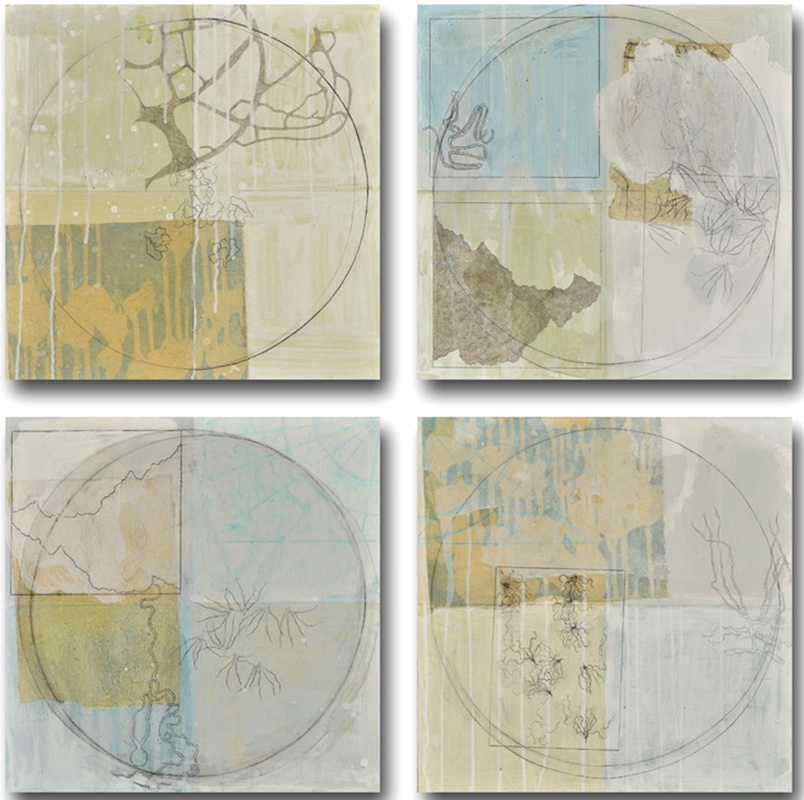
When the series began in September 2009, I approached the compositions with the traditional foursquare design of the medieval Hortus Conclusus and the paths that in the Persian tradition refer to the four rivers of life. In later prints and drawings, the compositions have included more loosely arranged divisions, the addition of a large circle and varying surface treatment.
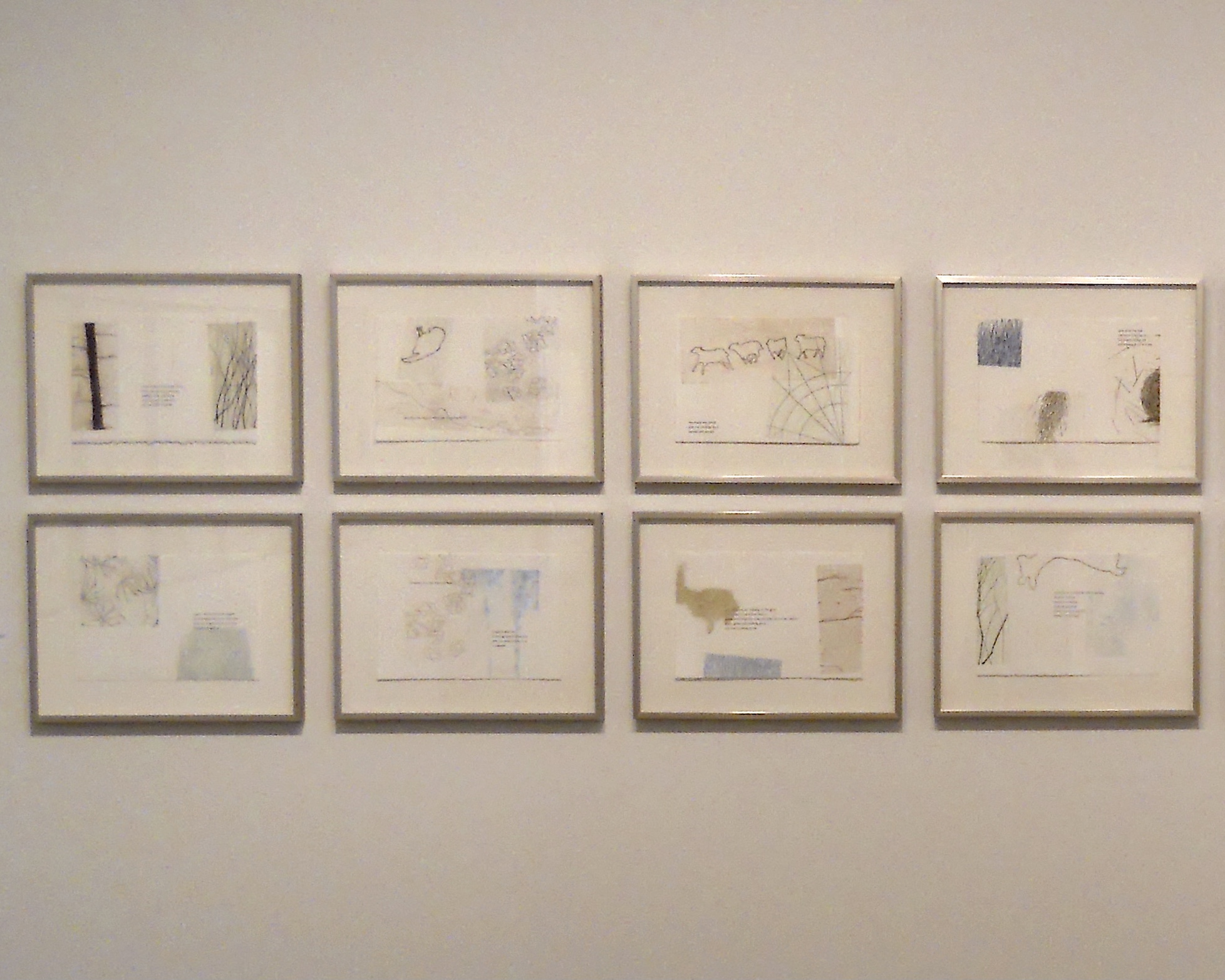
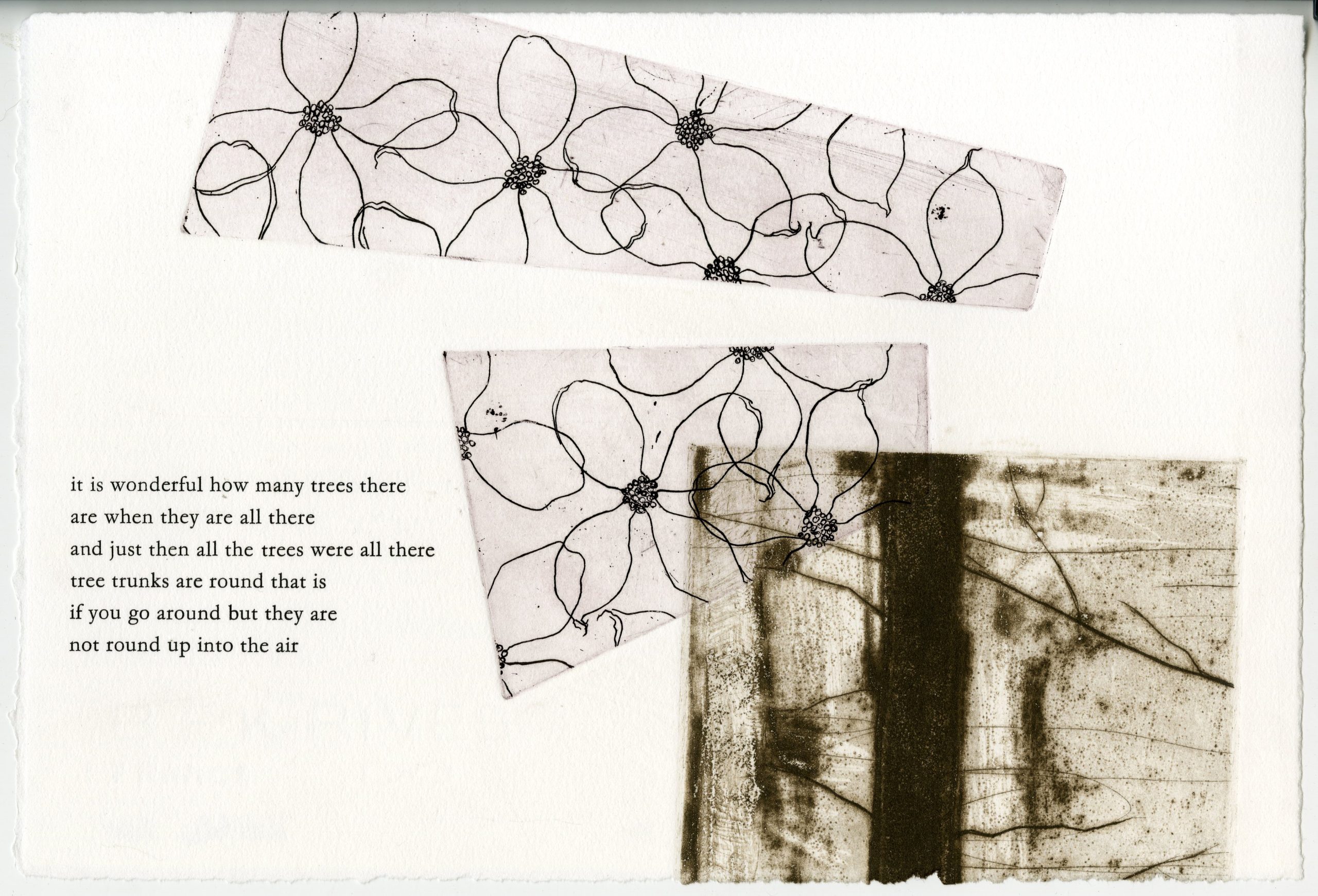
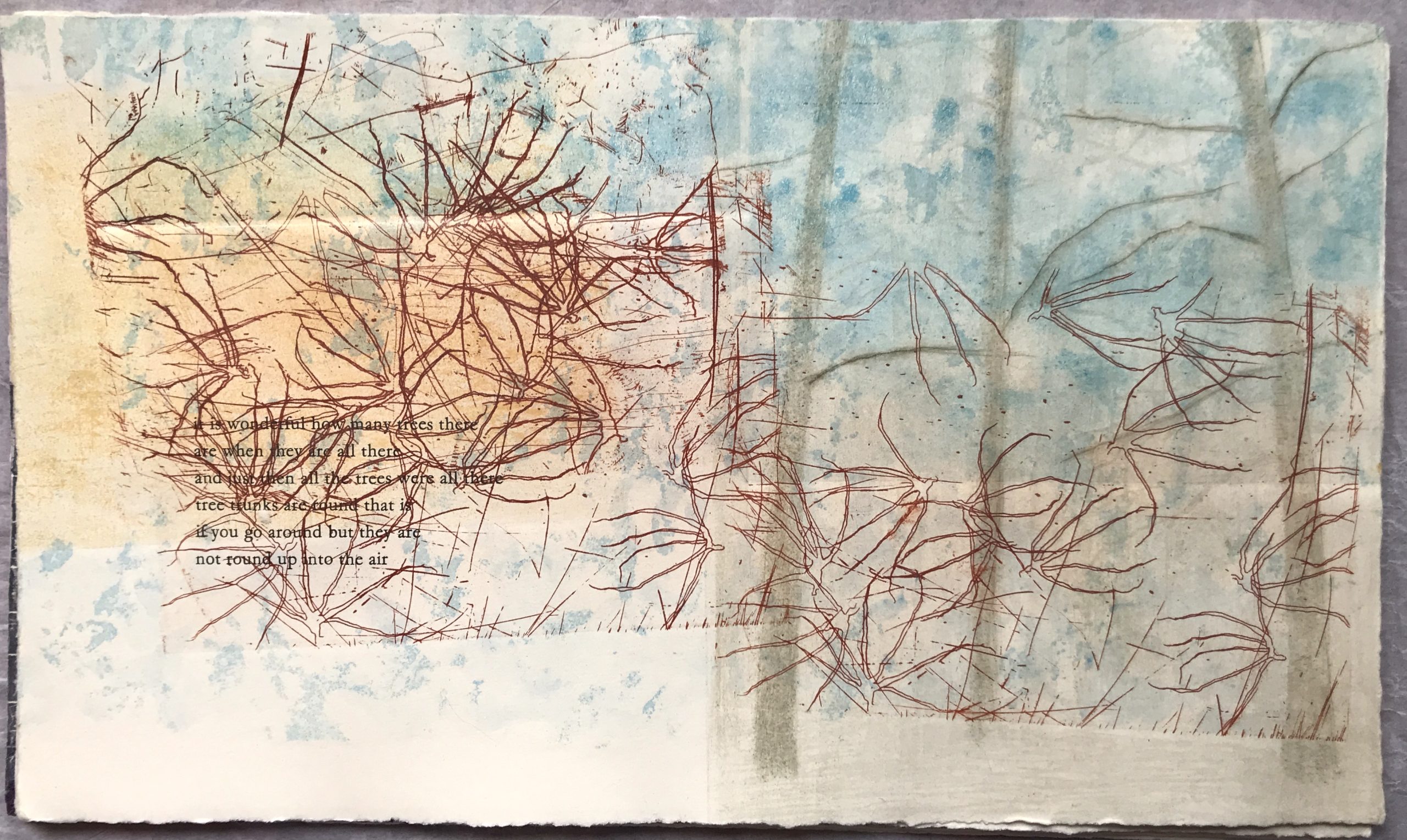
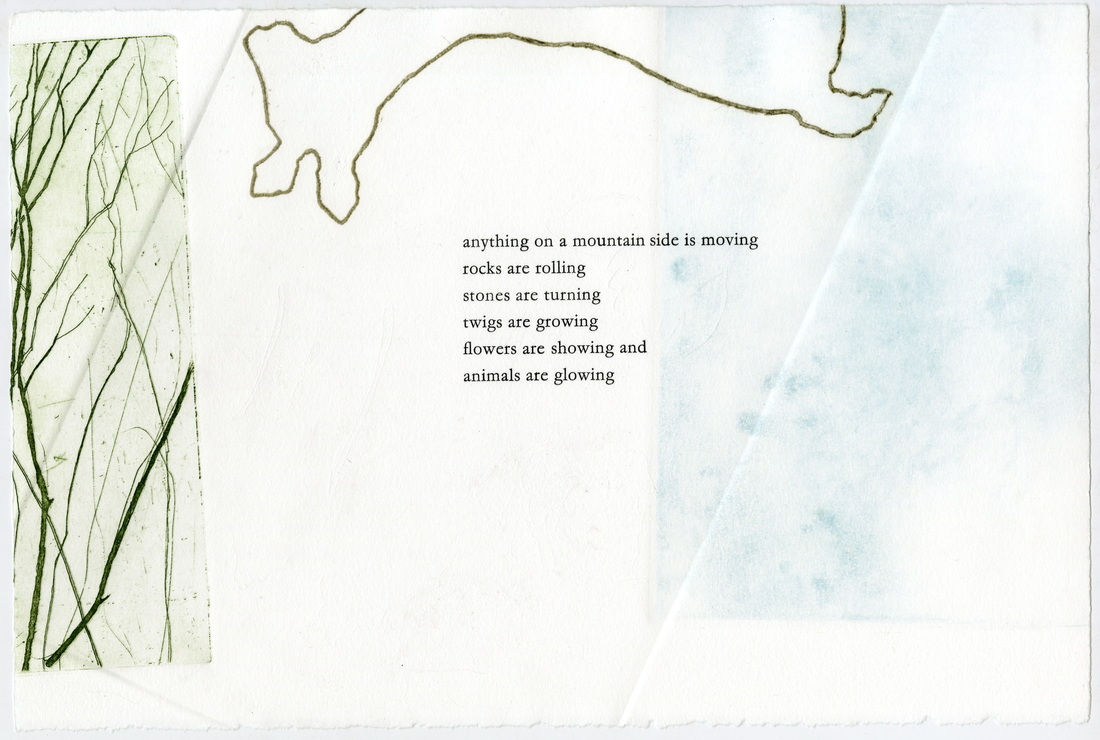
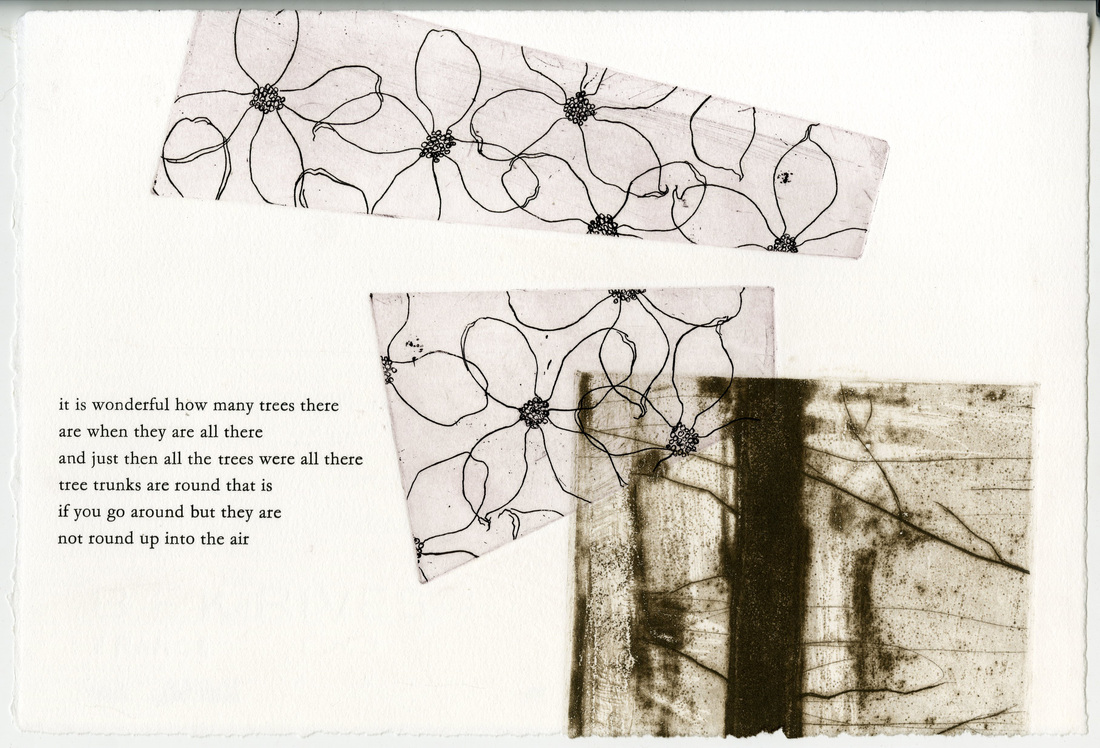
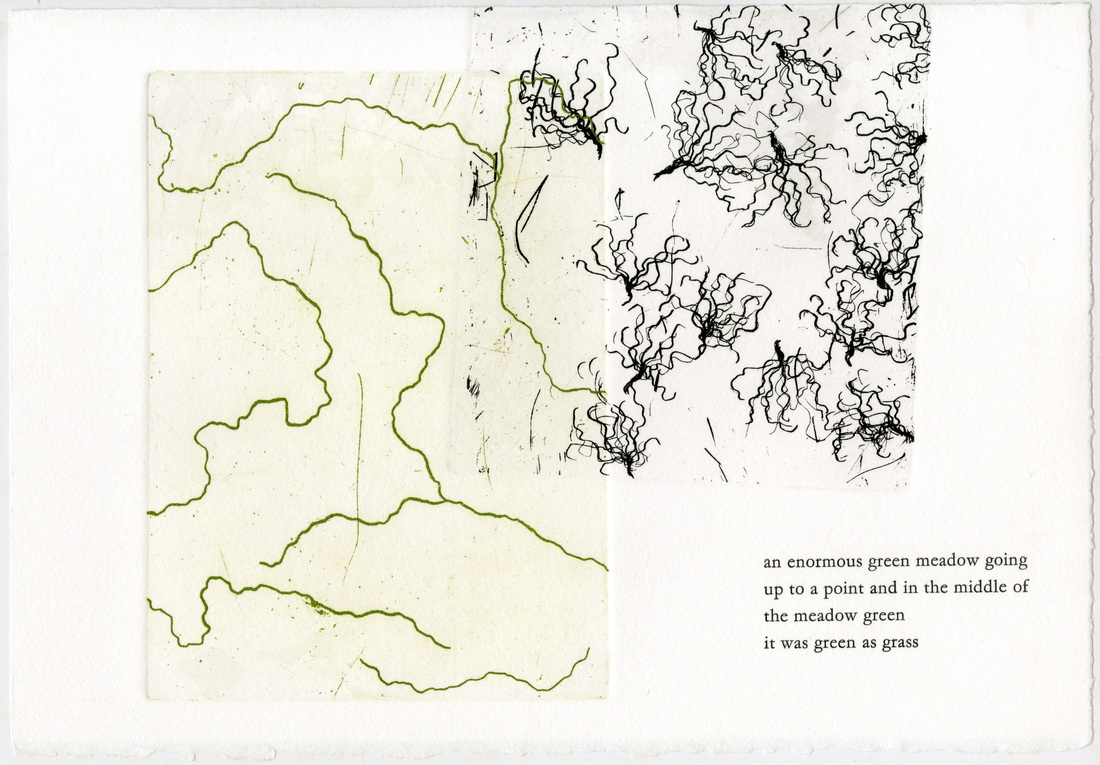
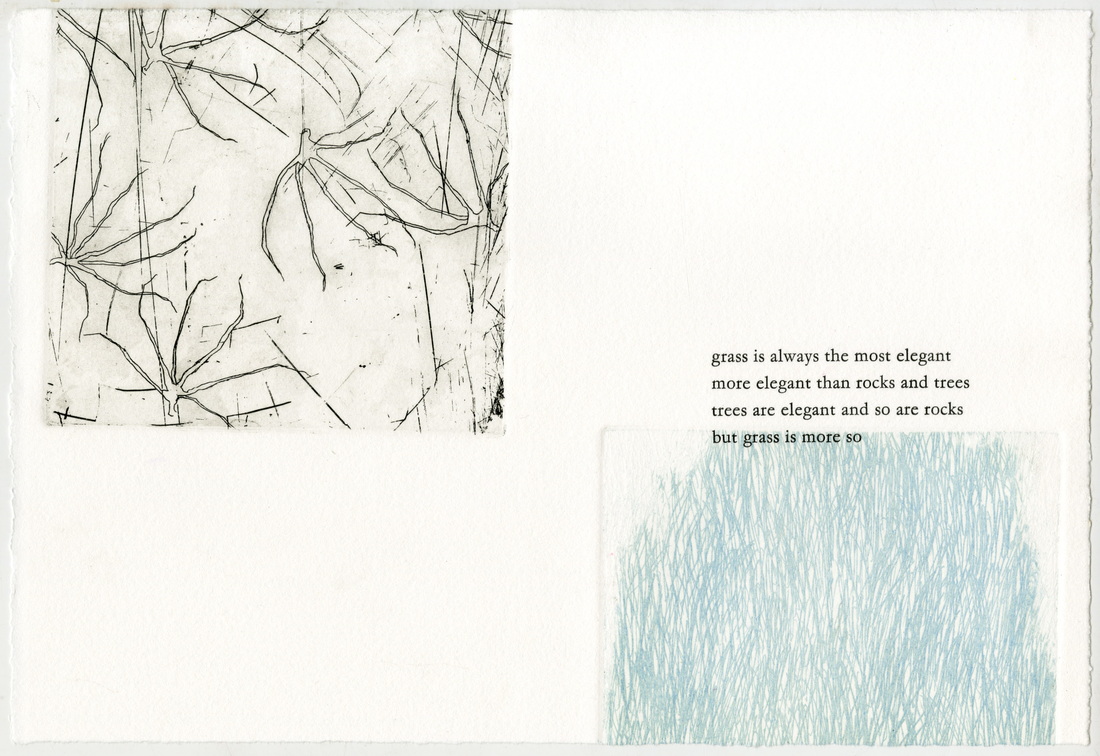
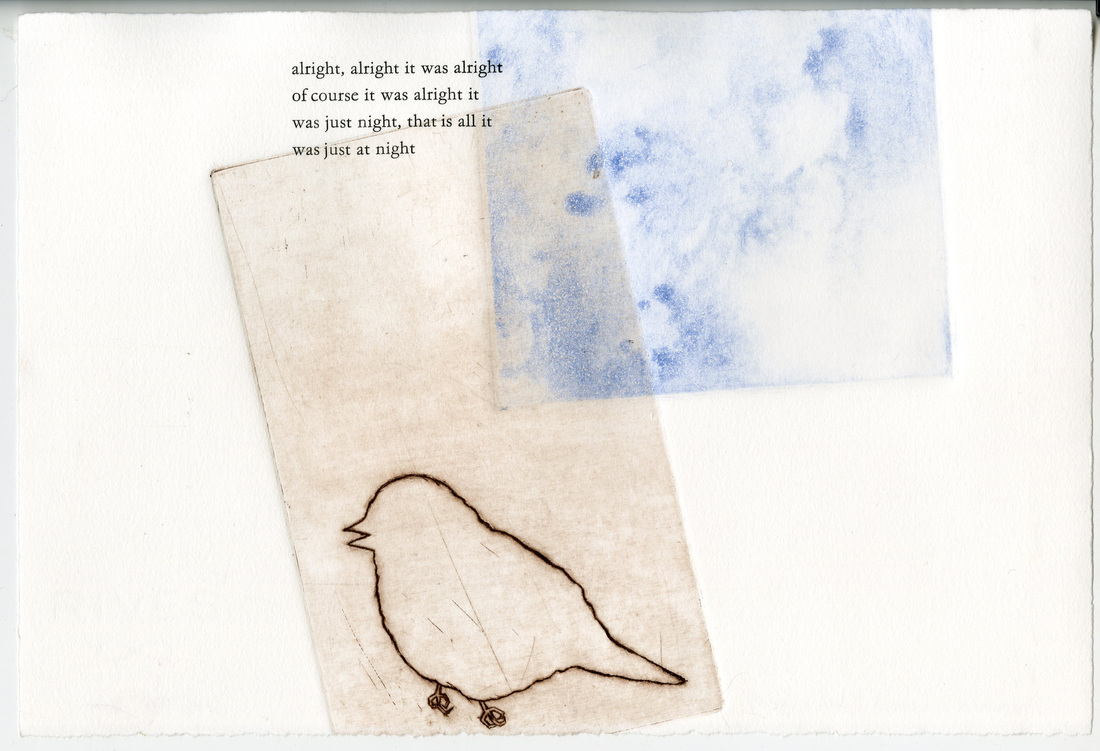
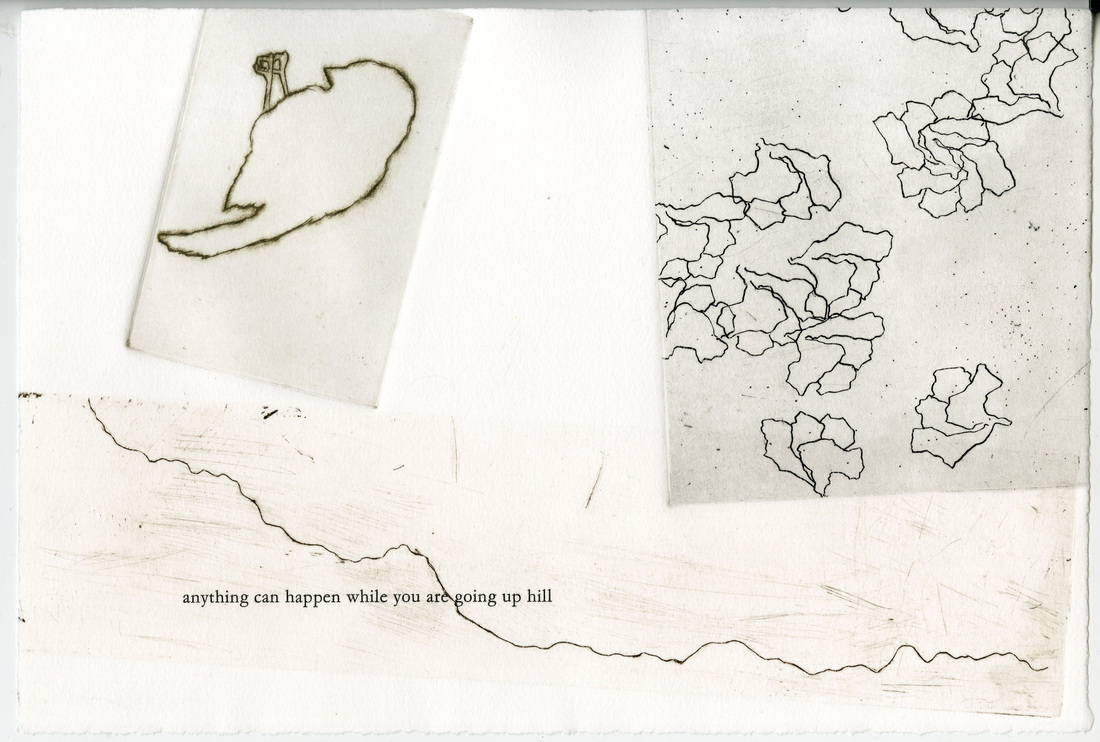
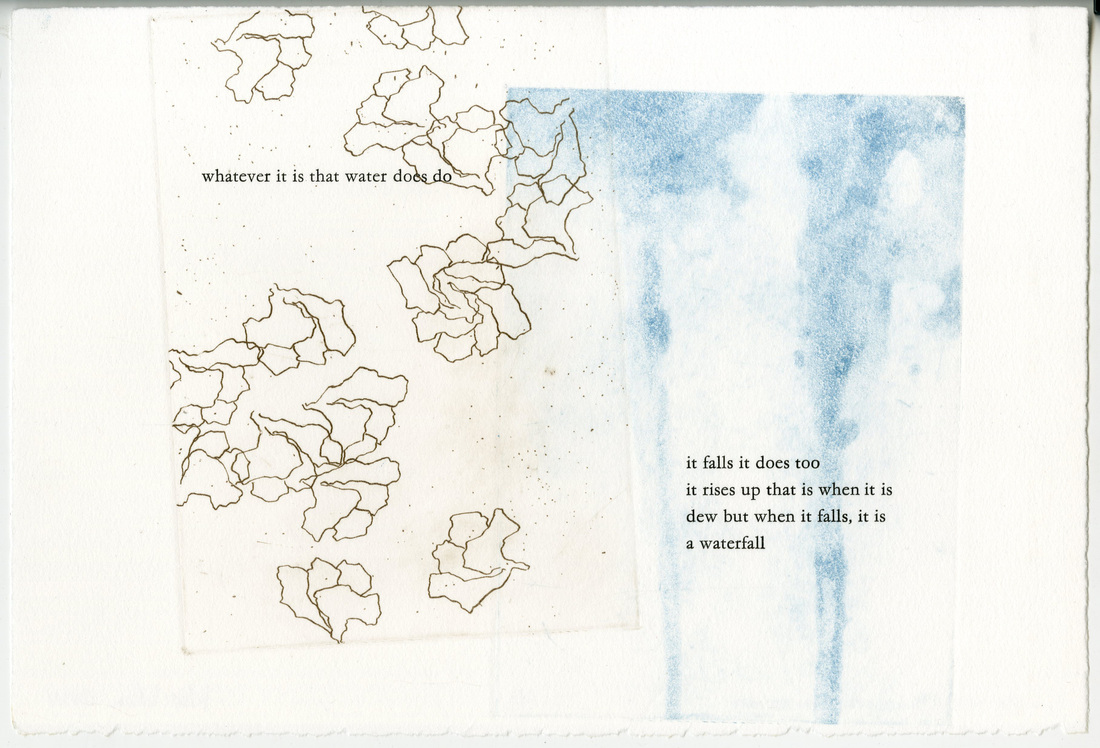
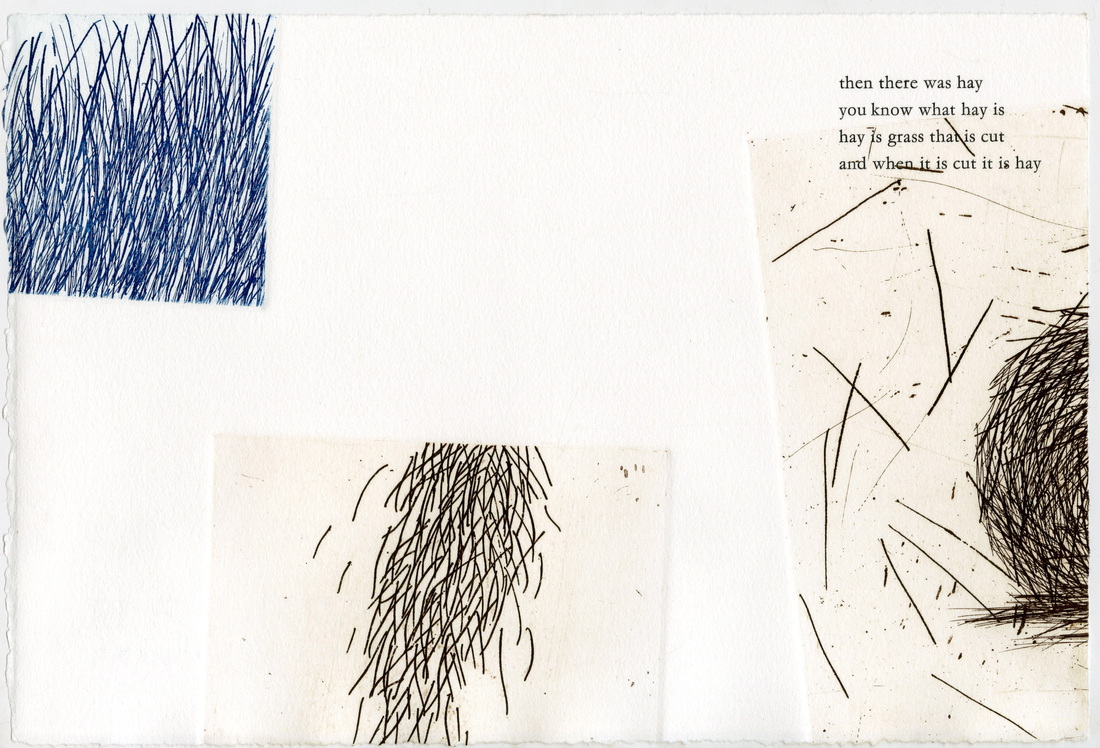
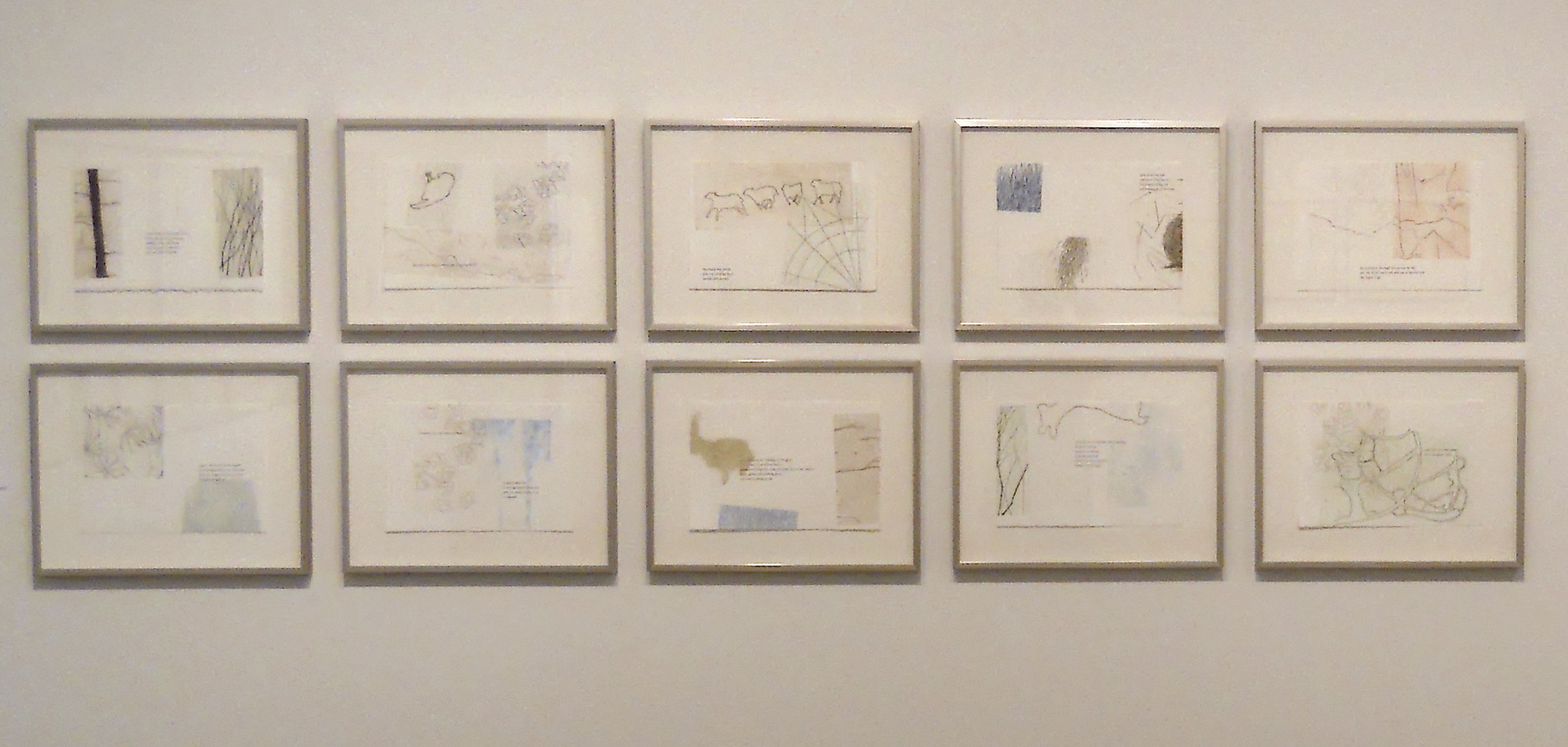
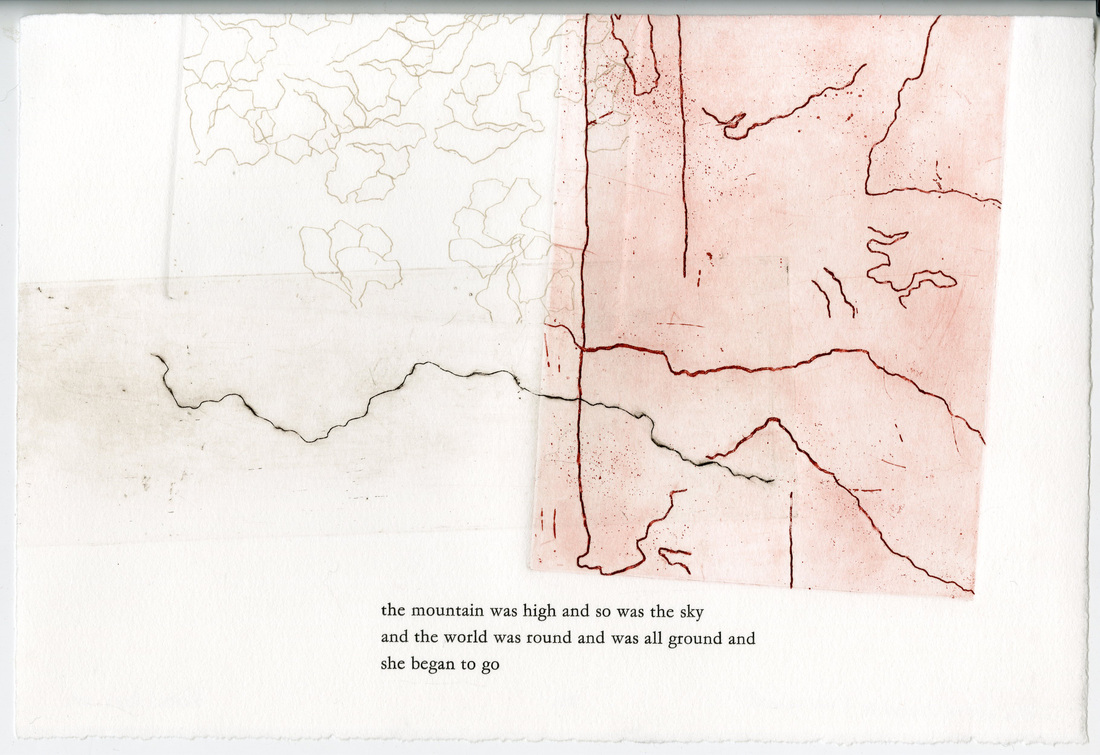
The World is Round...
(Series of 15)
Color: Intaglio, Printed with Grafikwerkstatt, Dresden
8.5 x 12 inches
Text from Gertrude Stein
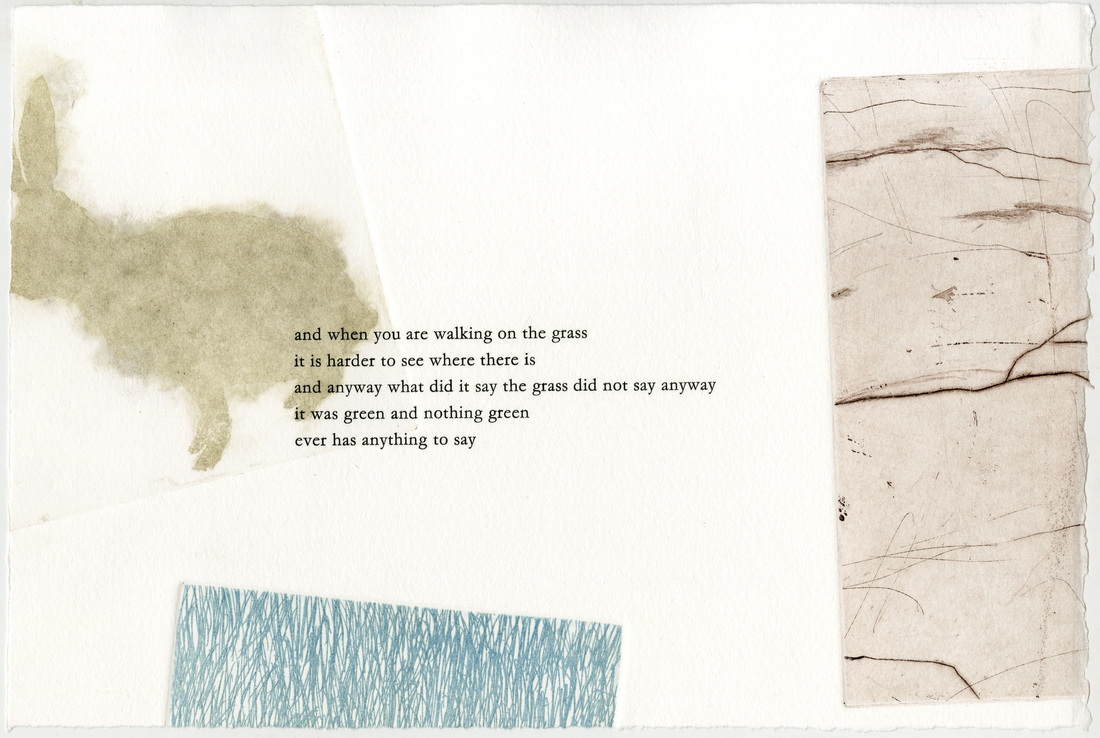
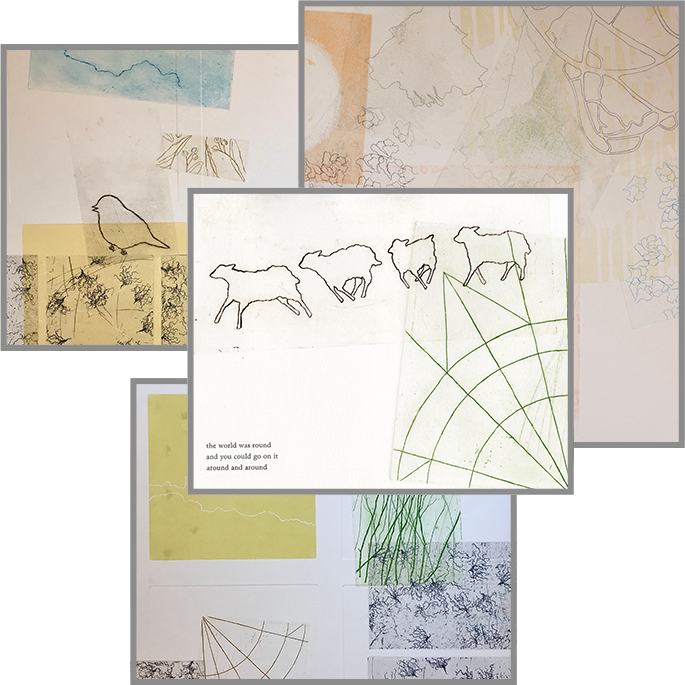
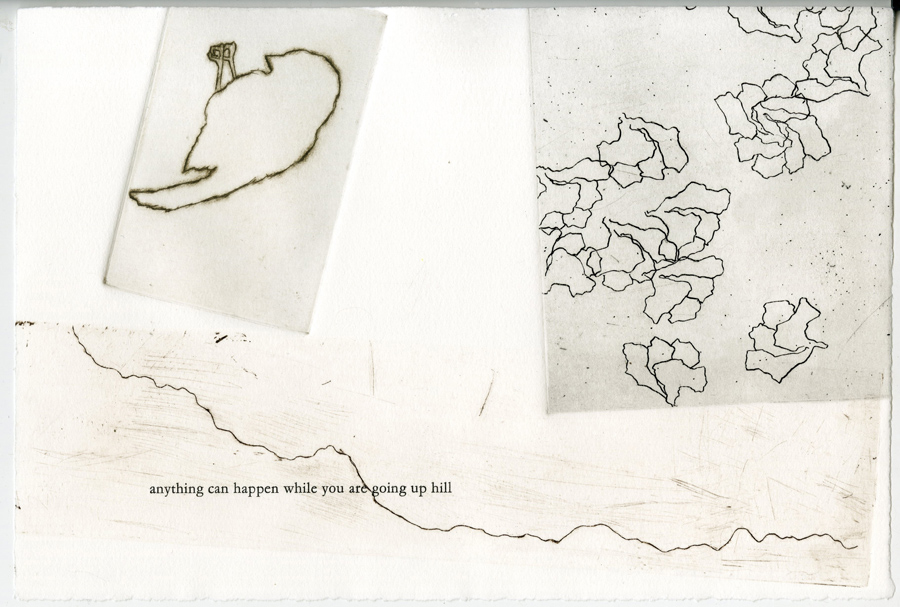
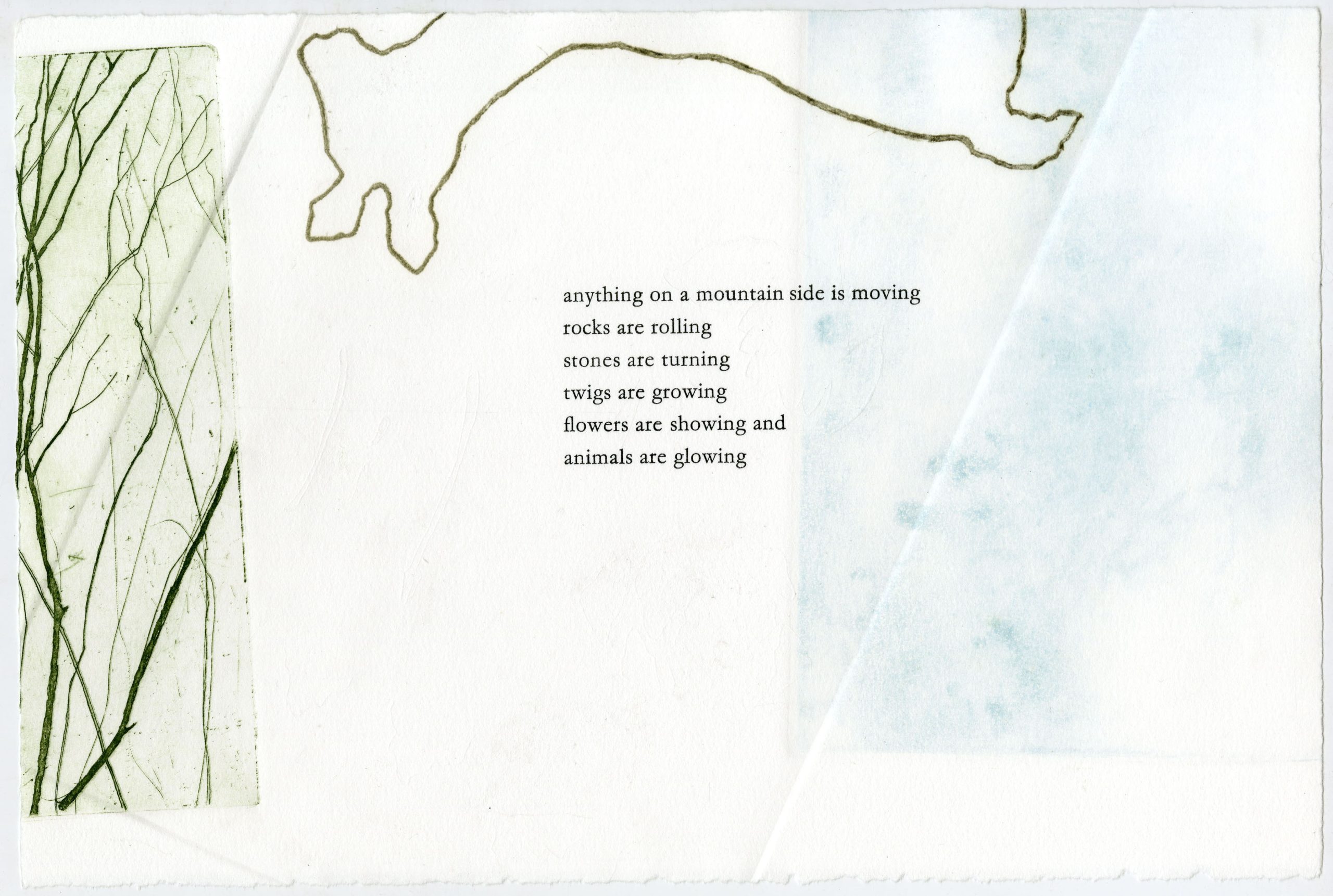
Just before my return to Virginia at the end of 2009, following three and a half years in Dresden, Germany, I began a new body of work titled It was green there, The name comes from a book for children by Gertrude Stein, The World is Round, which tells the story of nine-year-old Rose who goes on a journey in search of herself and struggles to establish a stable identity in a round world of variability. The complex and labyrinthine qualities of the tale mirror her efforts, resulting eventually in a story, but in the process, move it in circularity and fold it back upon itself.
In these prints titled, …the world is round, the text is excerpted from Stein’s book.
They were developed with collaborative assistance from the letterpress printer at Grafikwerkstatt, before I left Dresden. After I returned to Virginia and settled, I printed the emblematic etched images, from my archive of plates, developed in the last three and a half years.The anatomical imagery in these prints is derived from Nabokov’s notational sketches along with drawings of butterfly viscera from 17th c. Dutch biologist , Jan Swammerdam who demonstrated thorough his microscopic studies that the various phases of the life of an insect, including the egg, larva, pupa, and adult stages, are simply different forms of the same animal.
The textural colored fields were etched on old GDR-period zinc plates gifted to me from the printers at Grafikwerkstatt Dresden. The plates have a strange coating necessary to their original offset-lithographic purpose, which made the etching process unpredictable and difficult. The botanical images (Linden & Dogwood blossoms) are visual quotes from prints of earlier series. The letterpress text is from an Emily Dickinson poem I’ve worked with once before, it was printed with assistance of Grafikwerkstatt Dresden.