Flora / Movement in Plants
Nature may at times appear to be a Painter or a Philosopher or a celestial spirit. But deep down she is a scientist.
She is quantitative.
She is logical.
Alan Lightman
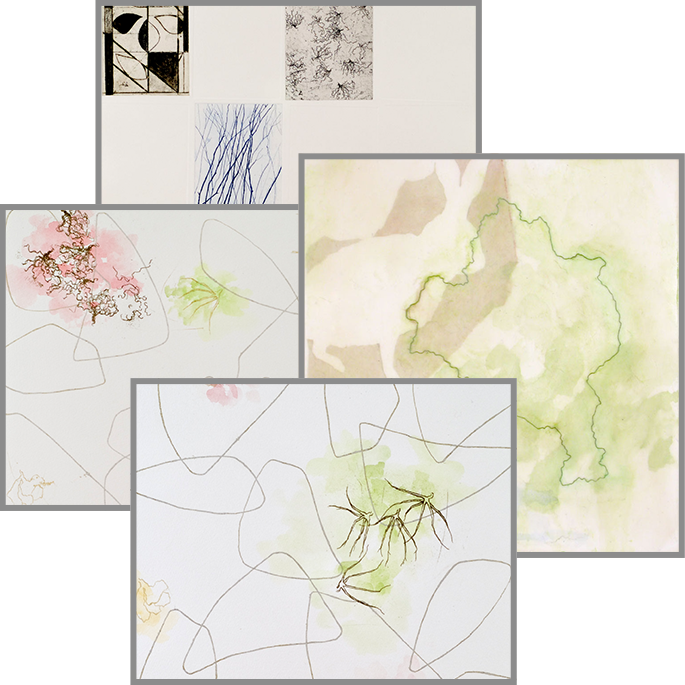
Flora Gallery
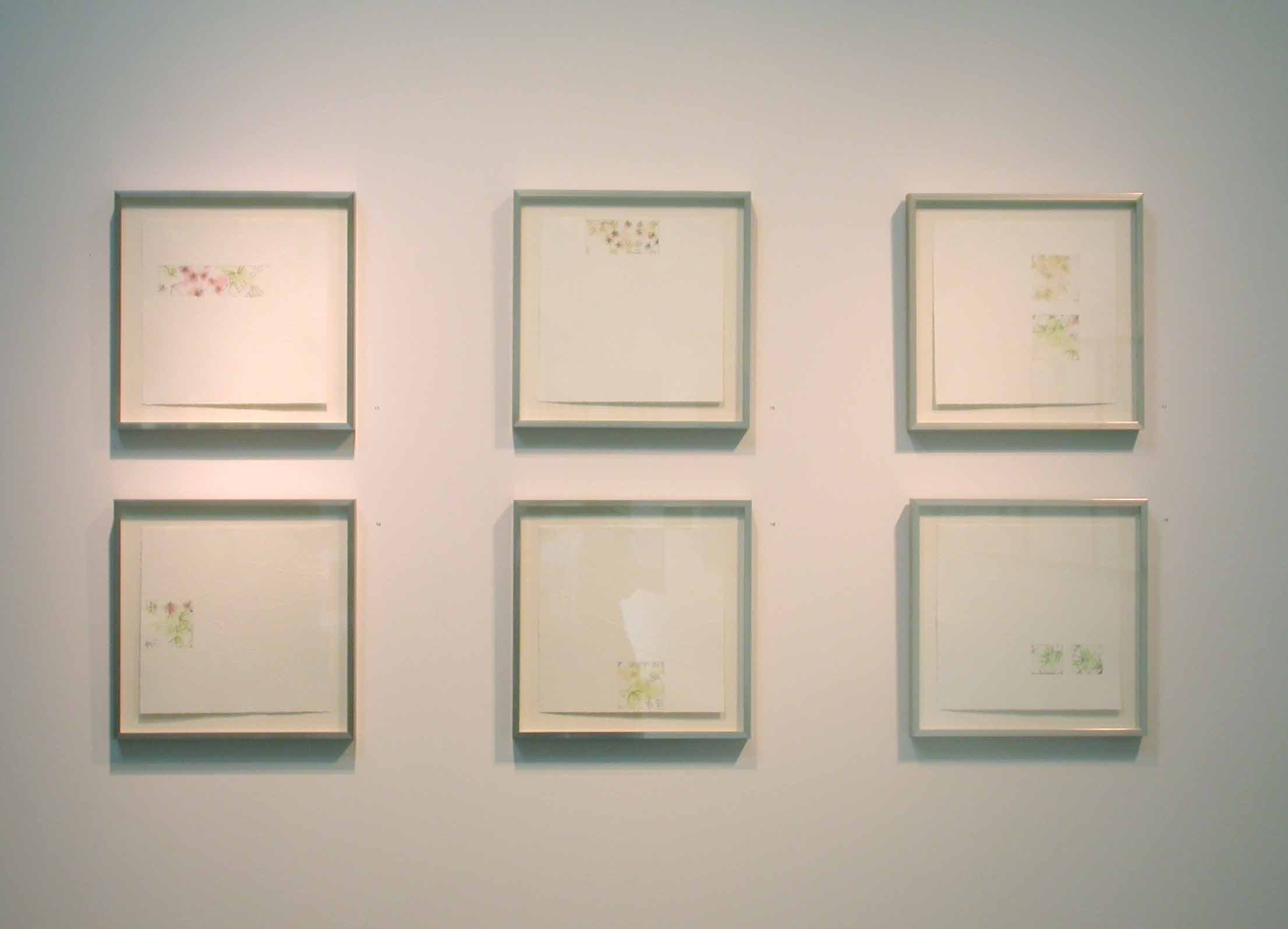
Places, Days, Weather
(Series of 10) 2008/09
Color: Intaglio
10 x 12 Inches
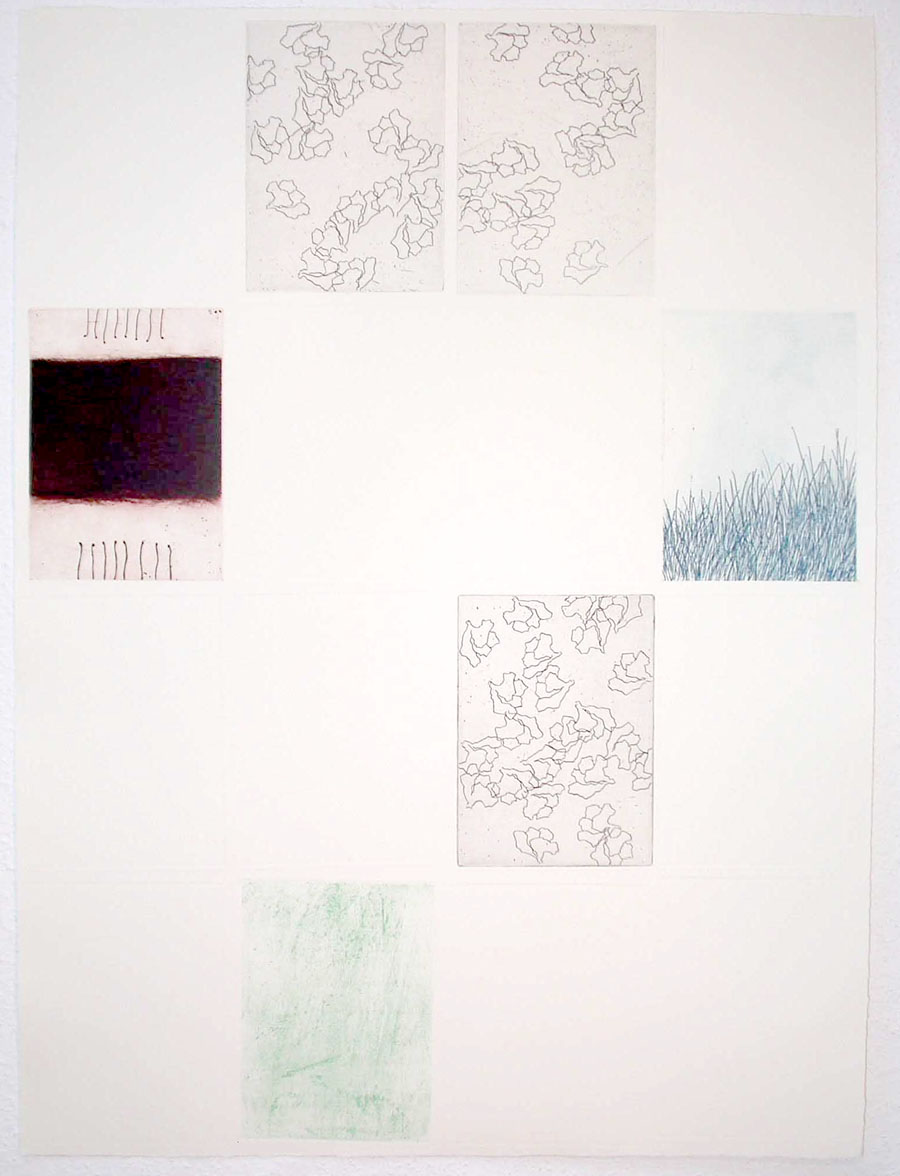
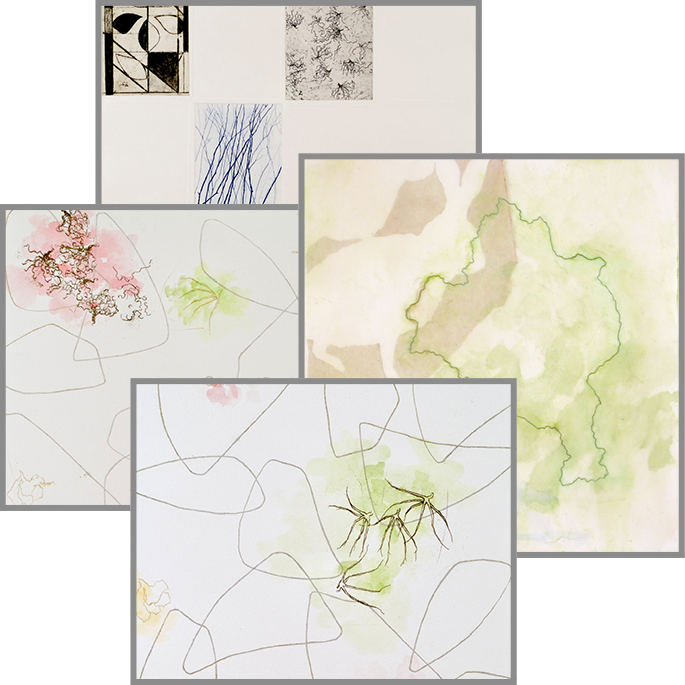
The systematic approach to this series combines several components each with an assigned role that together convey a sense of transitory presence.
The fragments of maps, flowers and butterflies were originally whole plates that were randomly cut into smaller pieces.
Maps: Virginia and Saxony of equal proportion were etched into a single copper plate, which was then cut up, and each piece assigned a different day.
State flowers: Every state in the US has state symbols that have some kind of significance. All have designated state flowers, and most also have trees, birds and other animals. The flowering dogwood (Cornus florida) is the state flower and tree of Virginia. The linden (Tilia) being of great mythological significance in Germany as a symbol of truth, justice and peace, I chose it as the ‘state flower’ and tree to represent Saxony.
Rivers: The James River of Virginia runs through the capital city of Richmond
(I moved from) and nearly across the width of the state; the Elbe River runs through the capital city of Dresden (I moved to) and through the state of Saxony.
Butterflies: A symbol of migration and movement.
Weather: I mixed colors of printing ink for various weather conditions such as warm, cold, windy, sunny, cloudy, rainy and made notes about the weather conditions in each city on a particular day in a week (Monday through Friday). The color combinations in each print are determined by the weather condition in each city on the given day. The prints are pairs; they note the weather in two places on the same day.
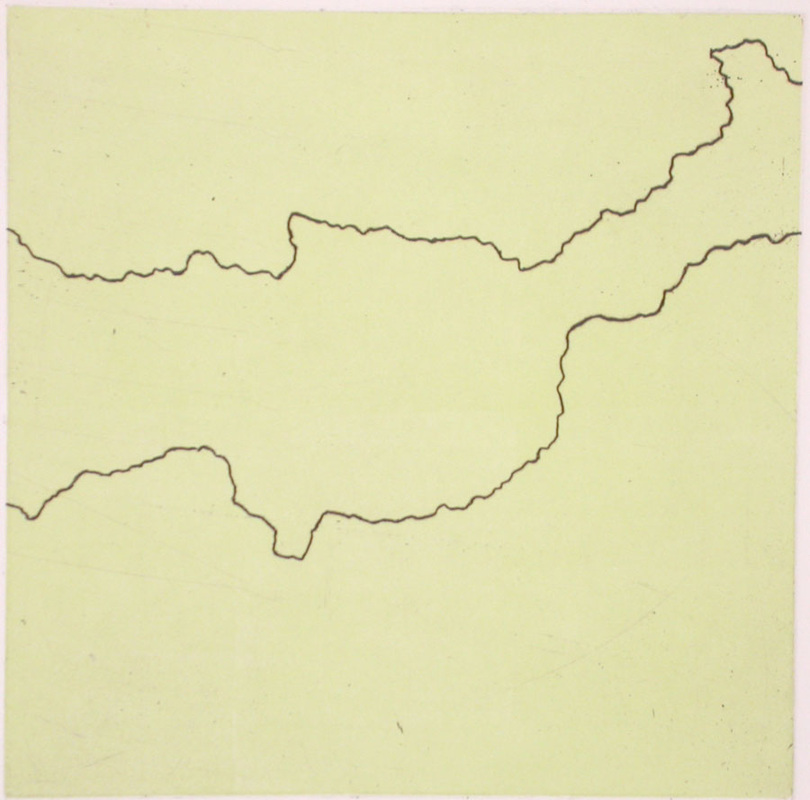
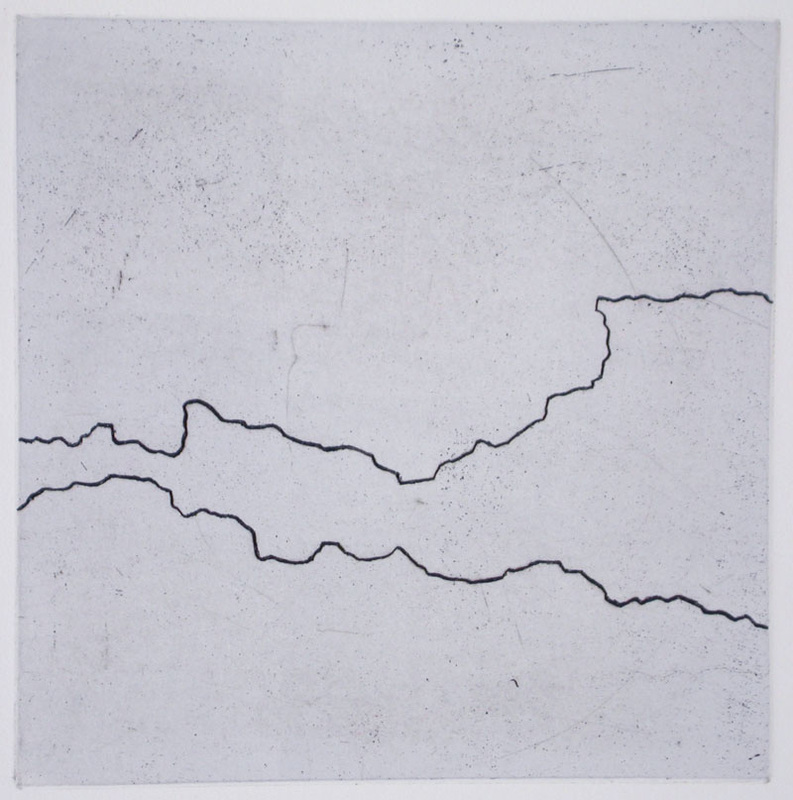
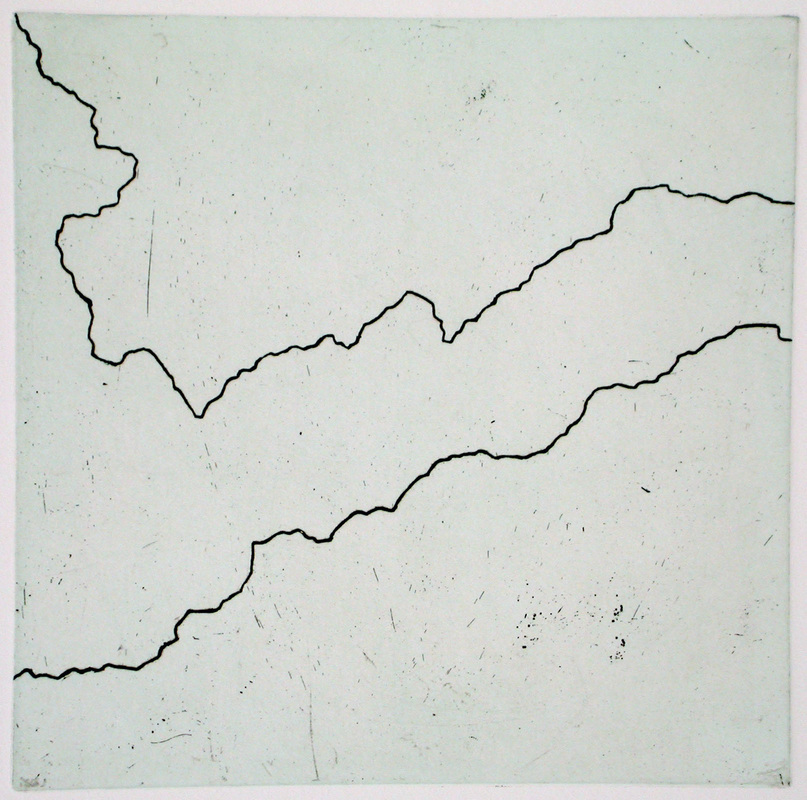
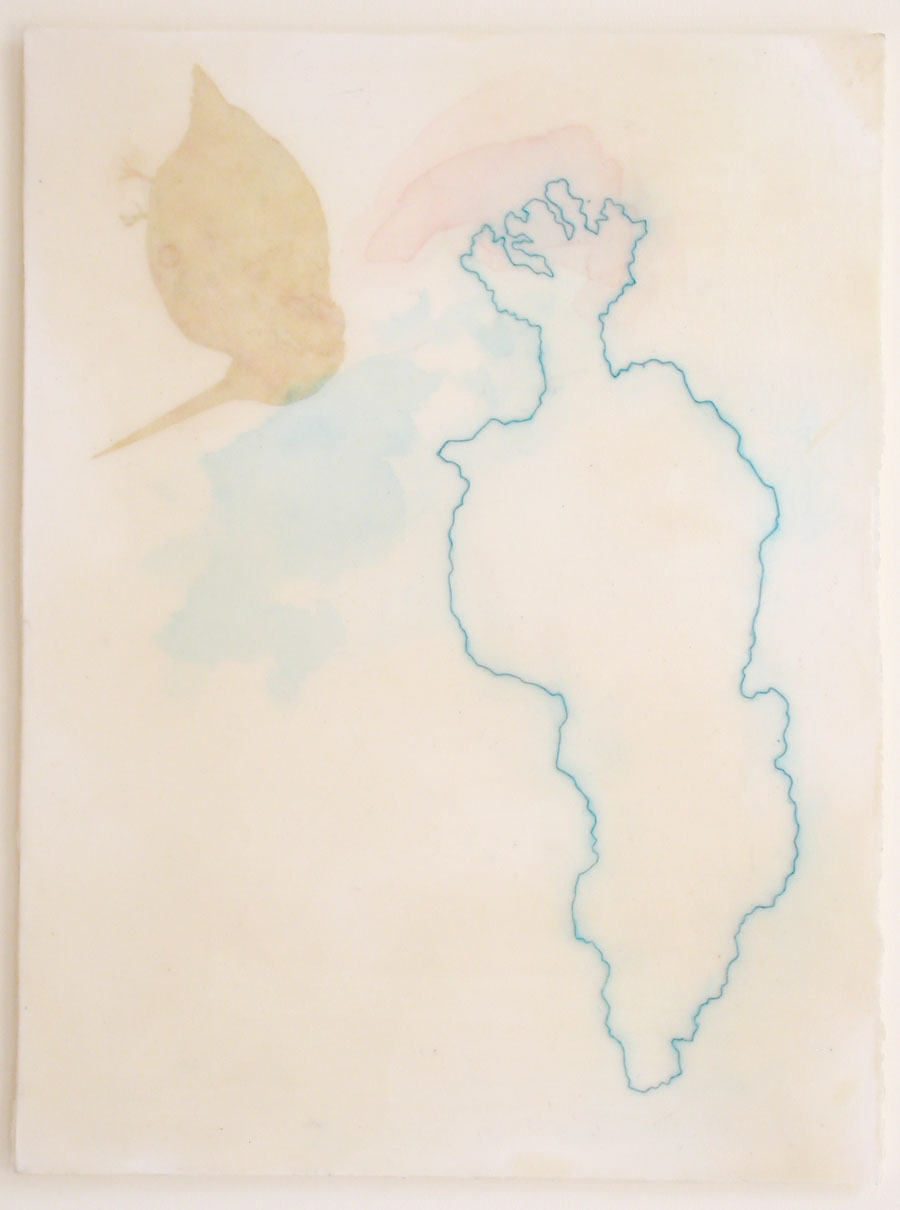
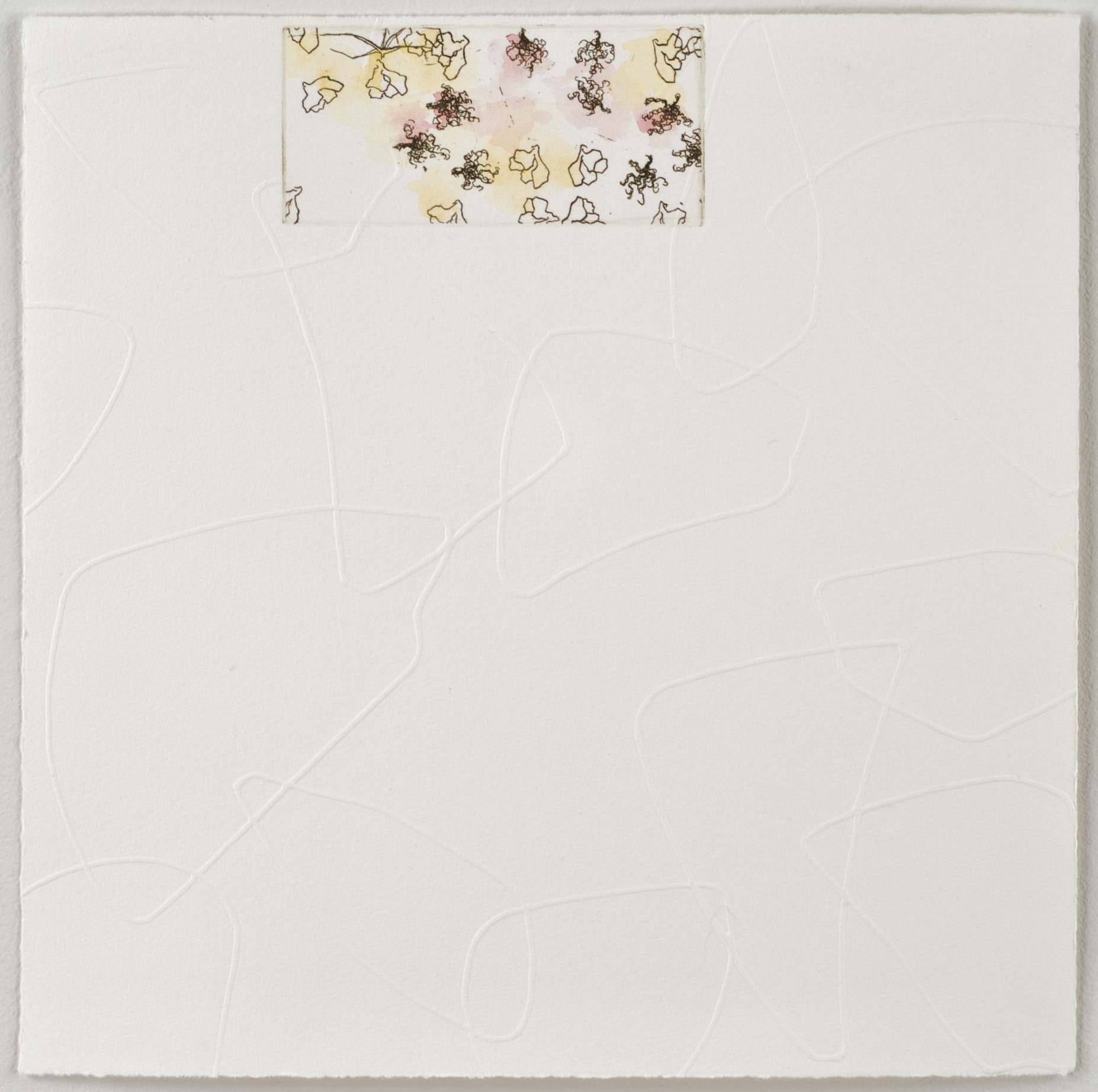
Shape Note Geography
(Series of 8), 2009
Color: Intaglio
8 x 8 inches
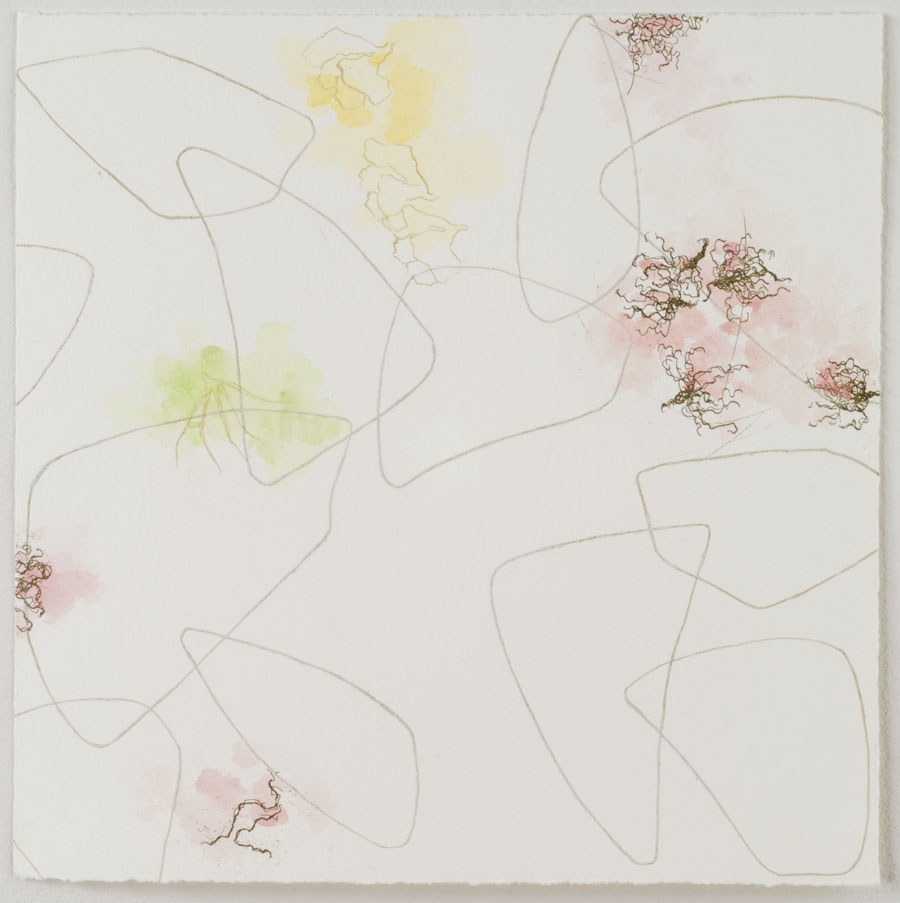
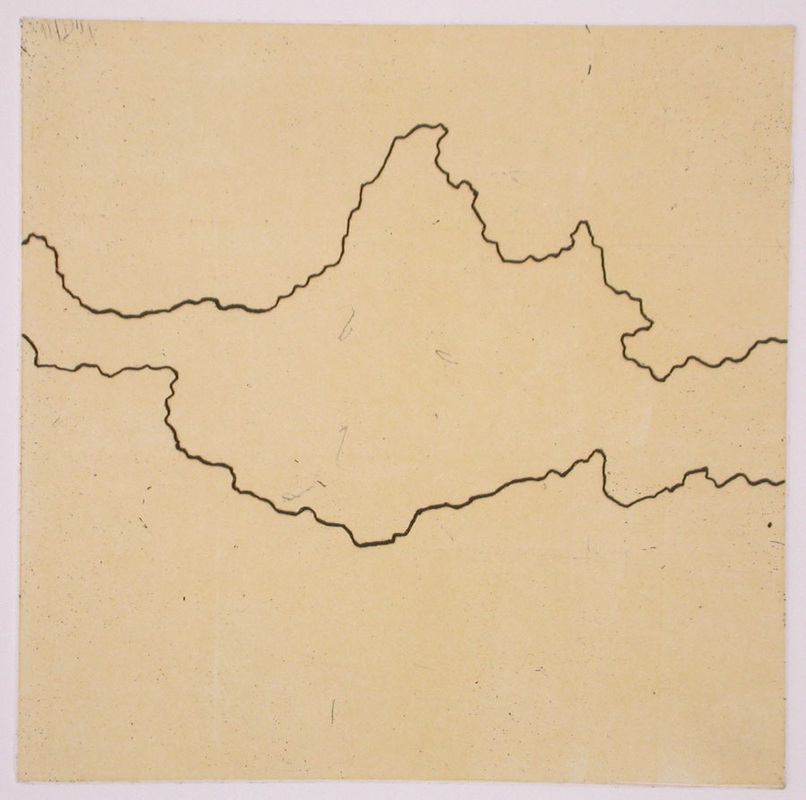
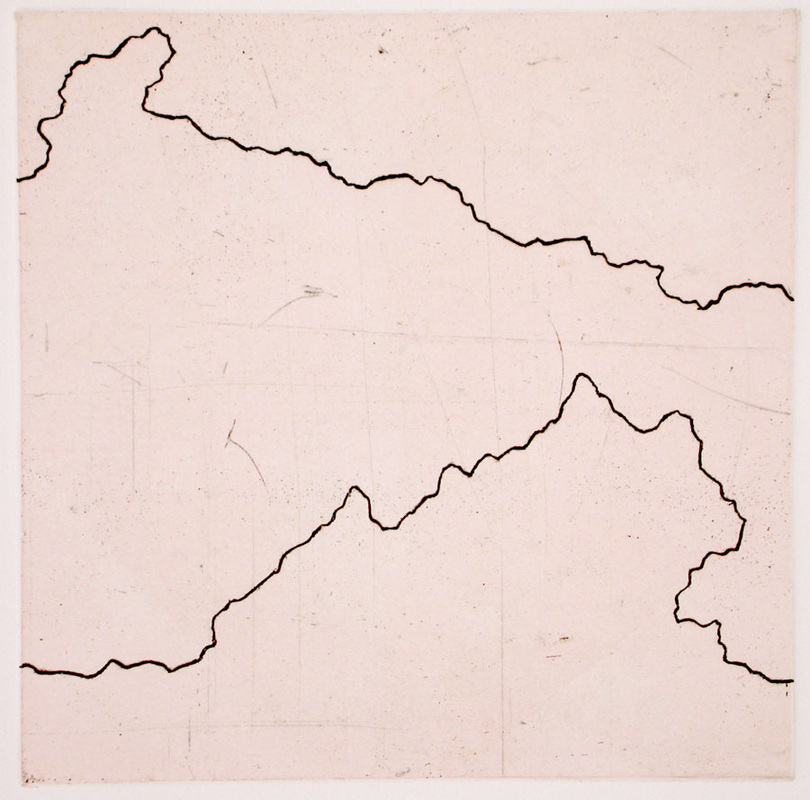
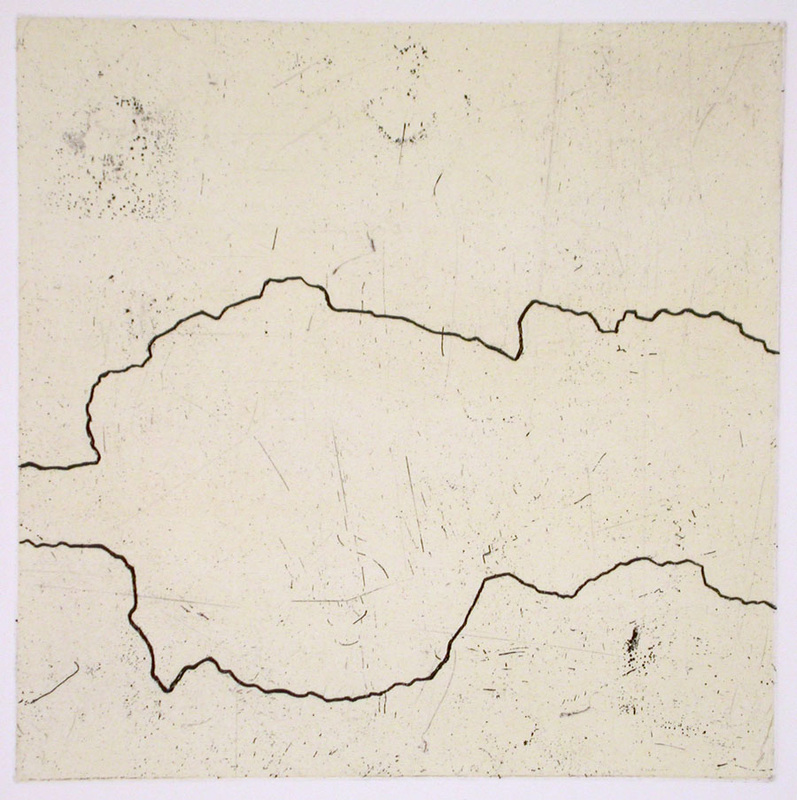
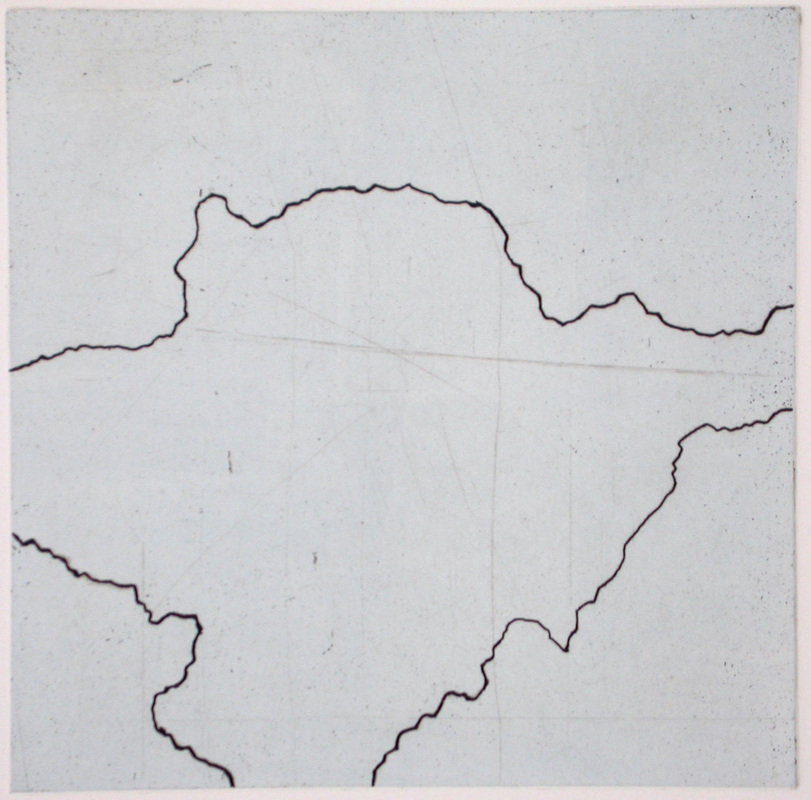
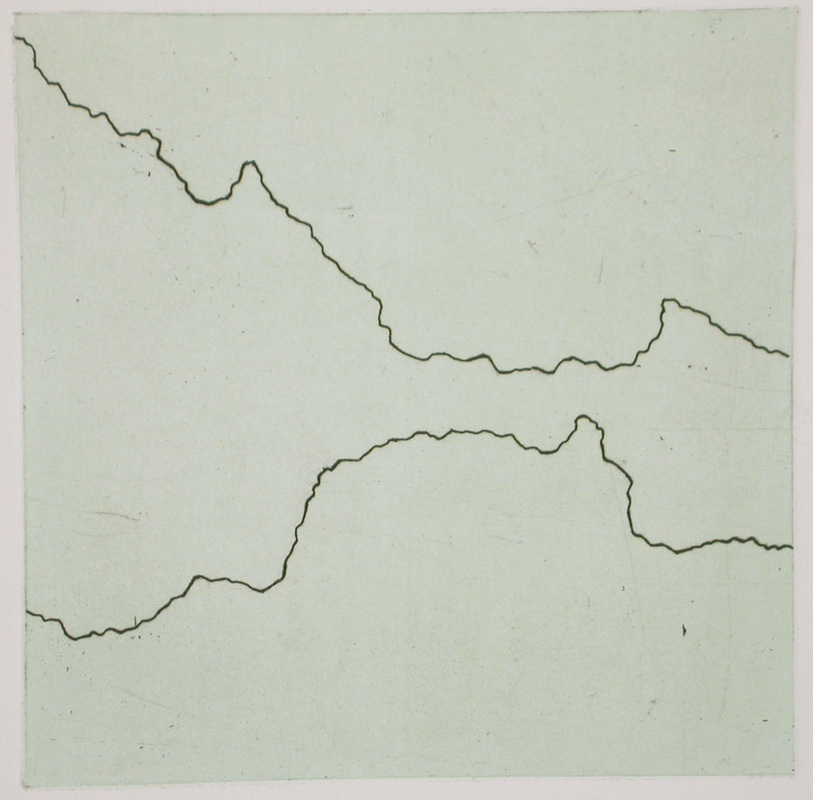
‘Shape notes’ are music notations designed to facilitate congregational singing, they link a note of the musical scale with a shape and a syllable, and this association can be used as an aid to reading music. Shape note singing has a long heritage in the southern region of the United States, and the tradition comes from colonial “singing schools” whose purpose was to teach beginners to sing. There are no rehearsals; the singers sit in a square formation, all facing inwards singing into the square.
I worked with a simple contour-line map of Virginia and one of Saxony to develop these compositions. Saxony is geographically a great deal smaller than Virginia;
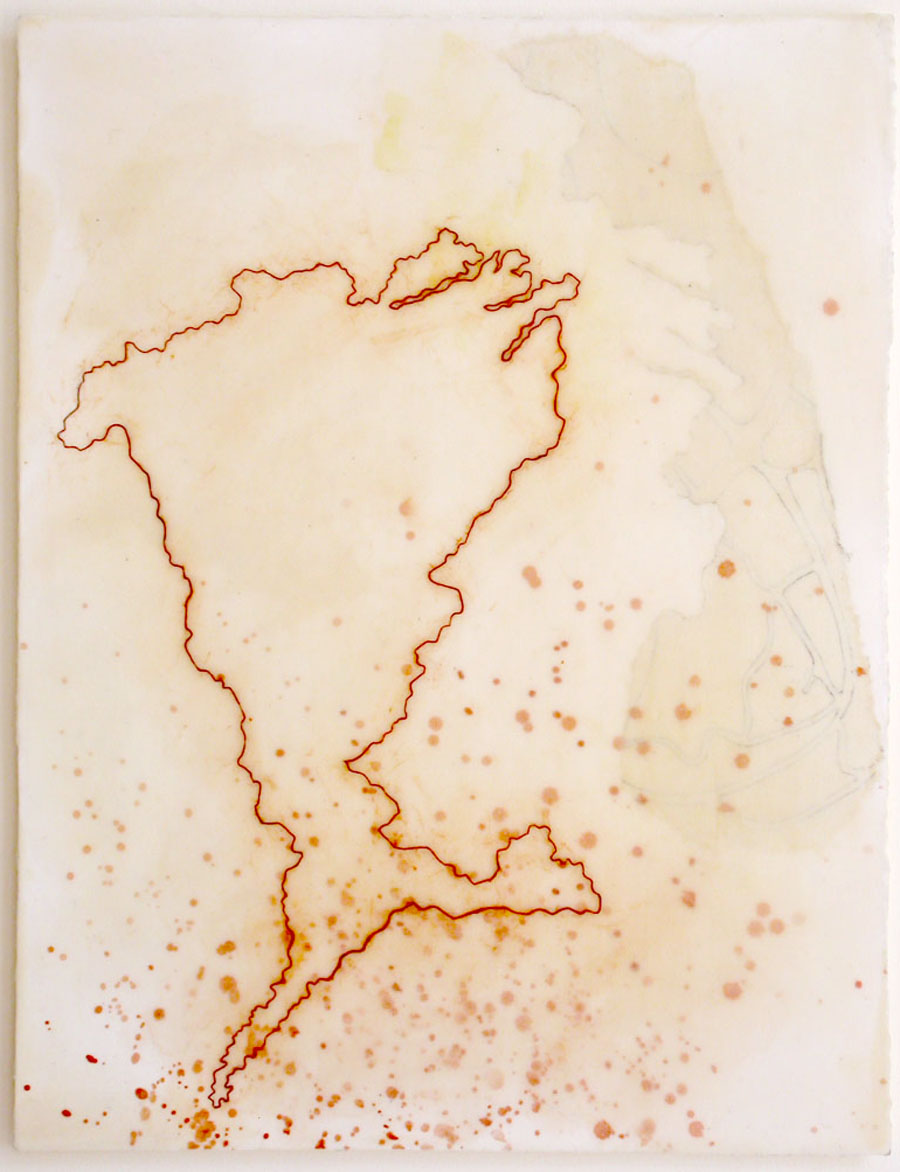
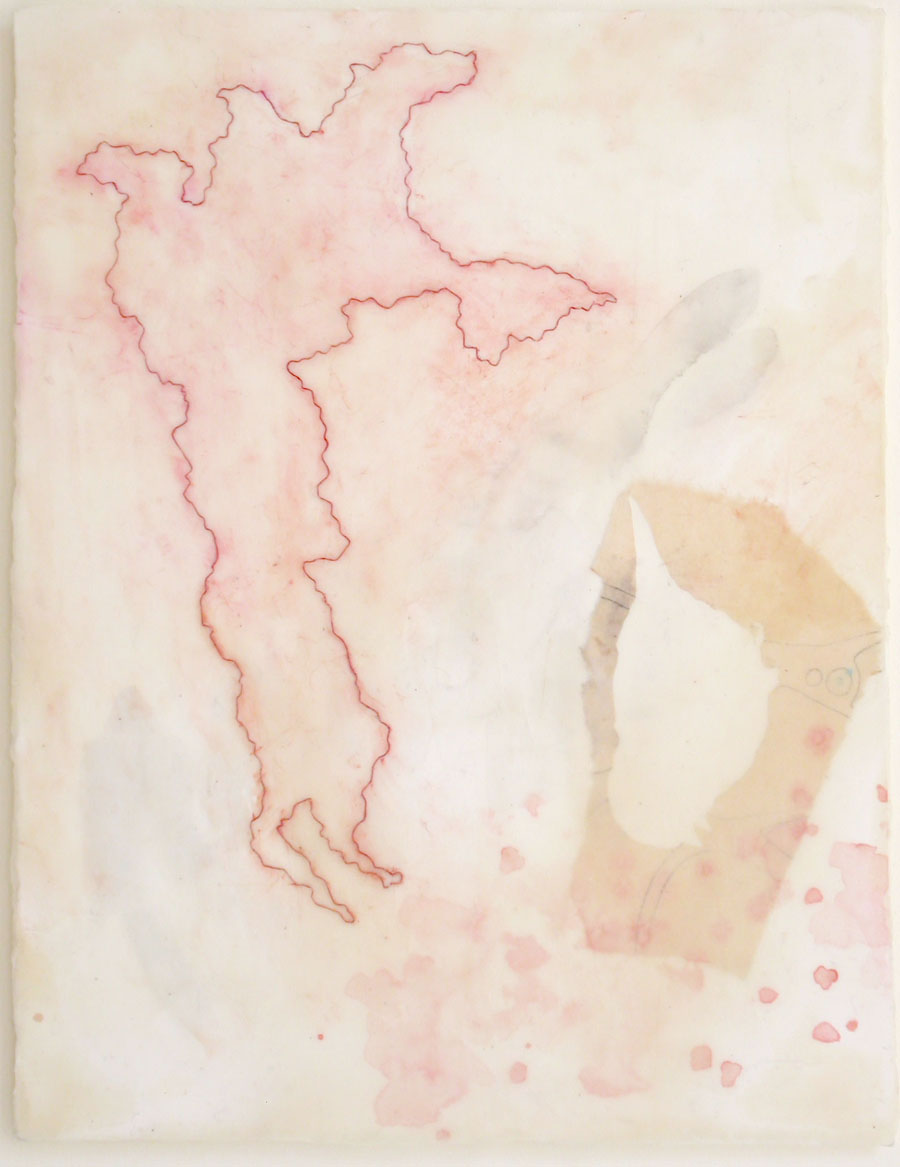
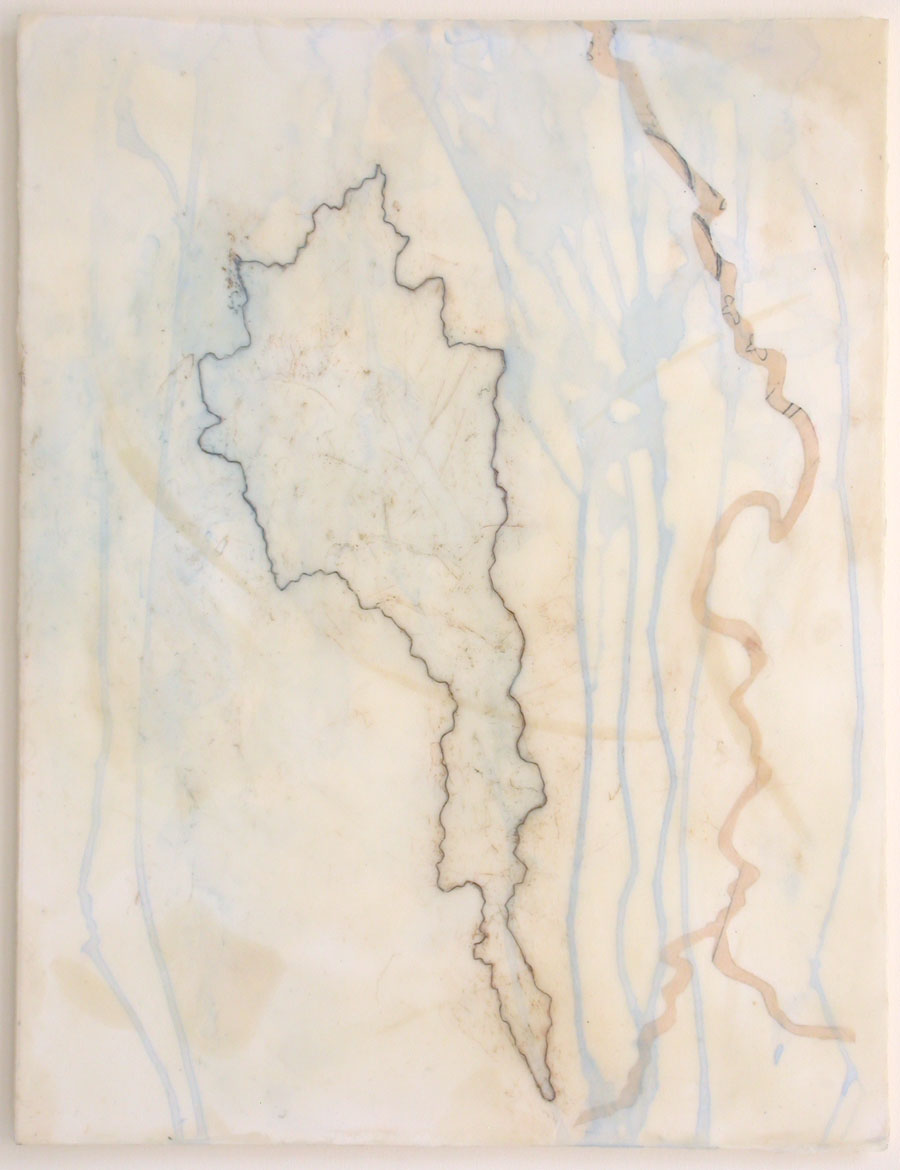
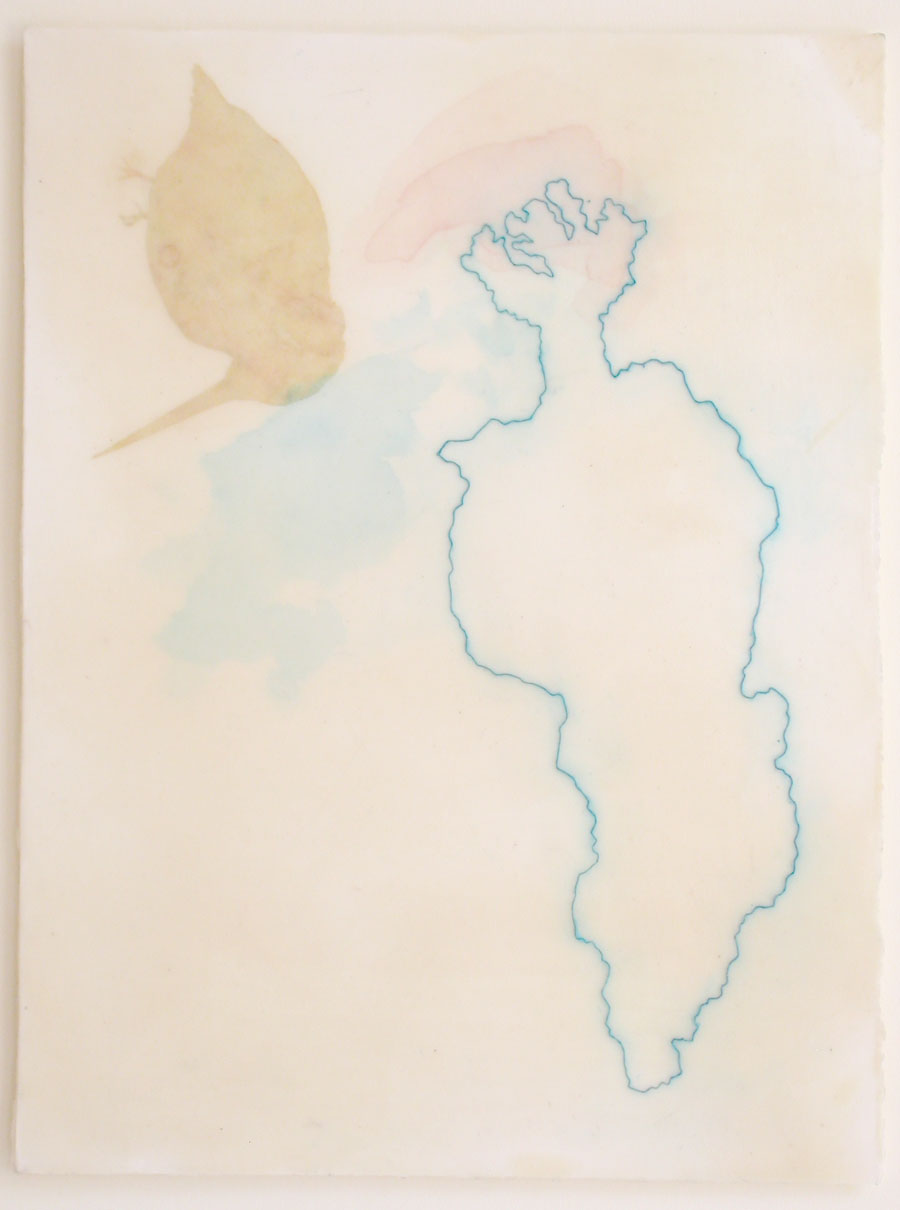
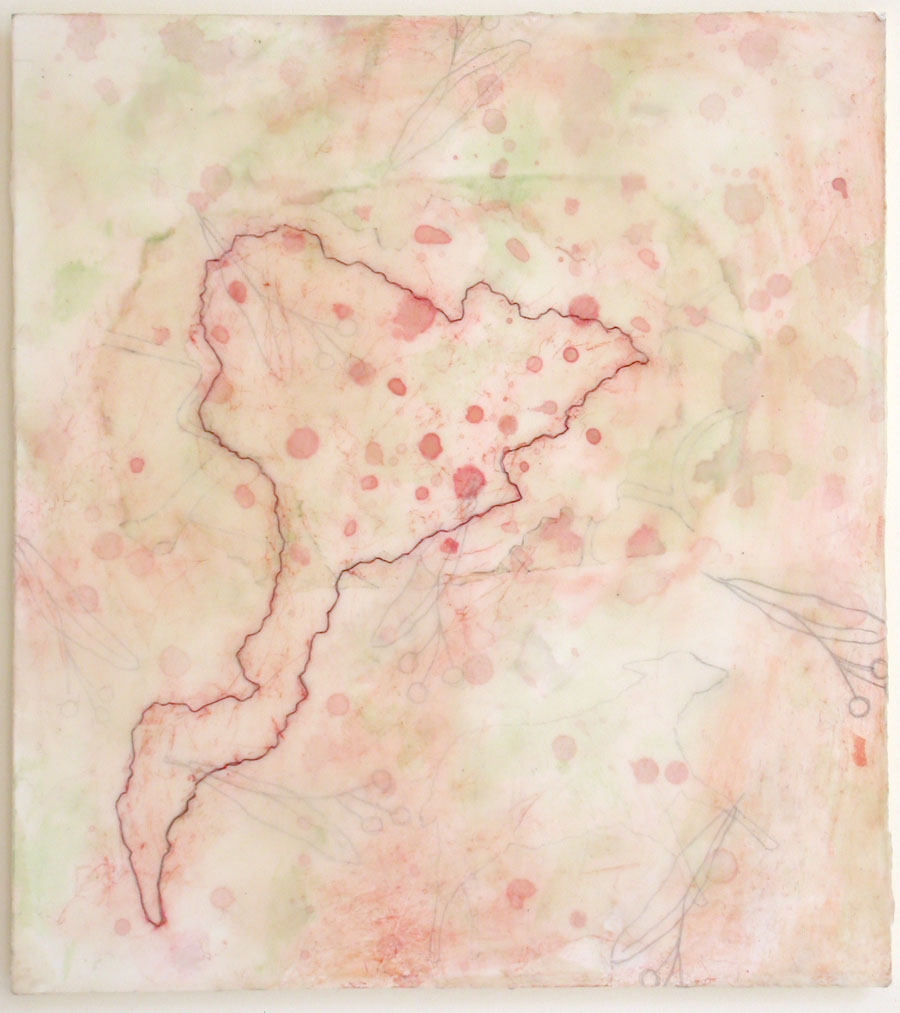
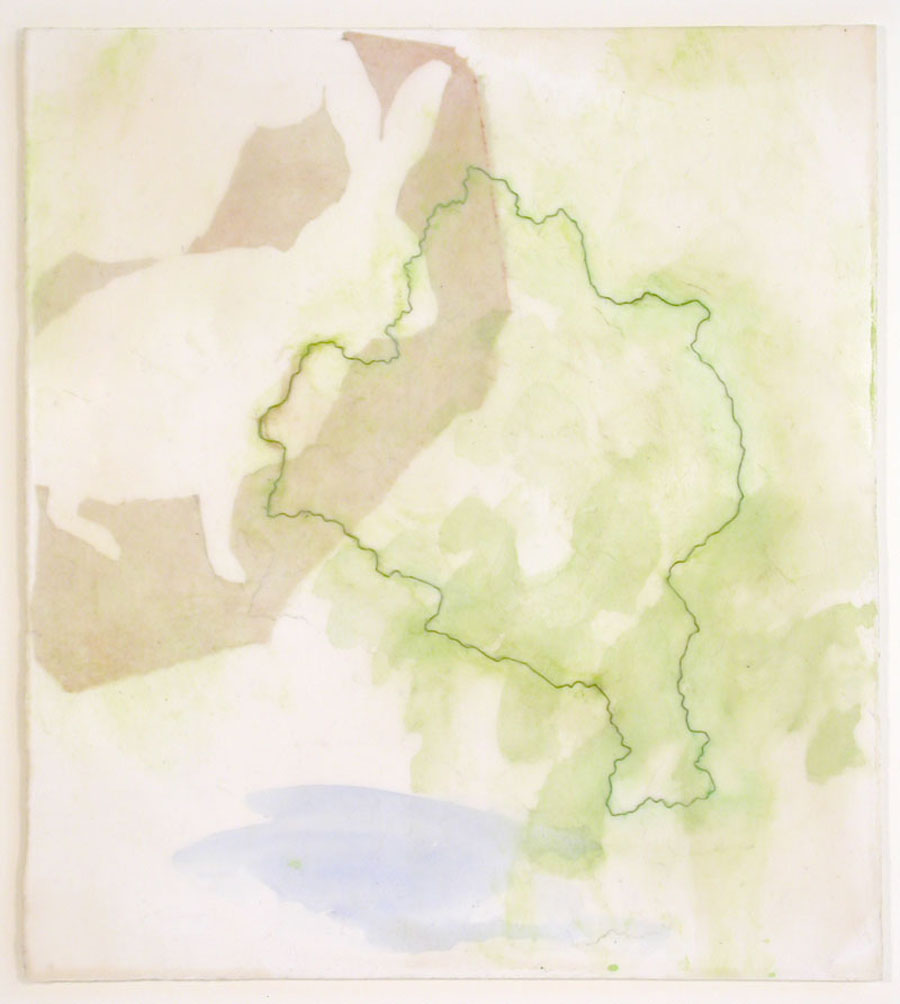
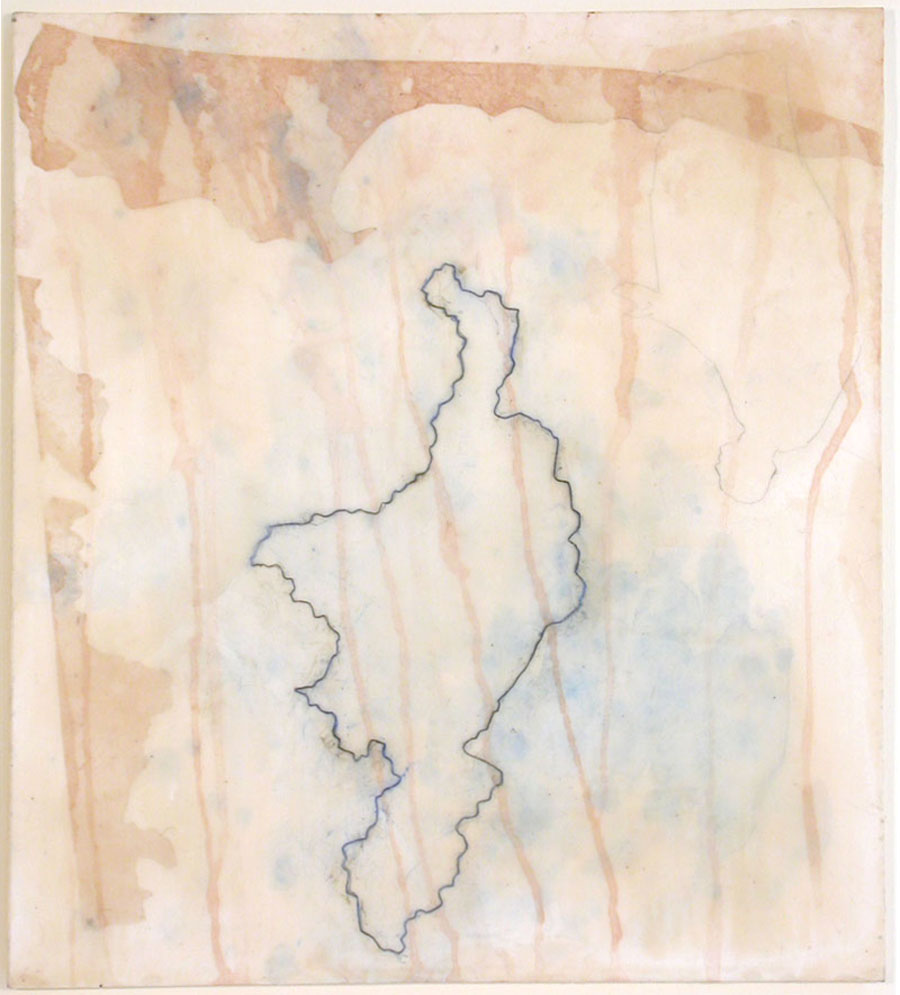
I enlarged that map it so that they would be in proportion to one another. Each composition is made of one line from the contour of Virginia and one from the contour of Saxony. The positive / negative aspect of the compositions makes the space between the lines look like an open space between two masses, much like bodies of water between continents. But simultaneously, the space between the lines can also be seen as a solid shape formed by line fragments of the two maps. These shapes between the lines are the source for the images in the Florilegium series.
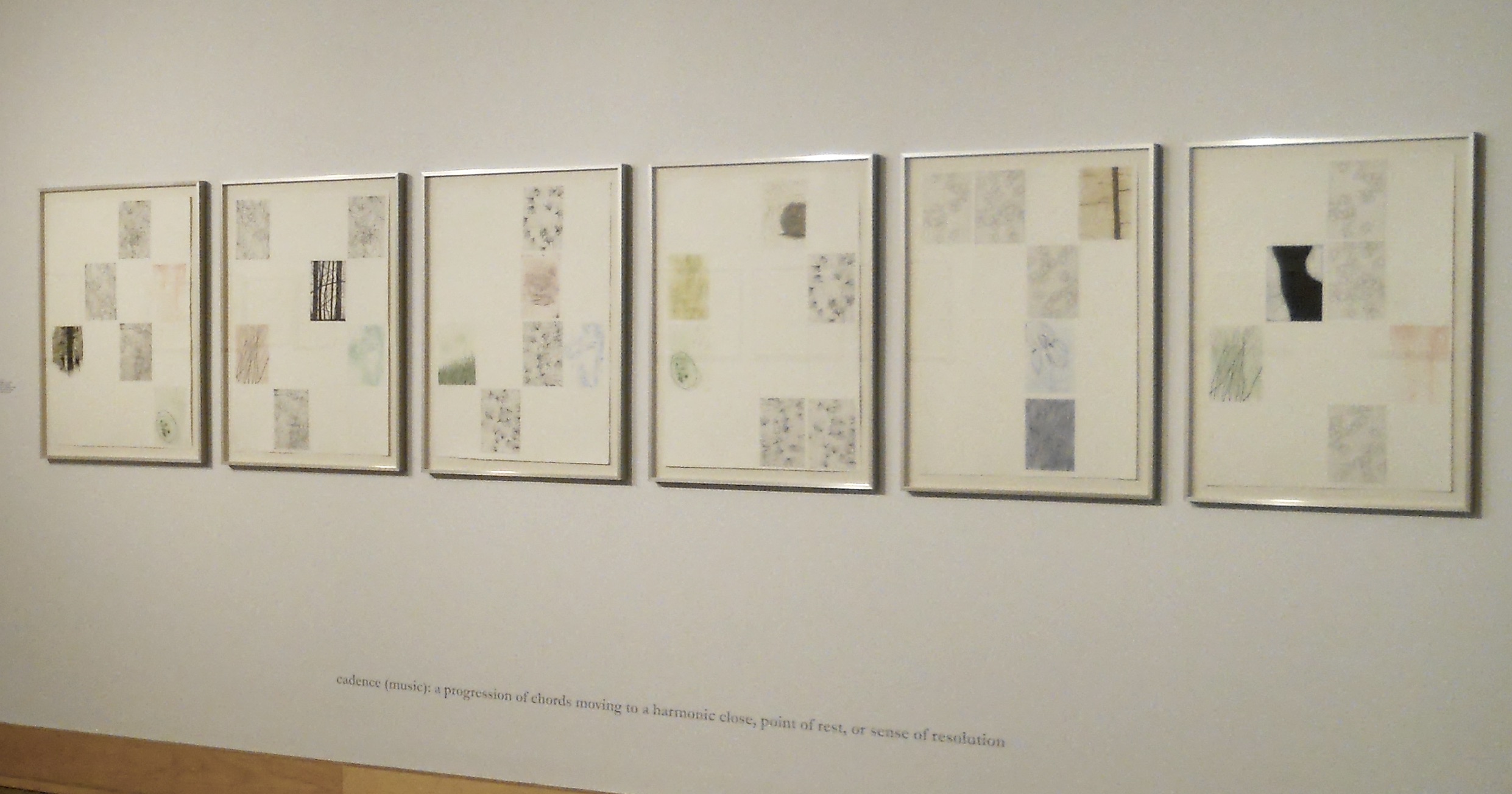
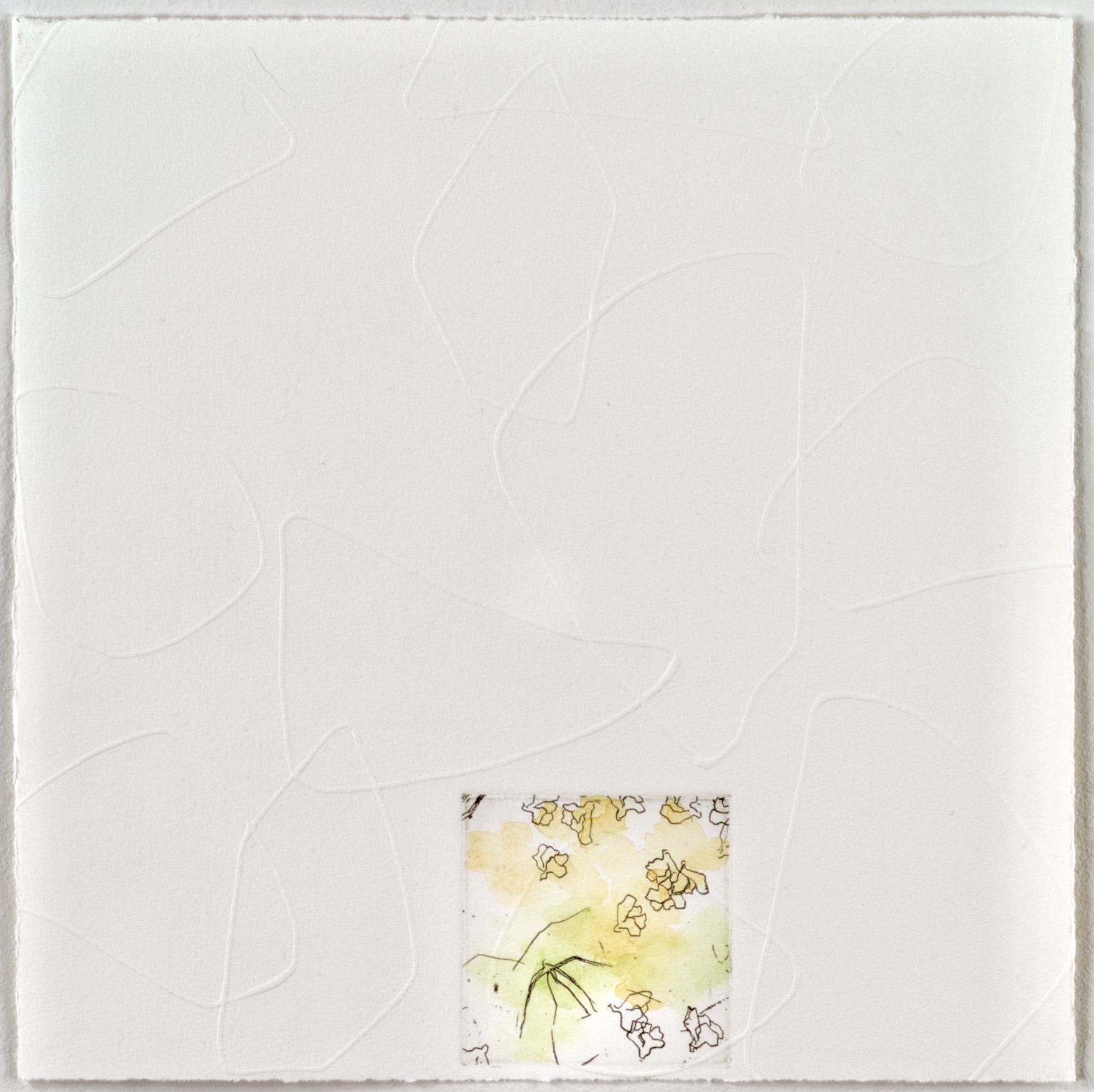
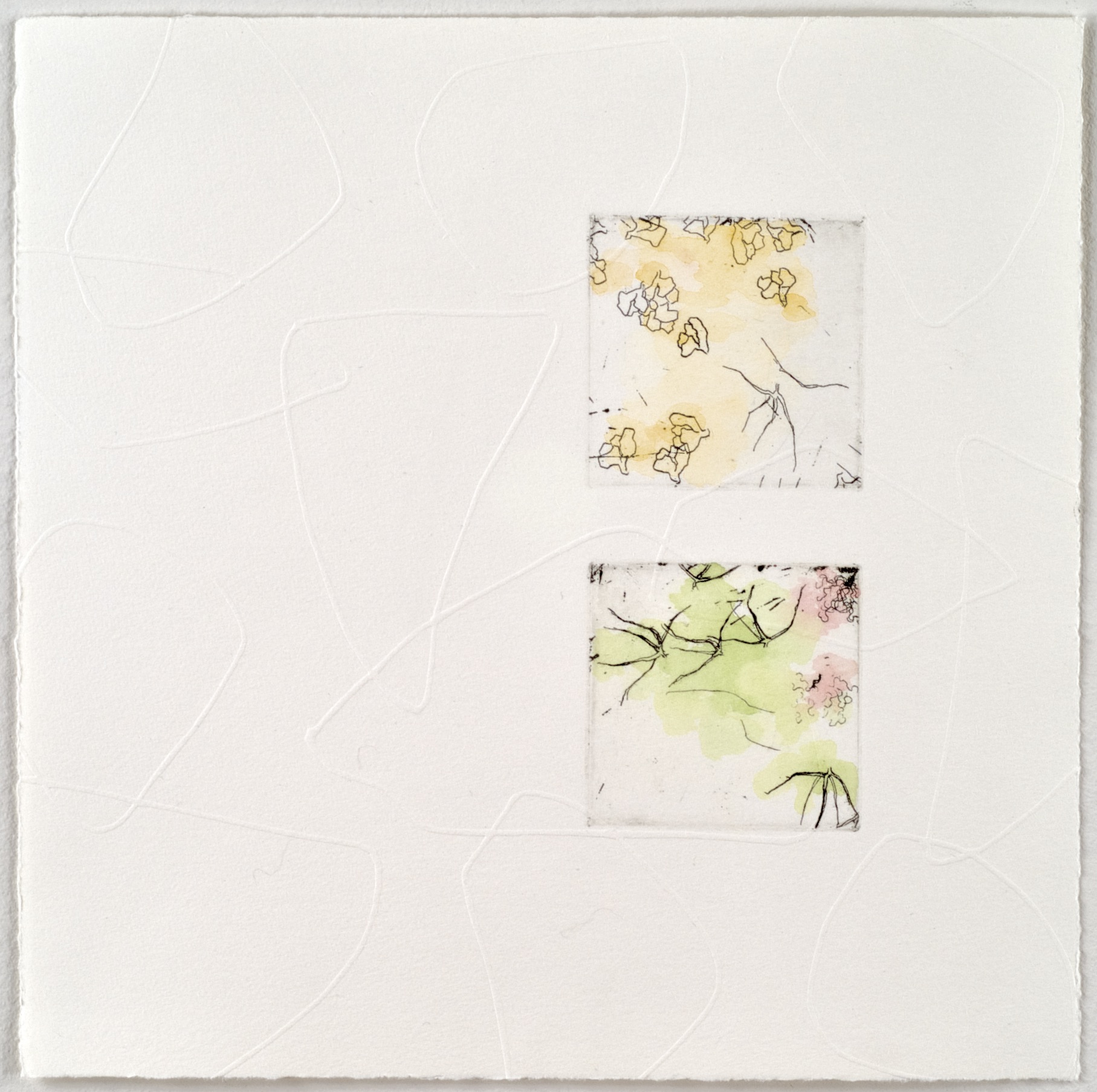
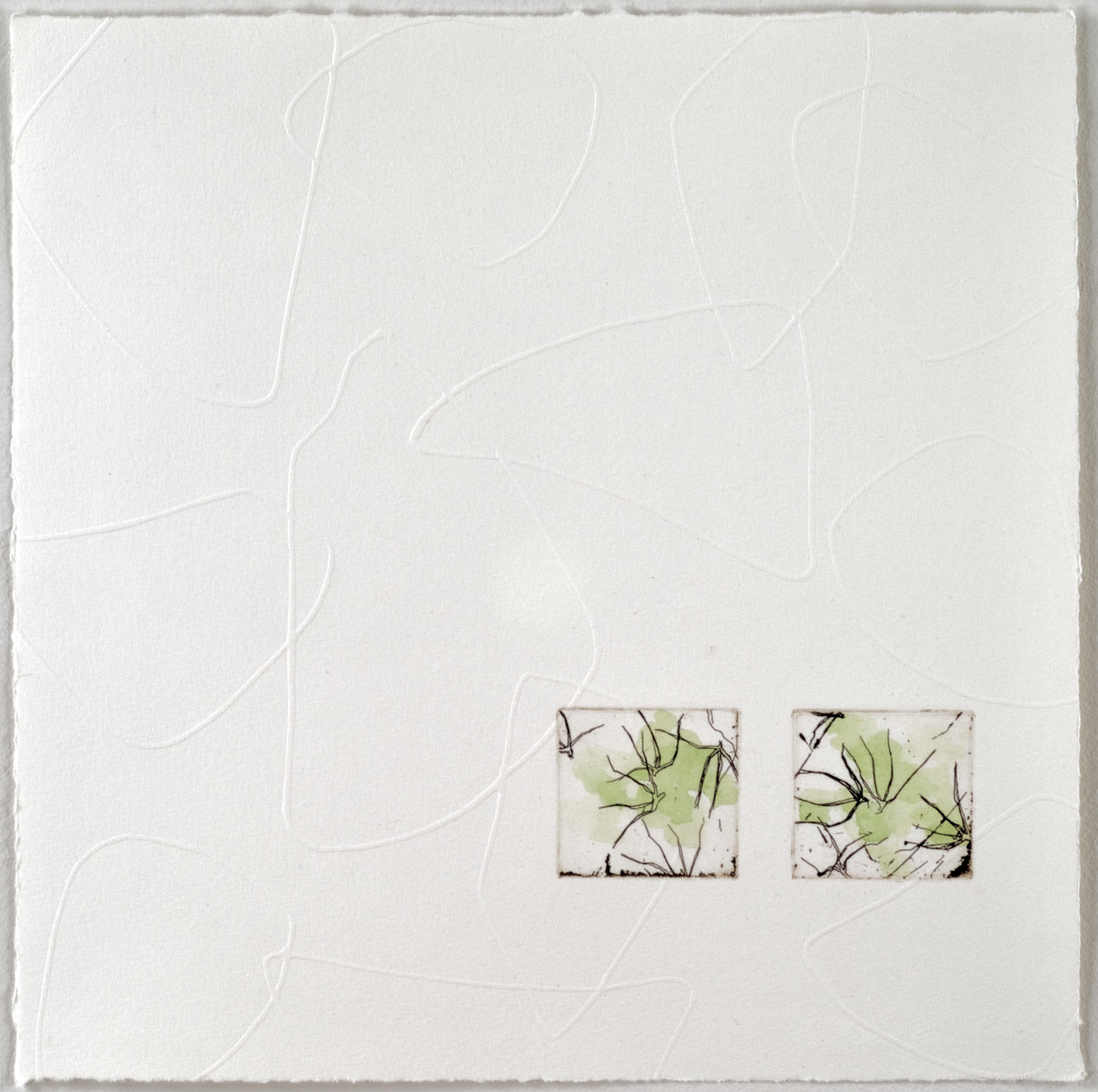
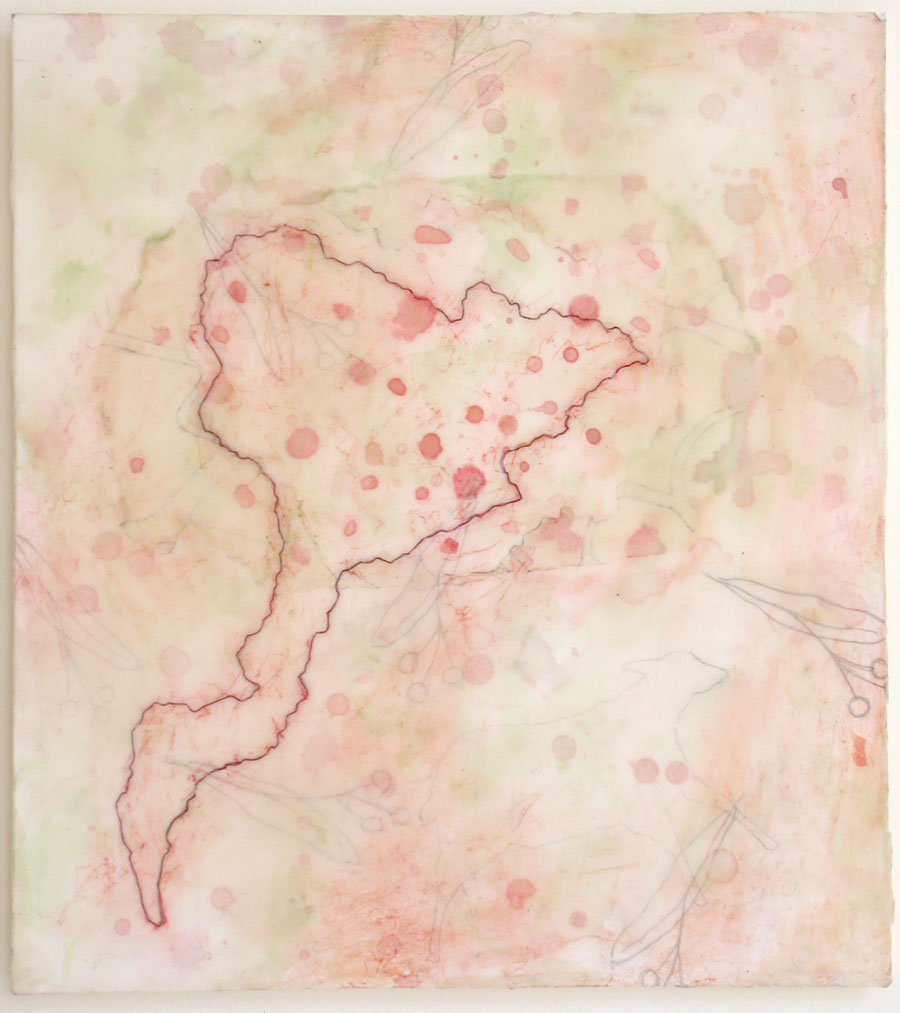
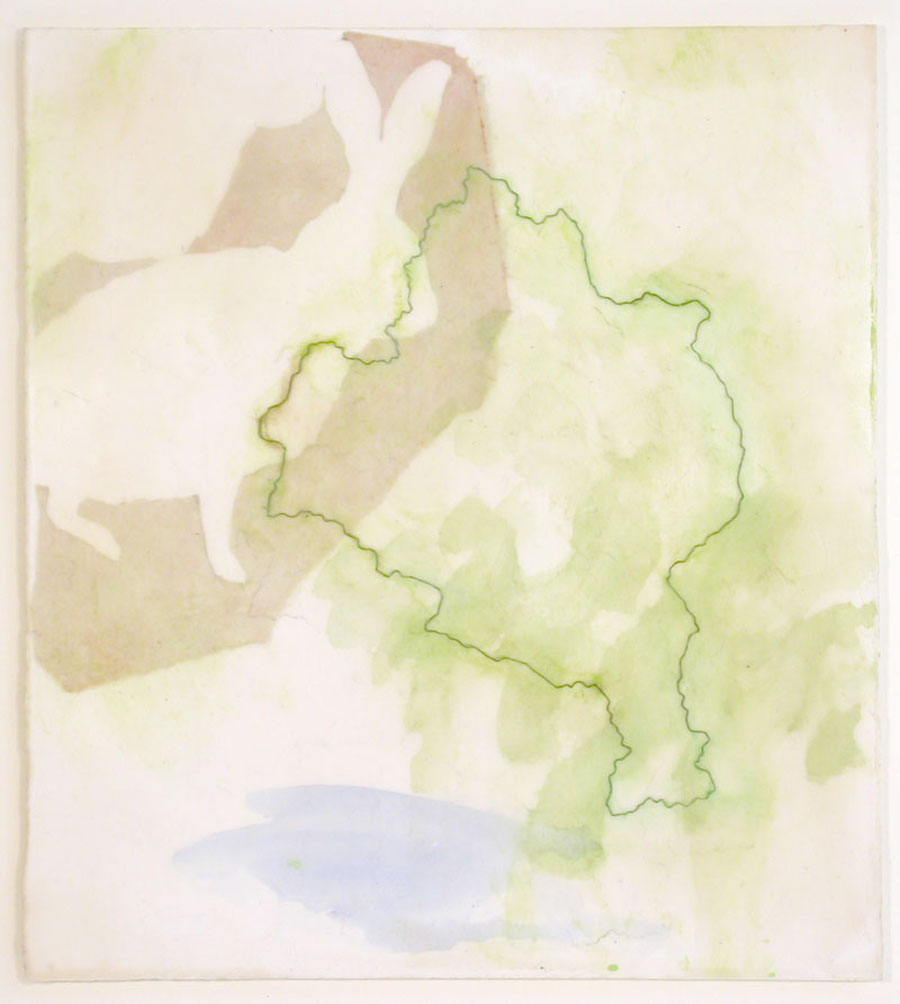
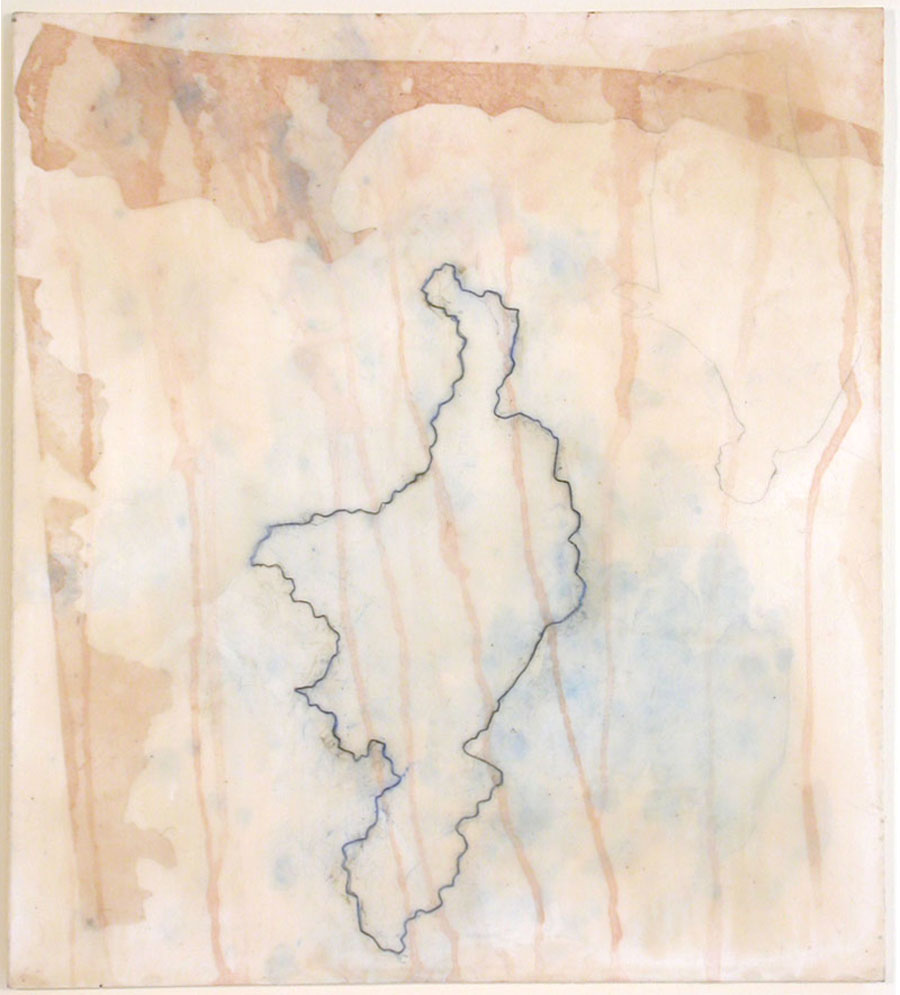
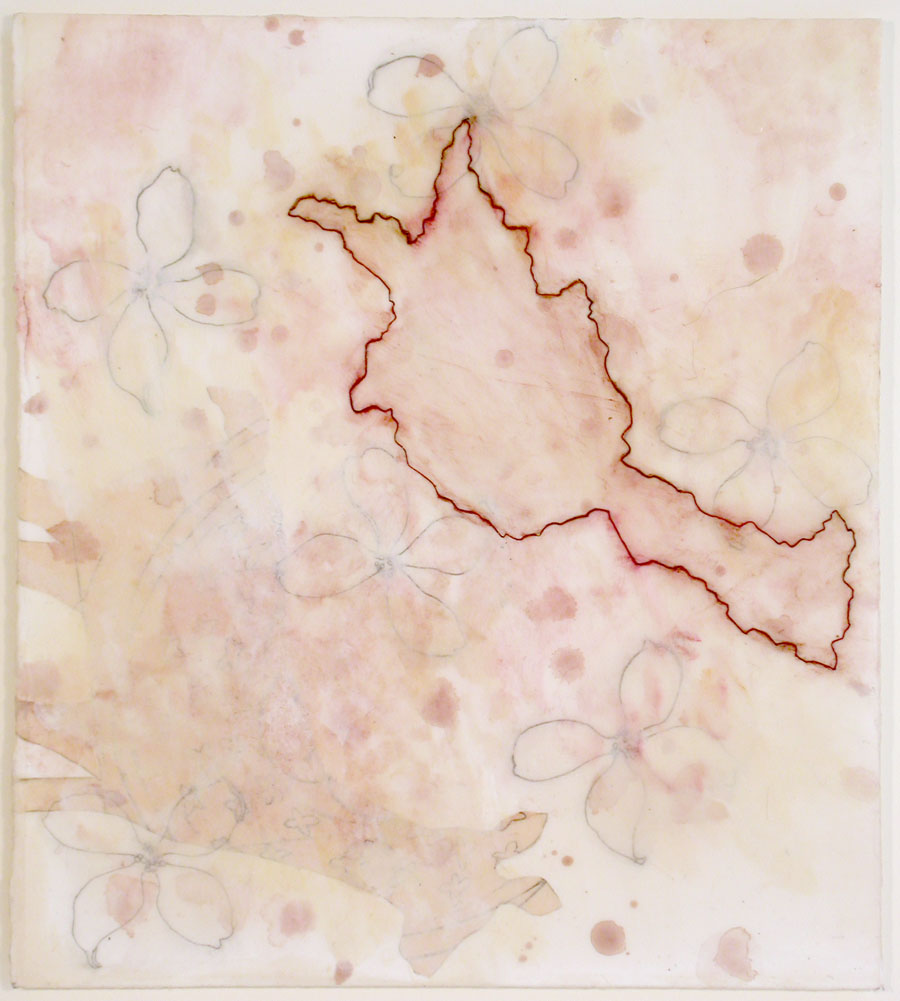
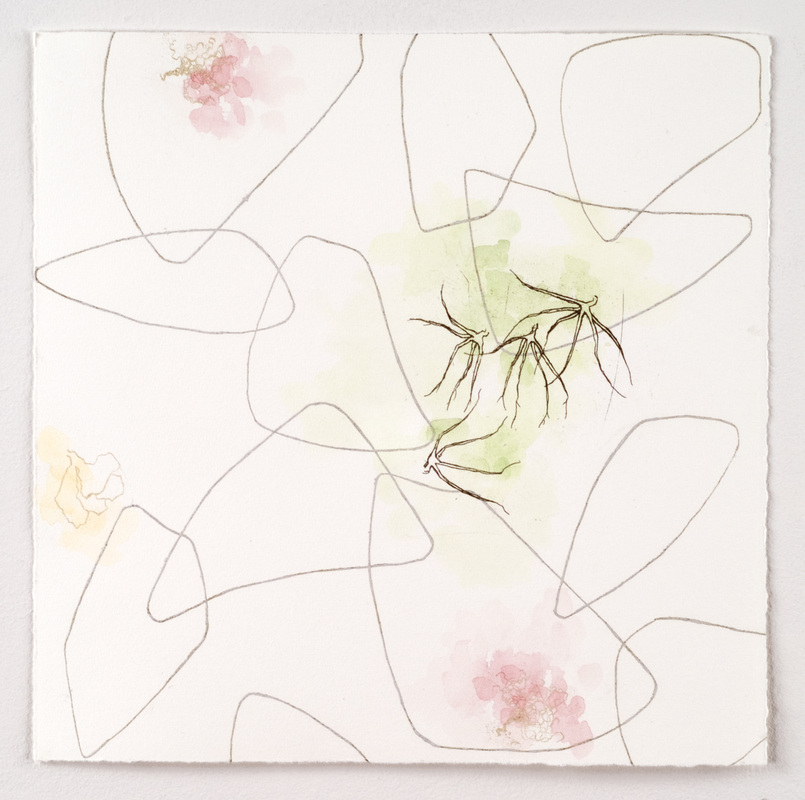
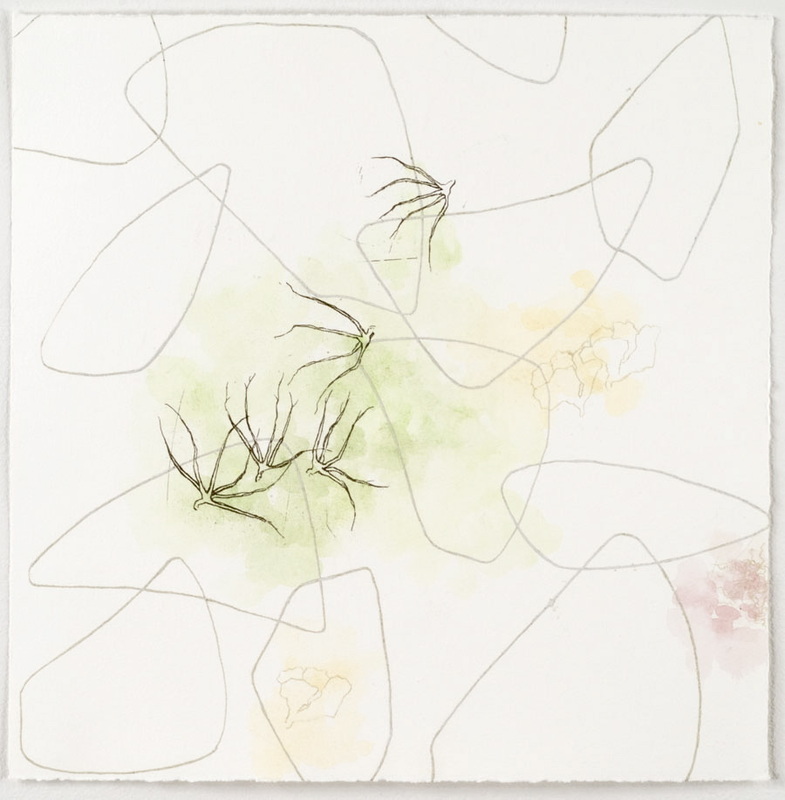
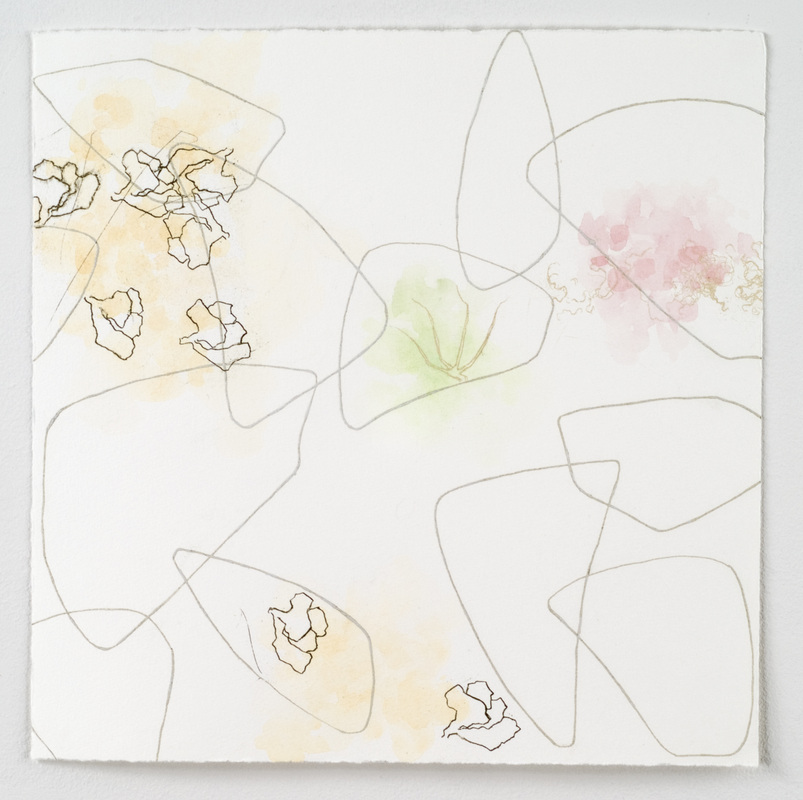
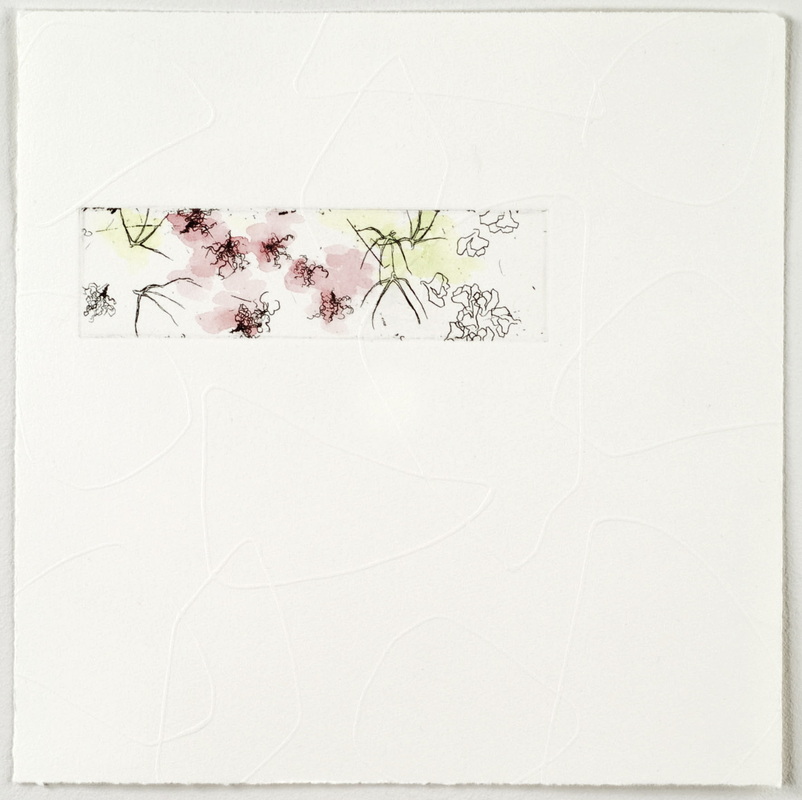
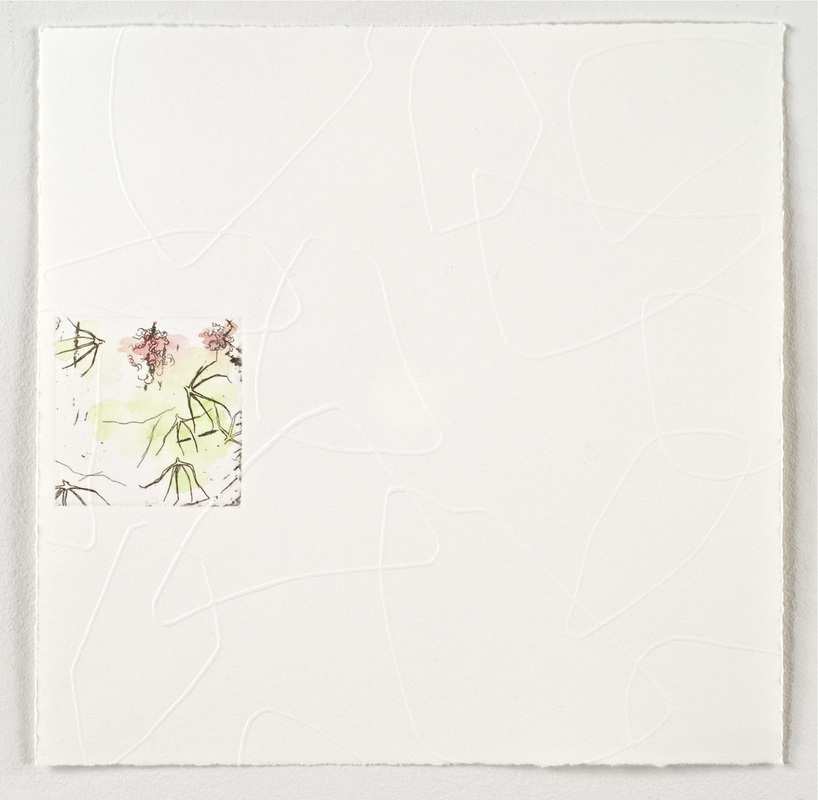
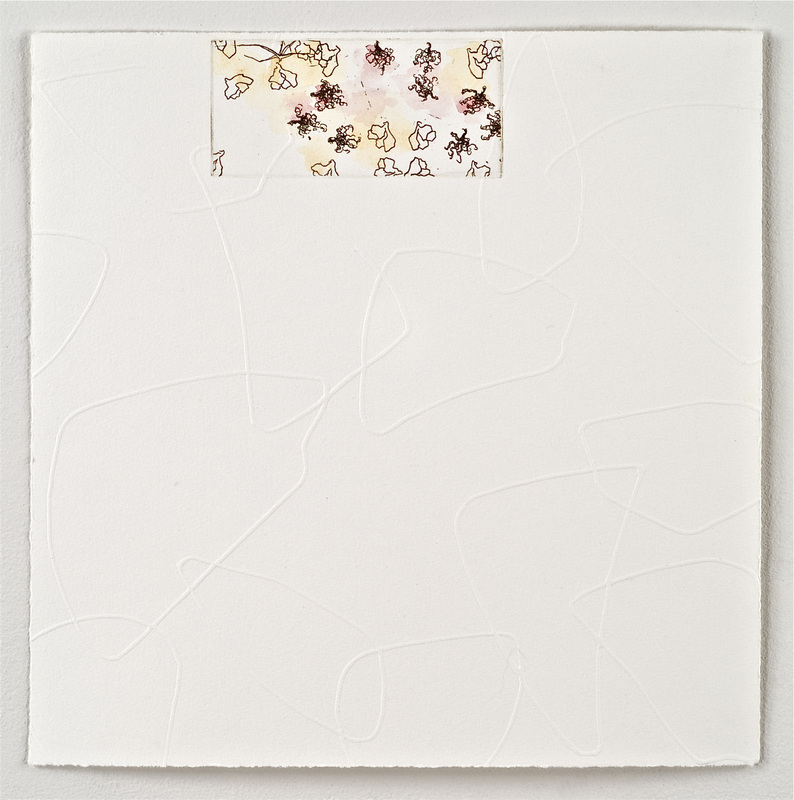
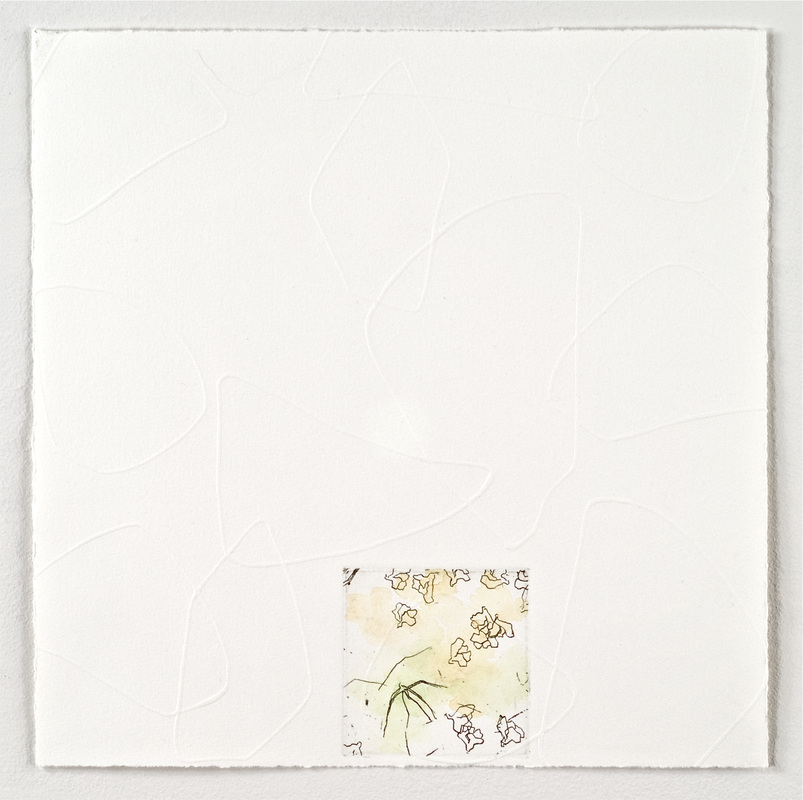
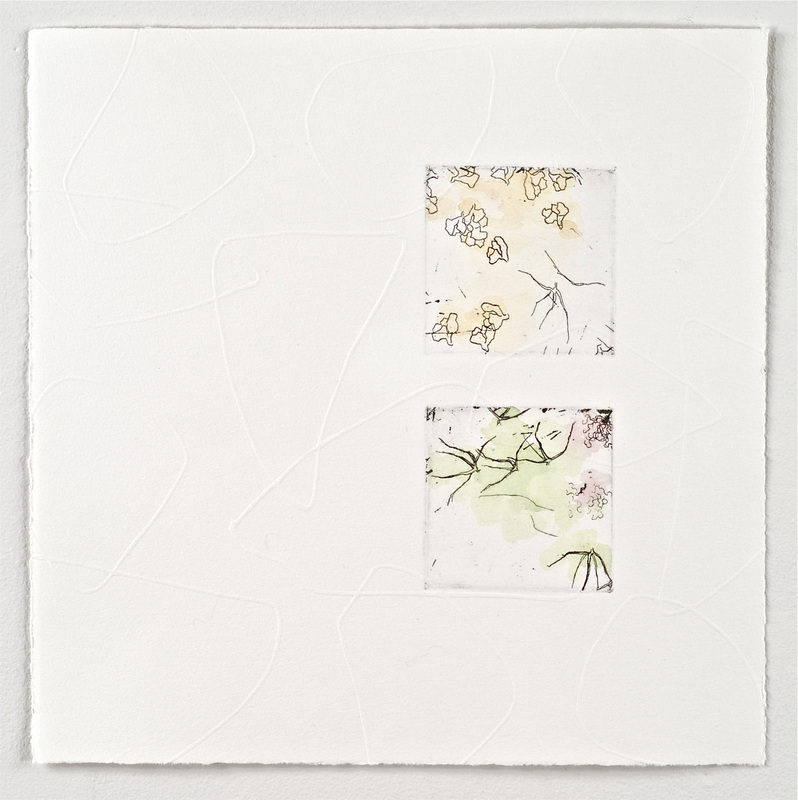
Florilegium
(Series of 8), 2008/09
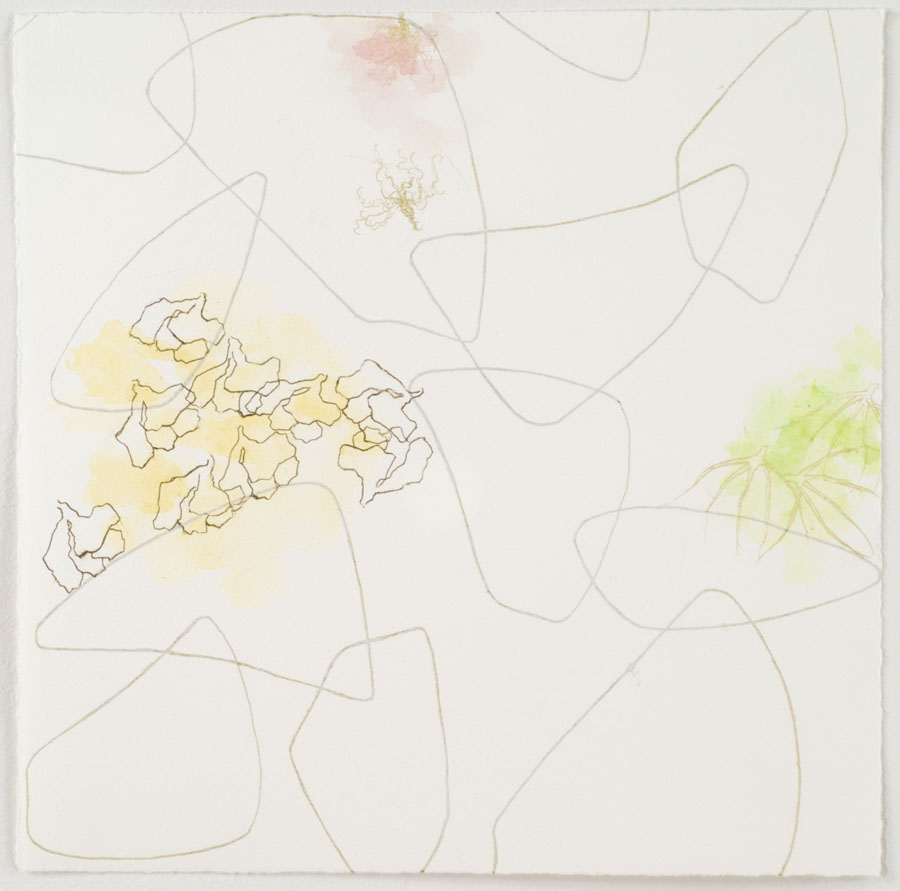
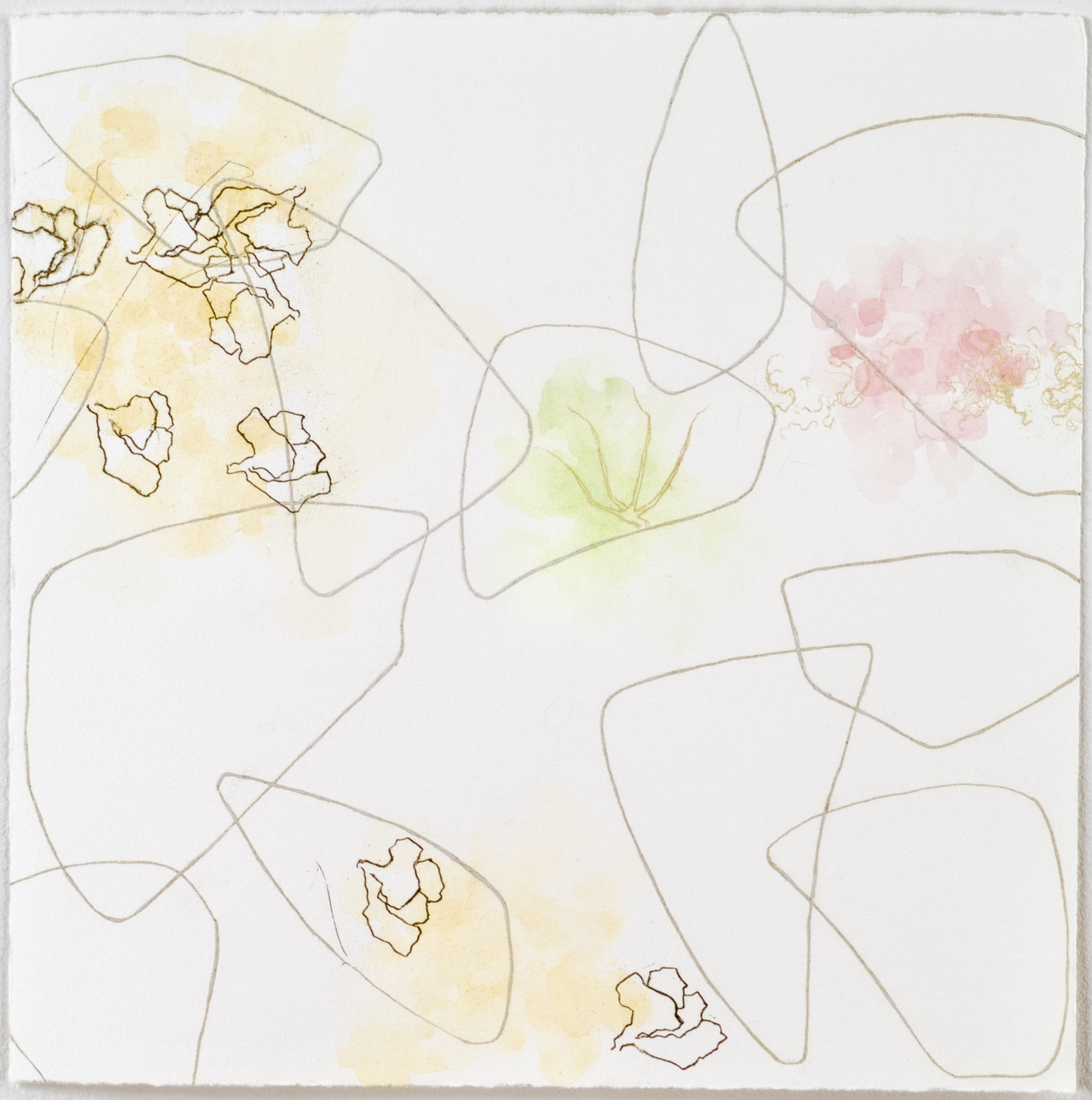
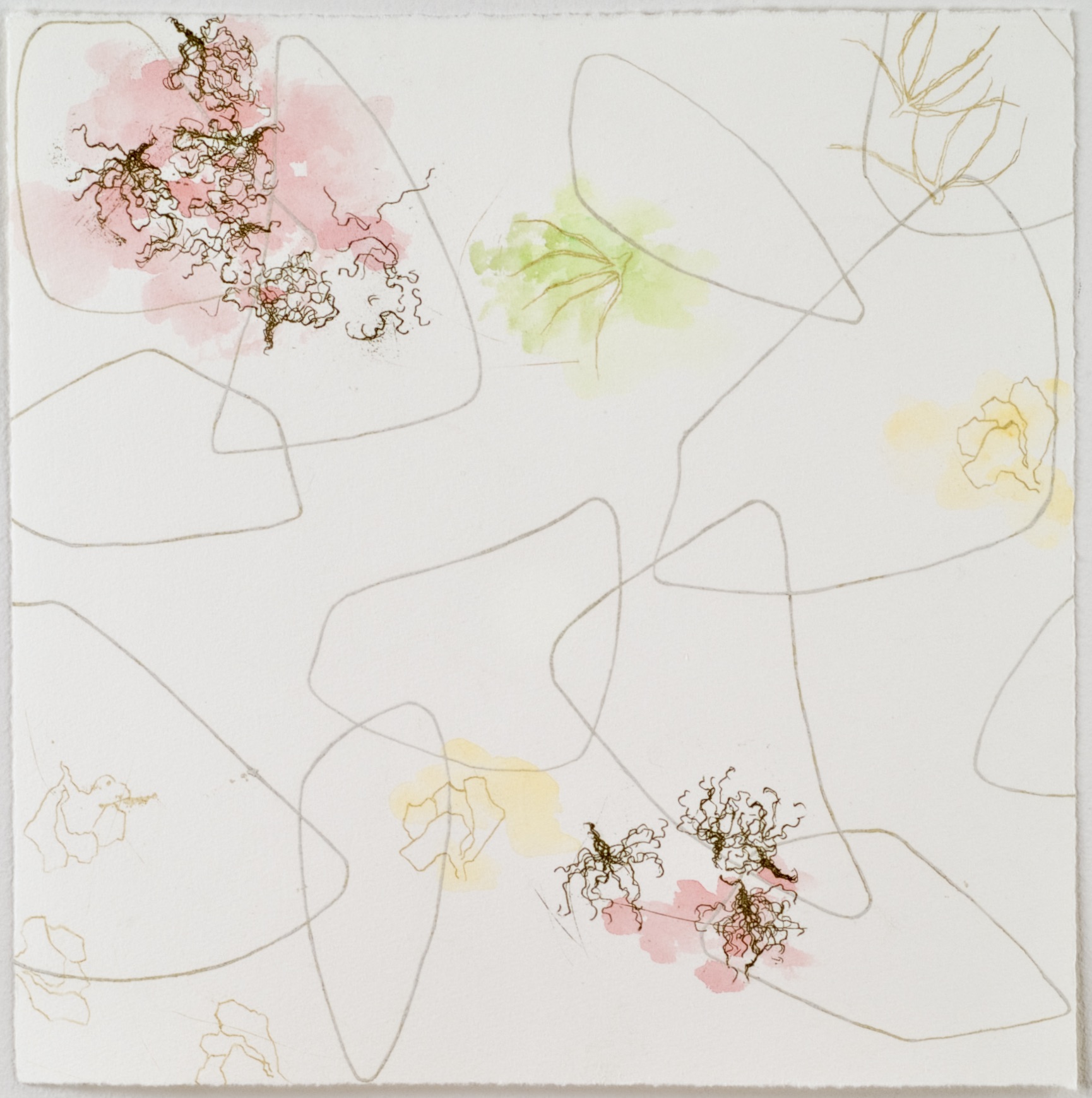
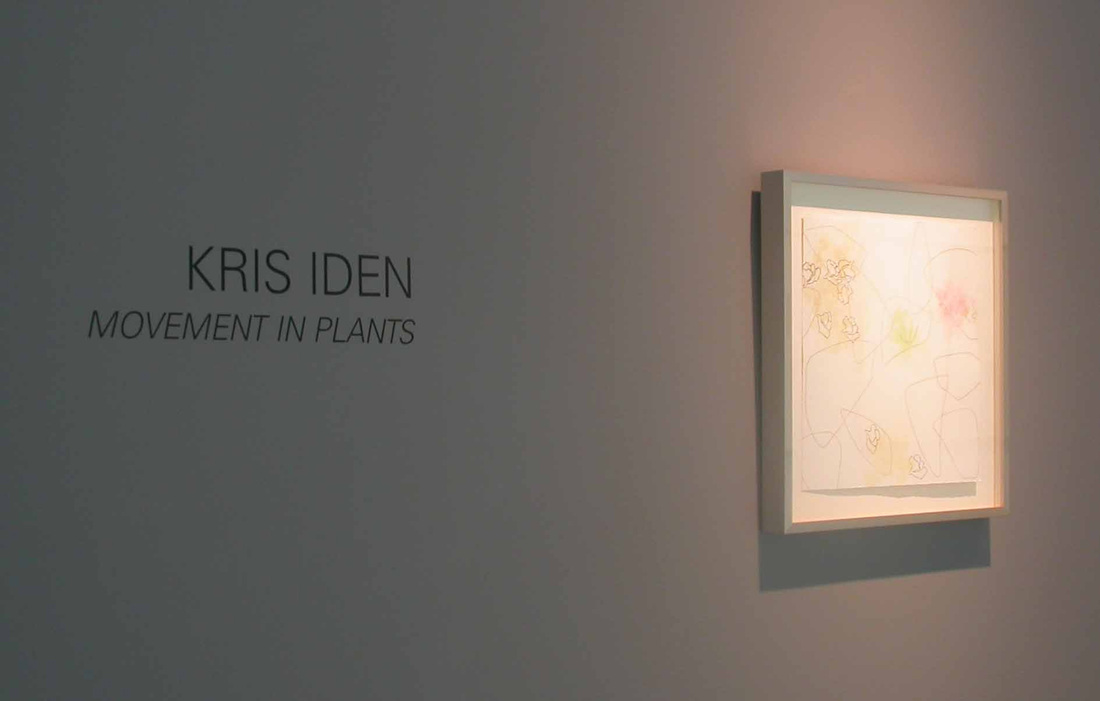
Colors: Collage on Paper with Watercolor, Beeswax, Intaglio Ink
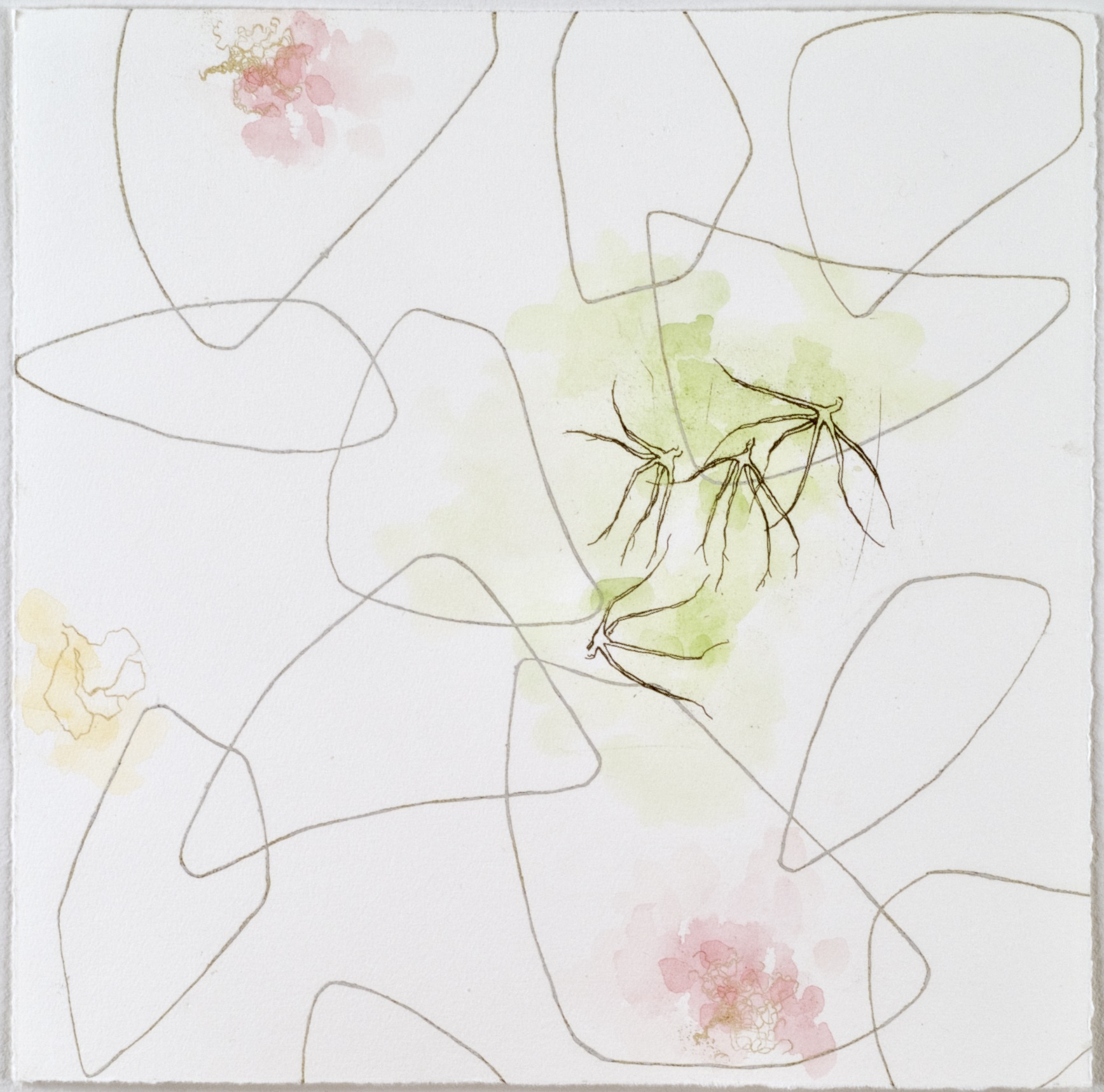
A Florilegium is a botanical book form that came into use early in the 17th century. Patrons for some florilegia were owners of great private gardens who wanted a permanent record of the rare plants they had assembled.
The term Florilegium is formed from the Latin flos (flower) and legere (to gather) and literally means a gathering of flowers, or collection of fine extracts from the body of a larger work.
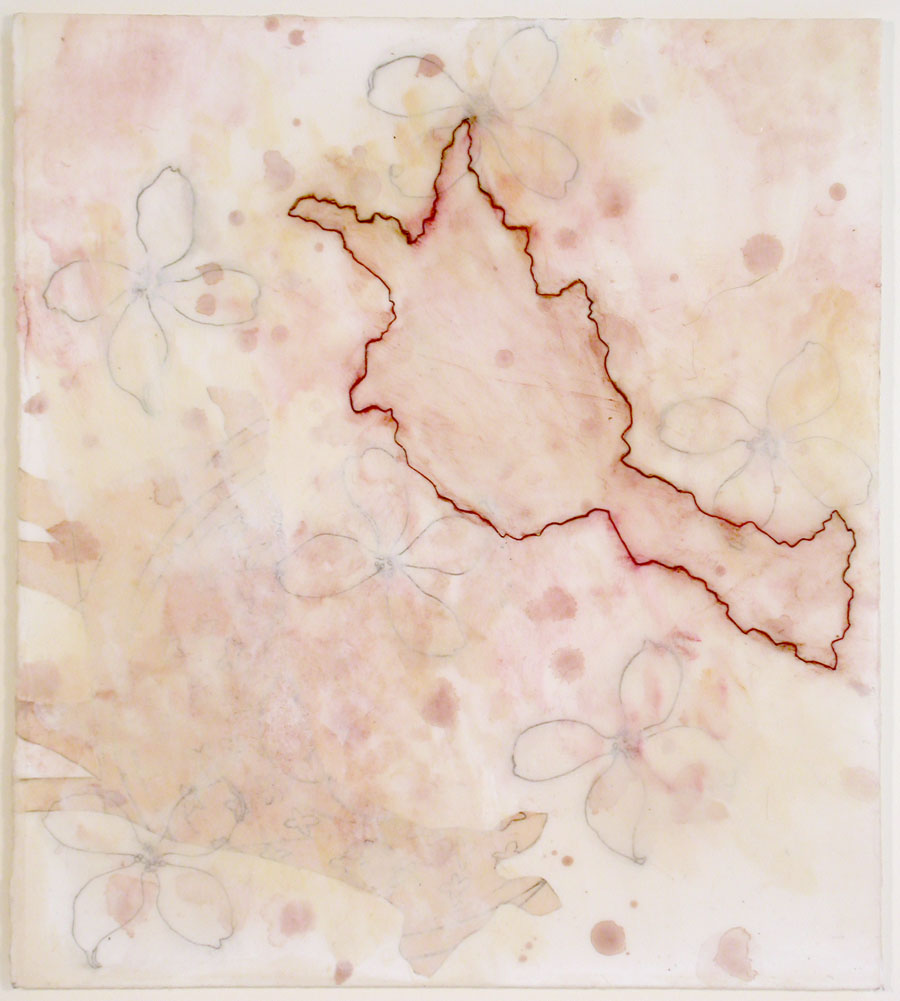
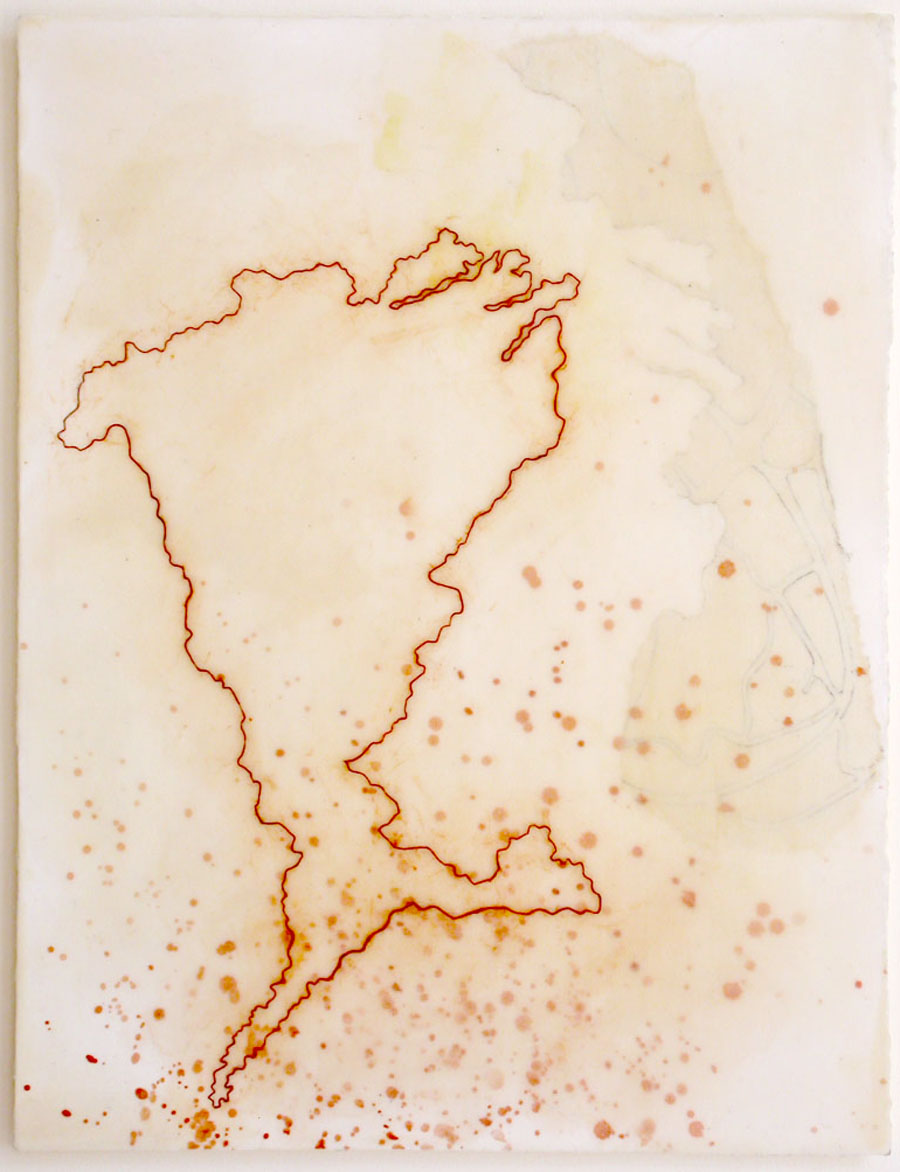
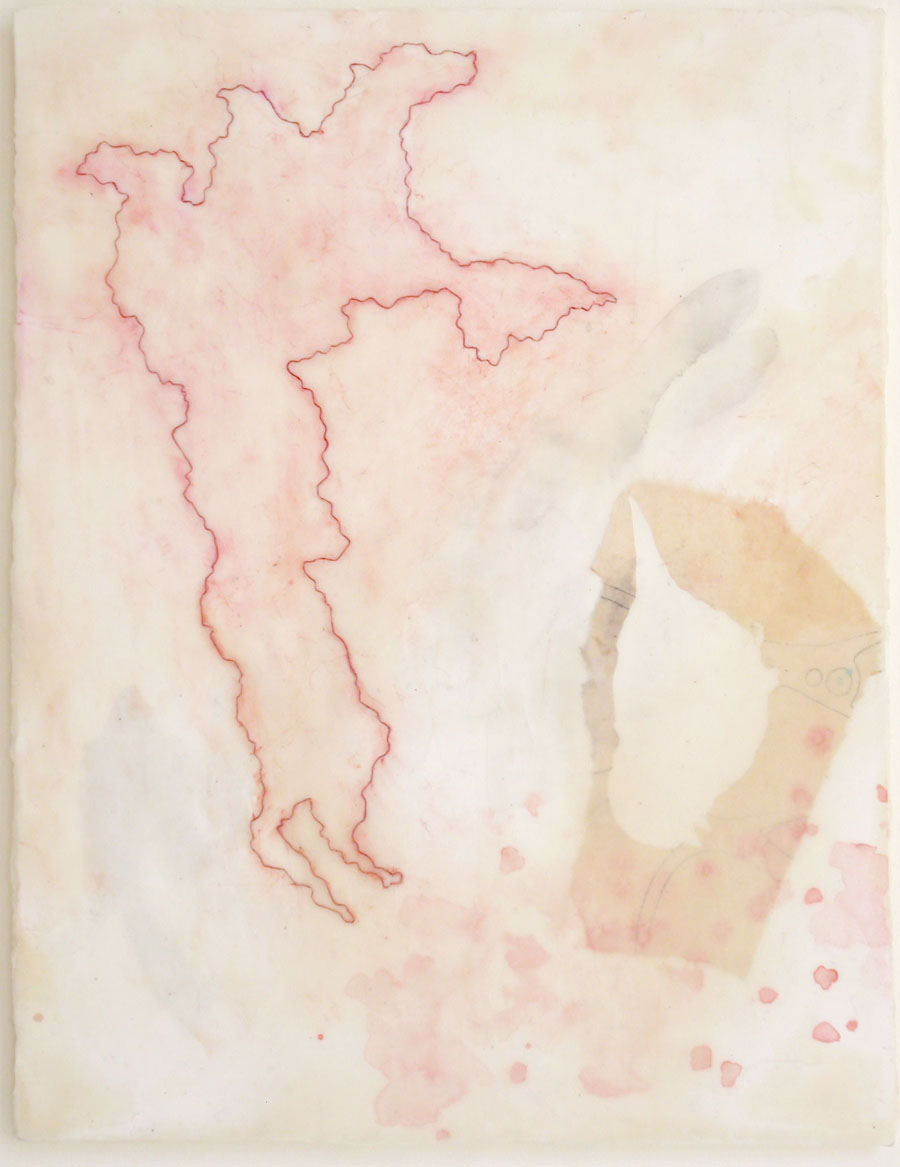
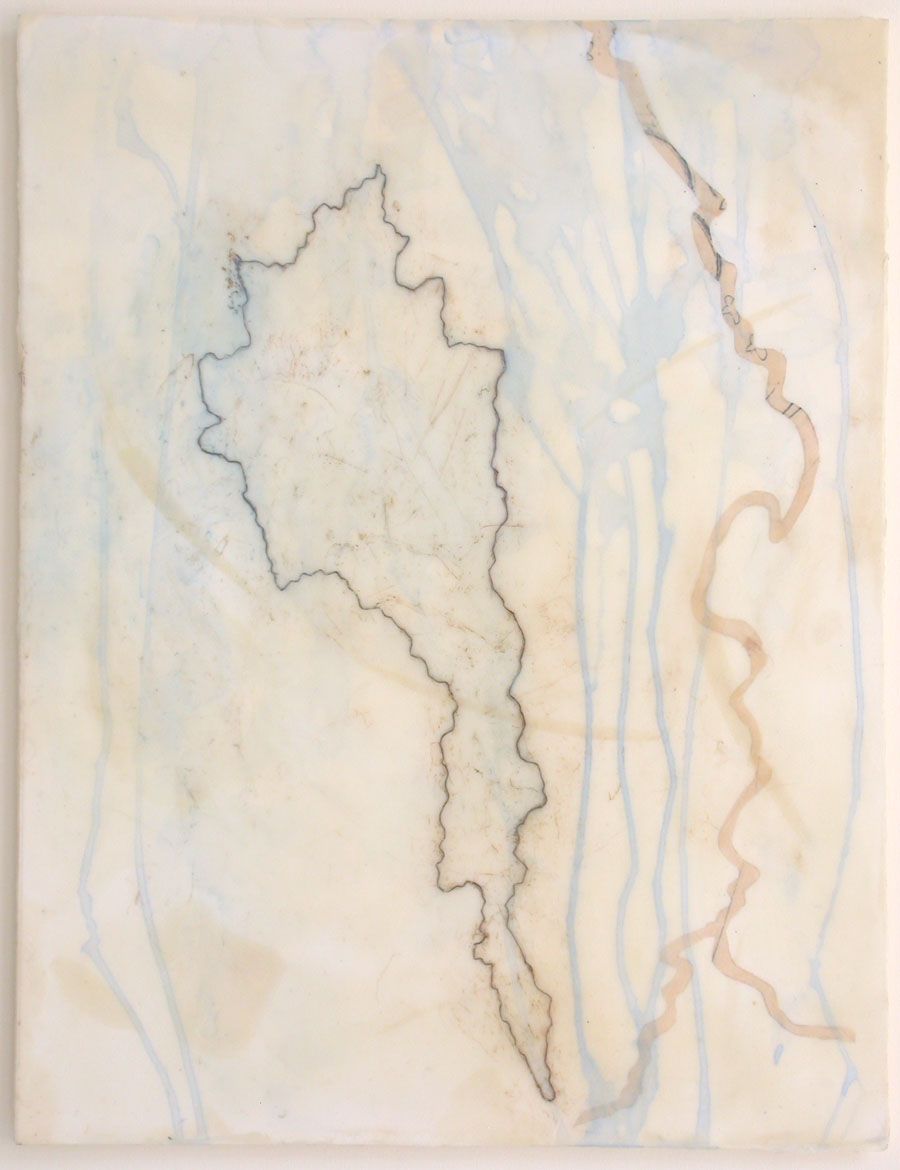
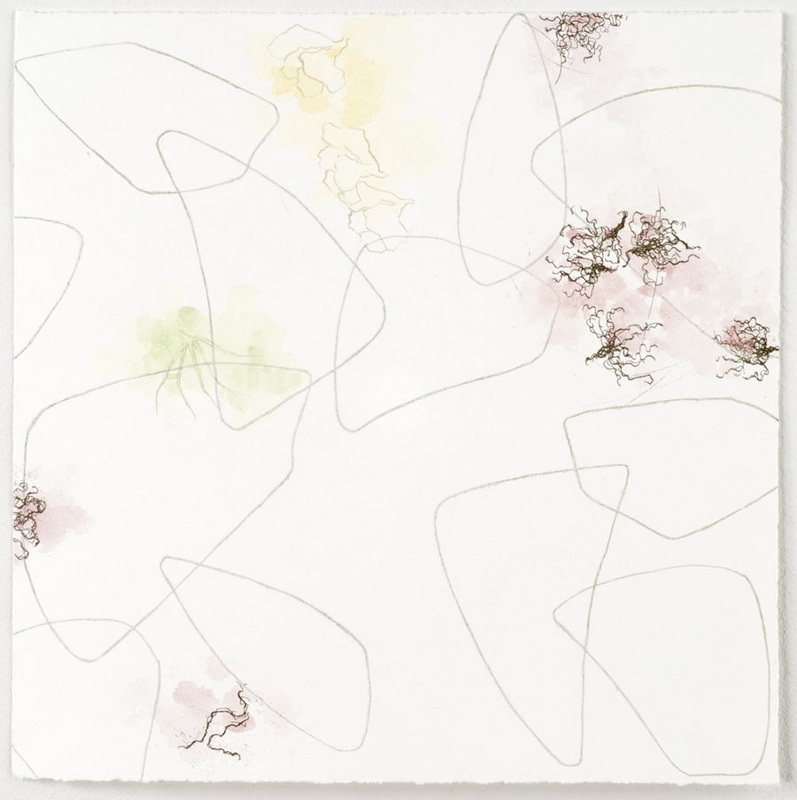
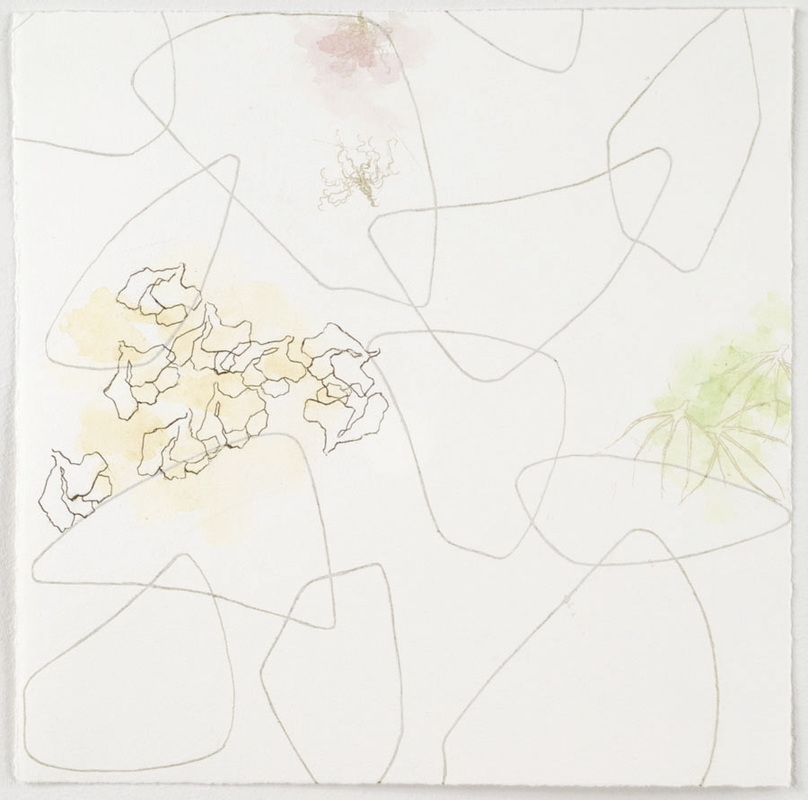
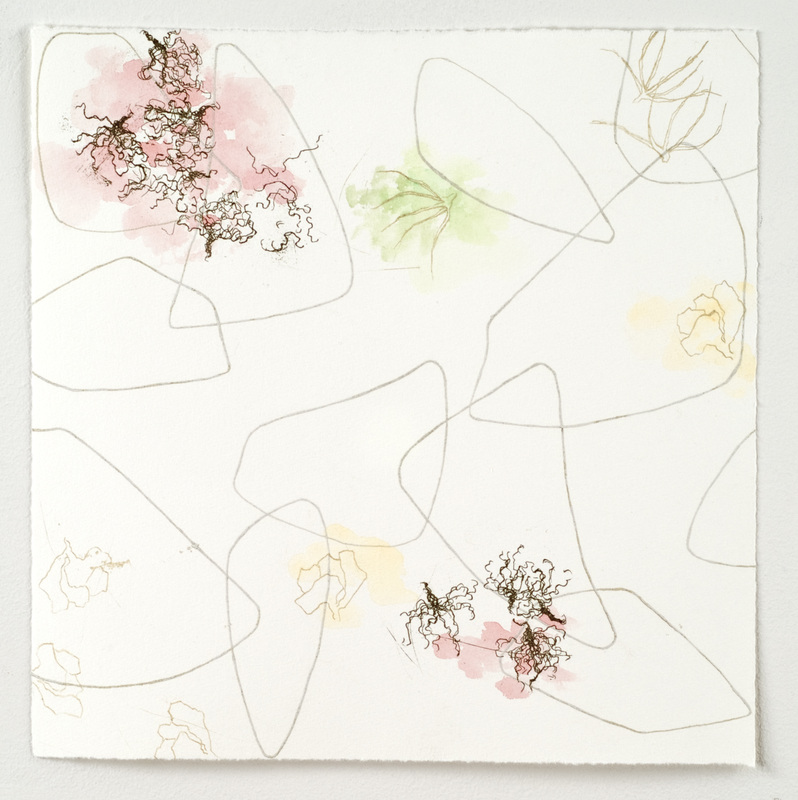
In these drawings I have adapted each image from a composition in the Shape Note Geography series using the negative space between the lines. The images once traced from the original horizontal compositions were turned to a vertical position and finished on the top and bottom with additional lines from the contours of my Virginia and Saxony maps. These new plant-like images were then transferred to watercolor paper, and paint and collage papers were added. Each drawing was covered in beeswax, then the shapes were incised into the wax surface with an etching needle, and finally etching ink was rubbed into the incised lines.
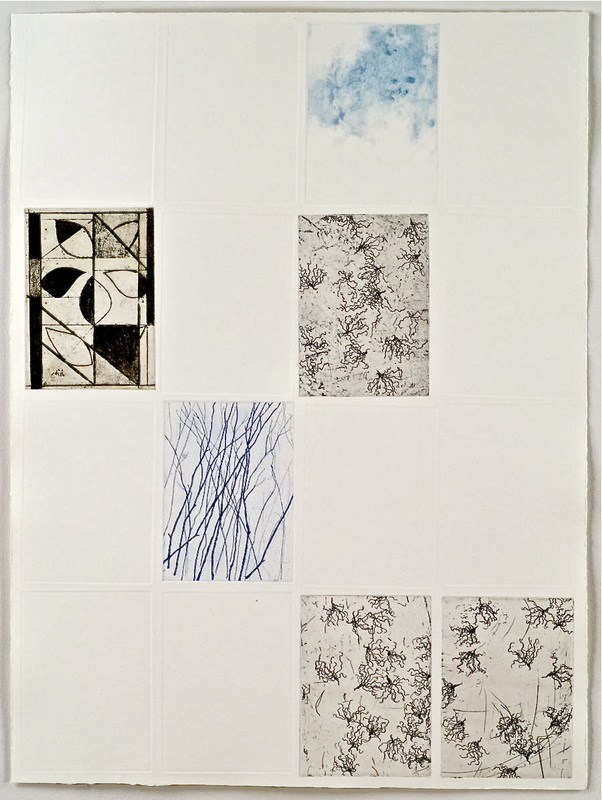
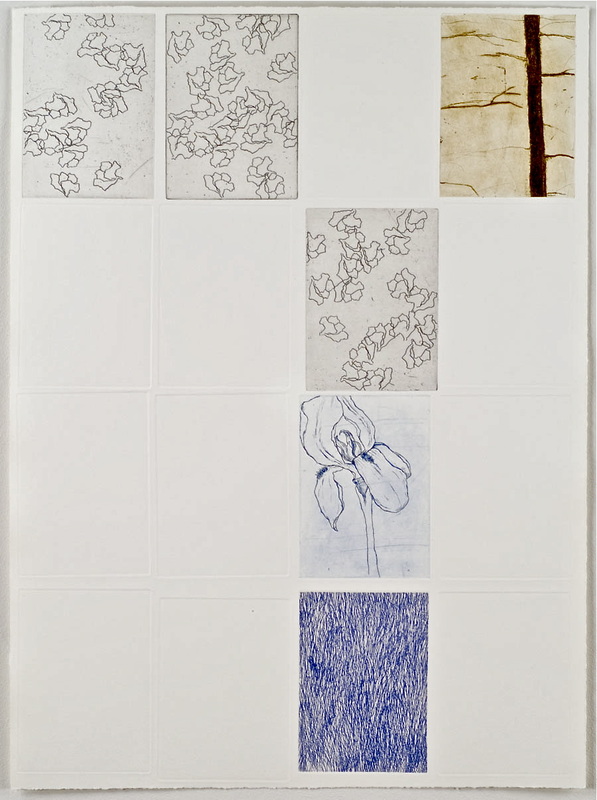
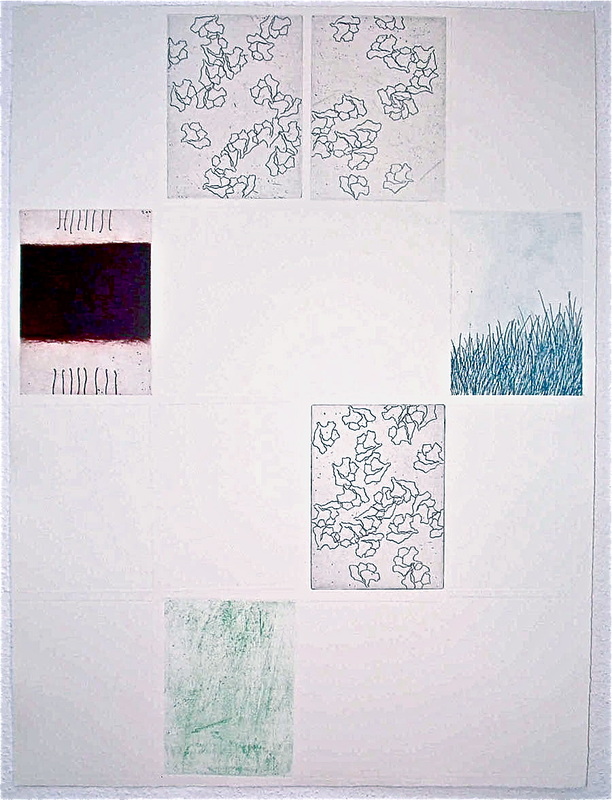
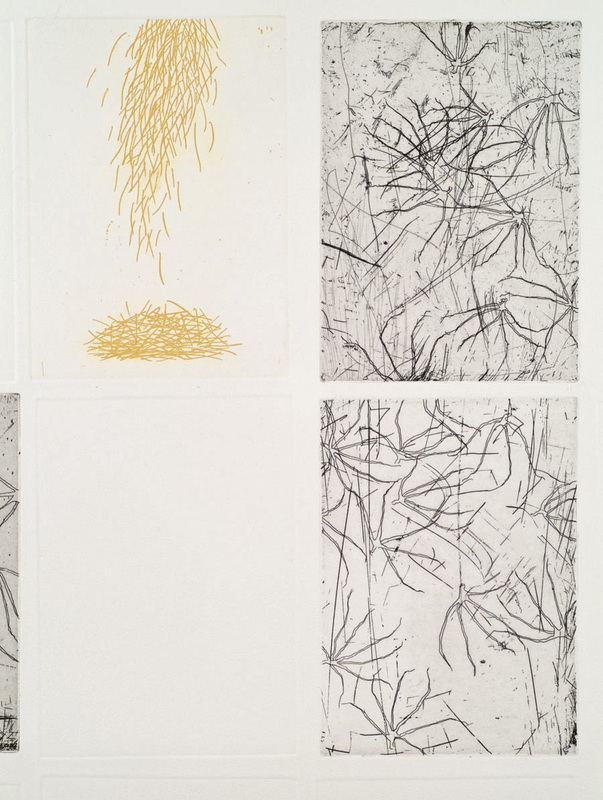
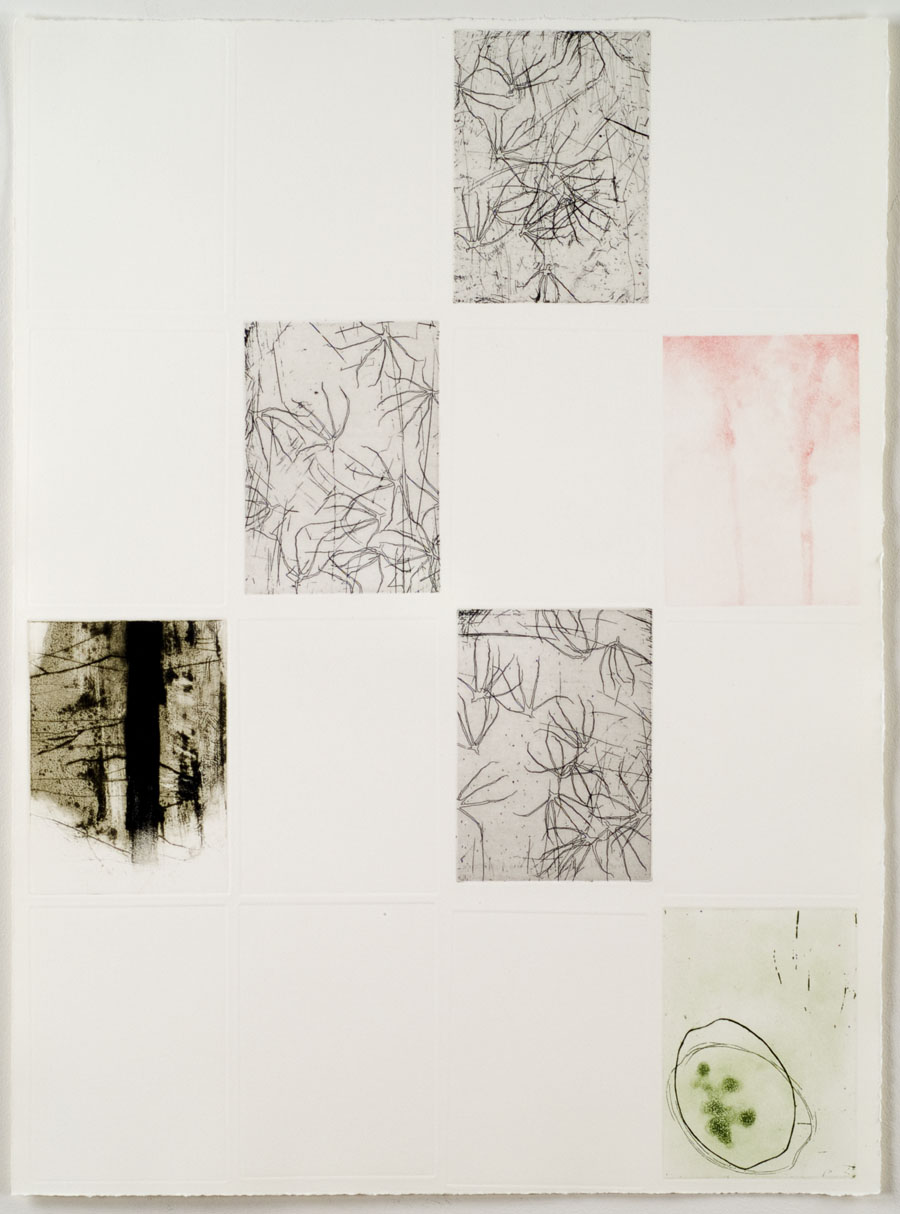
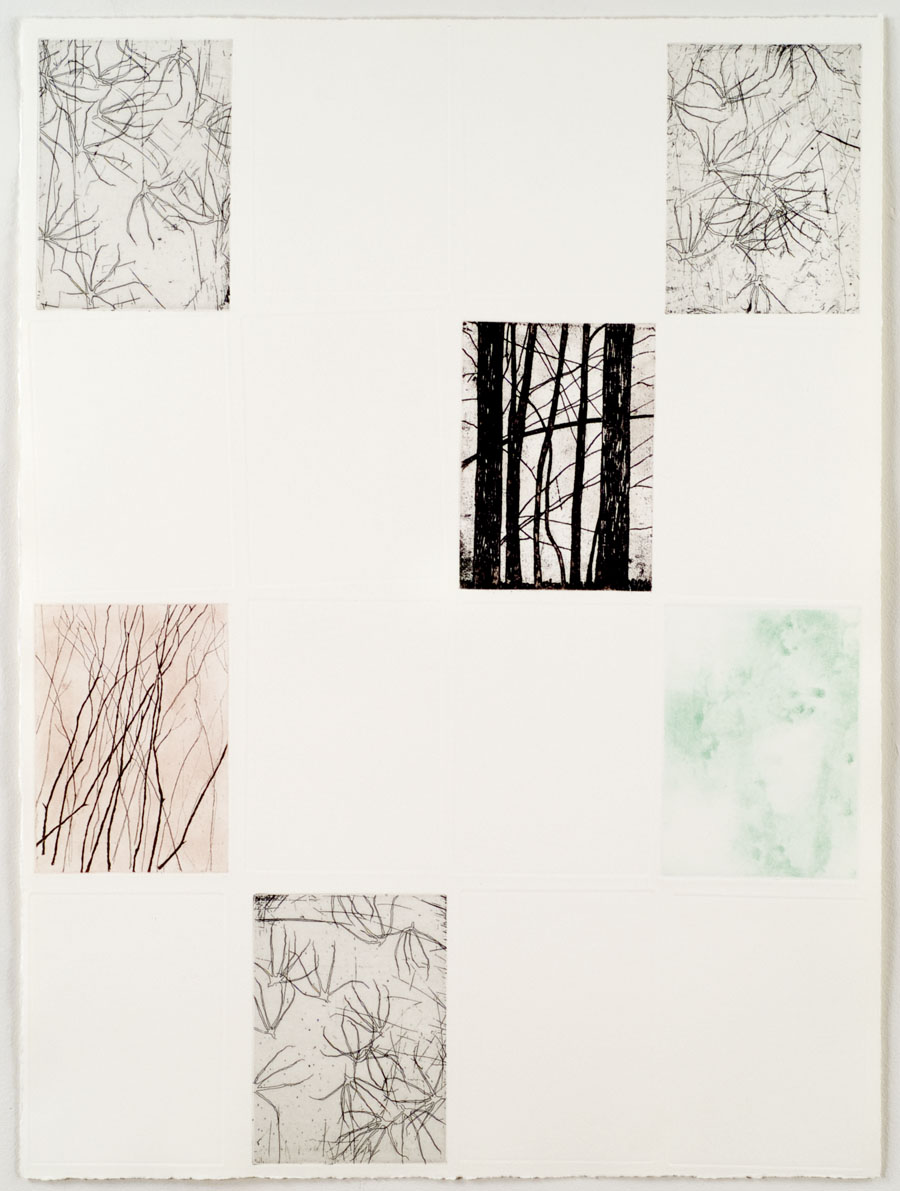
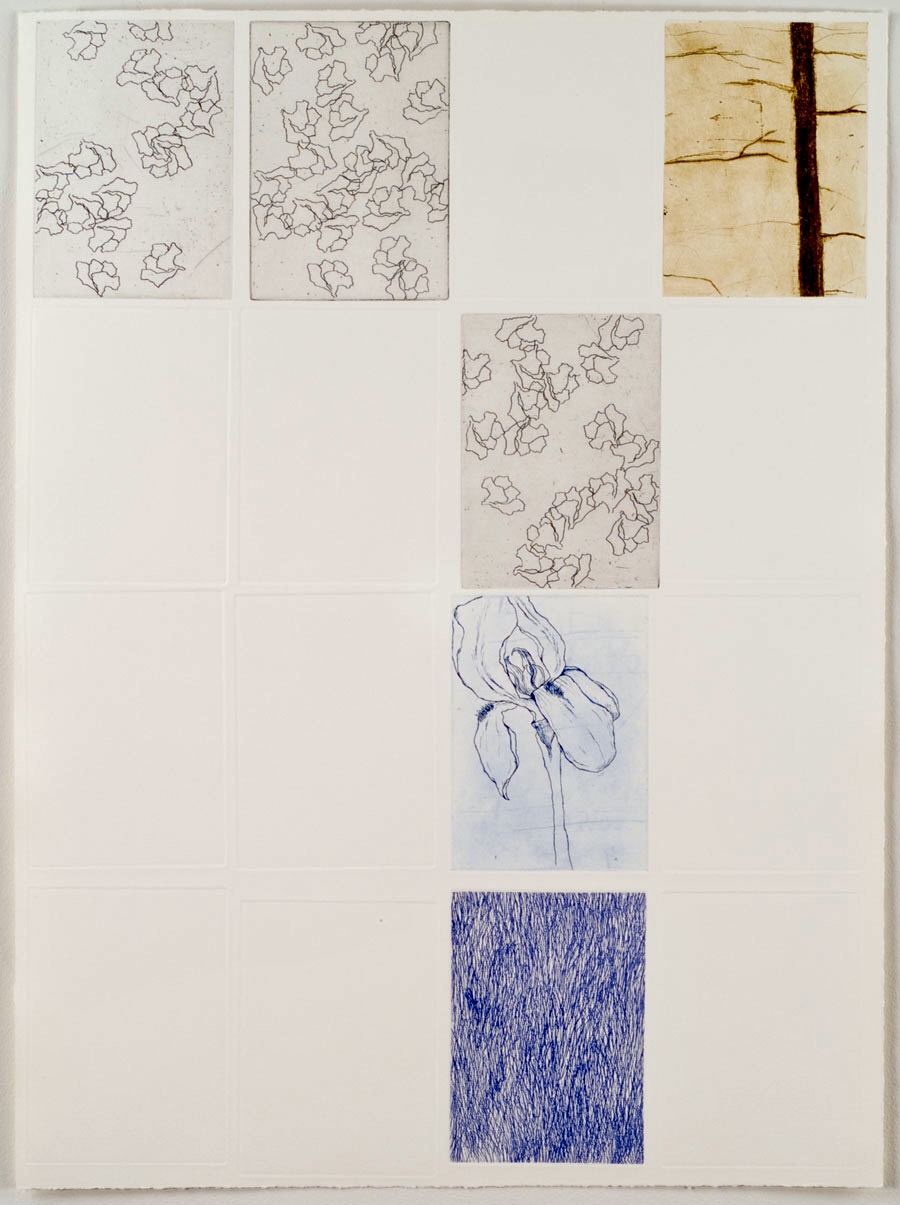
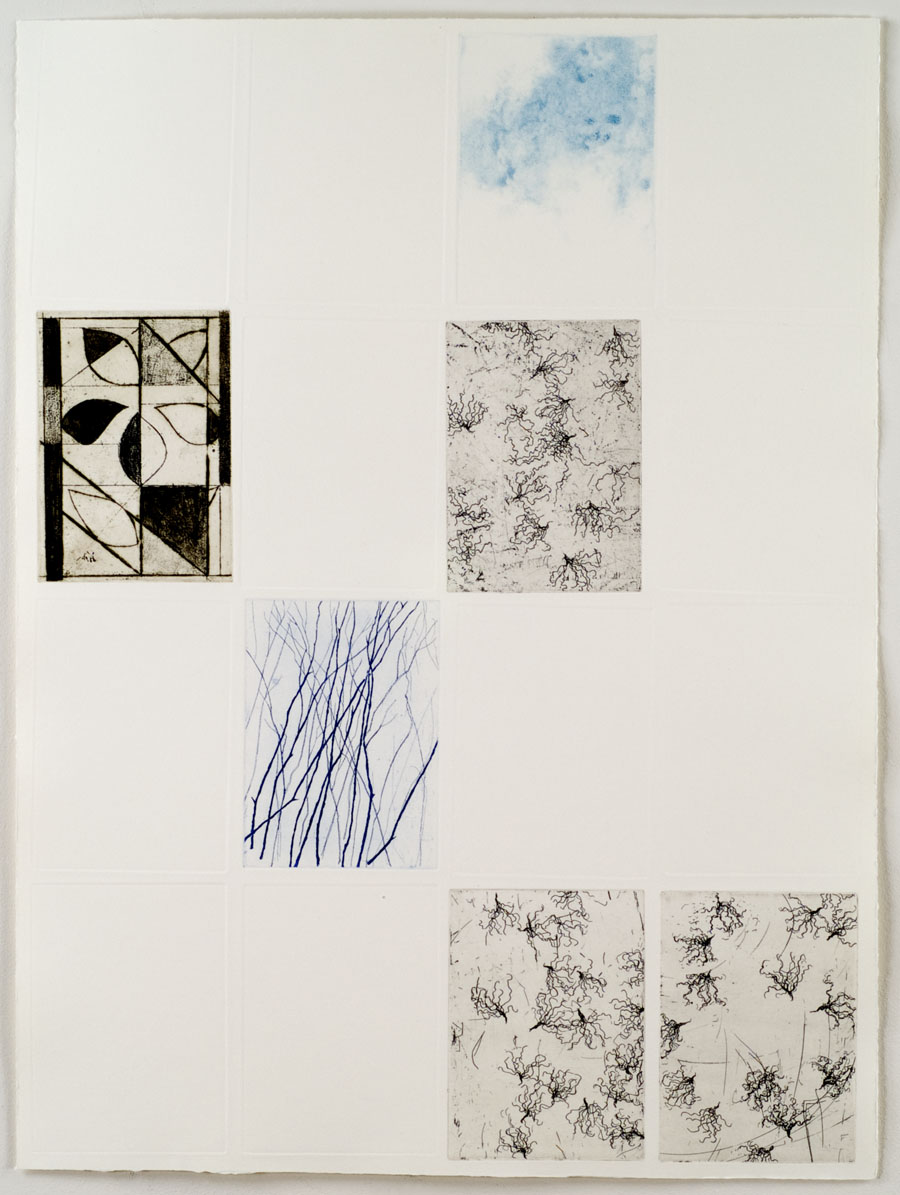
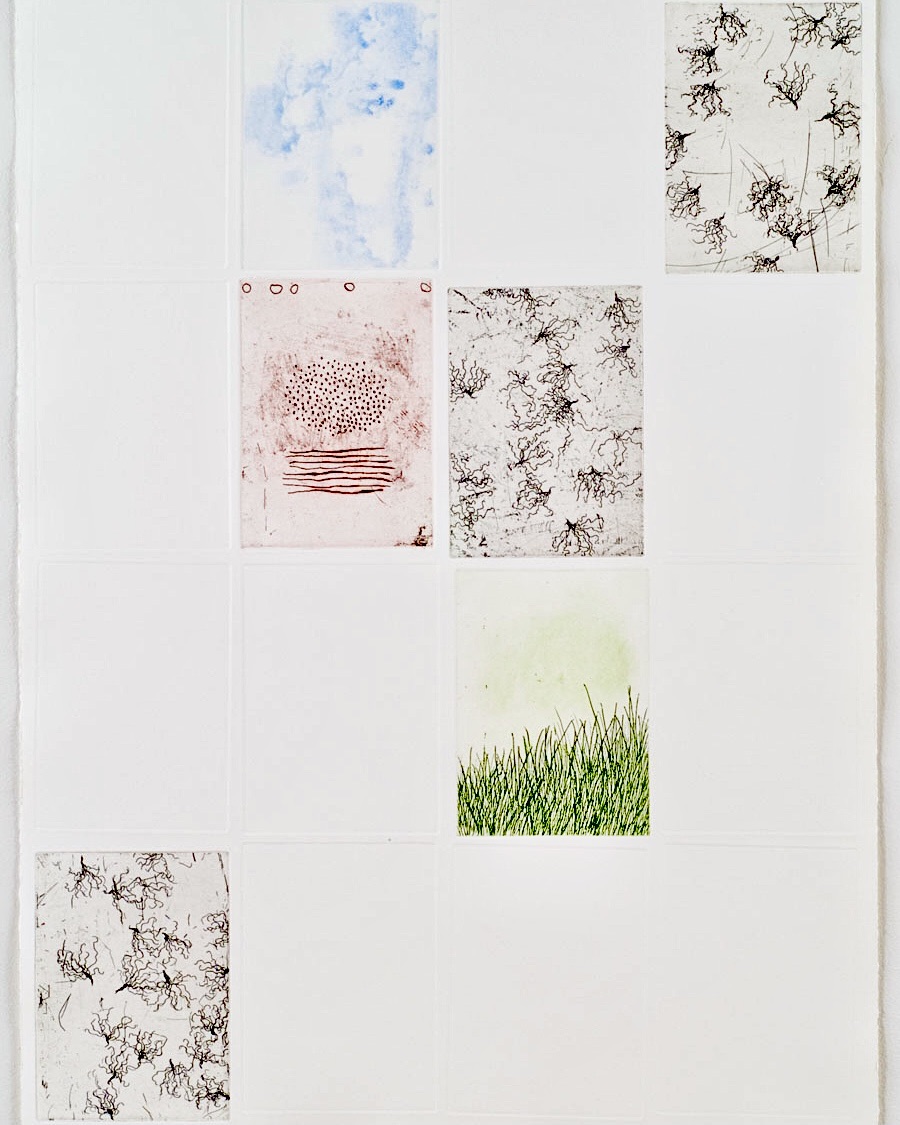
Herbaria: locus
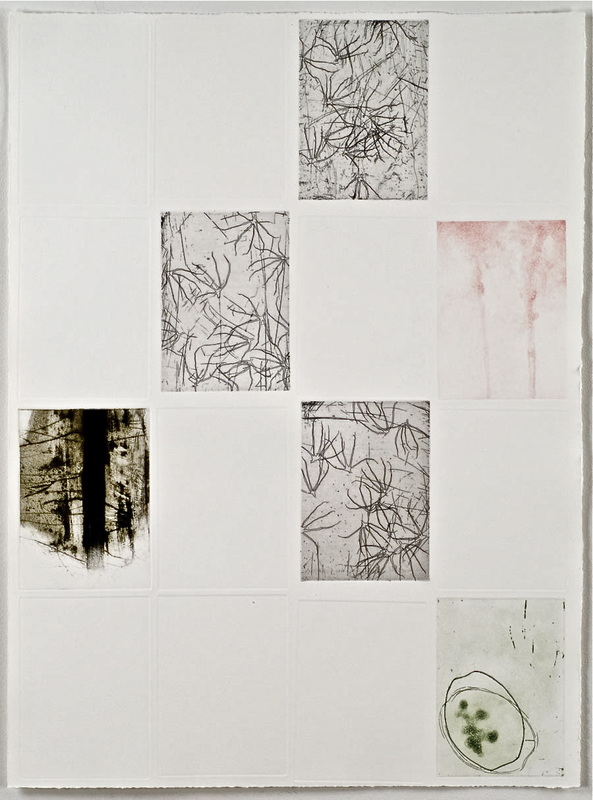
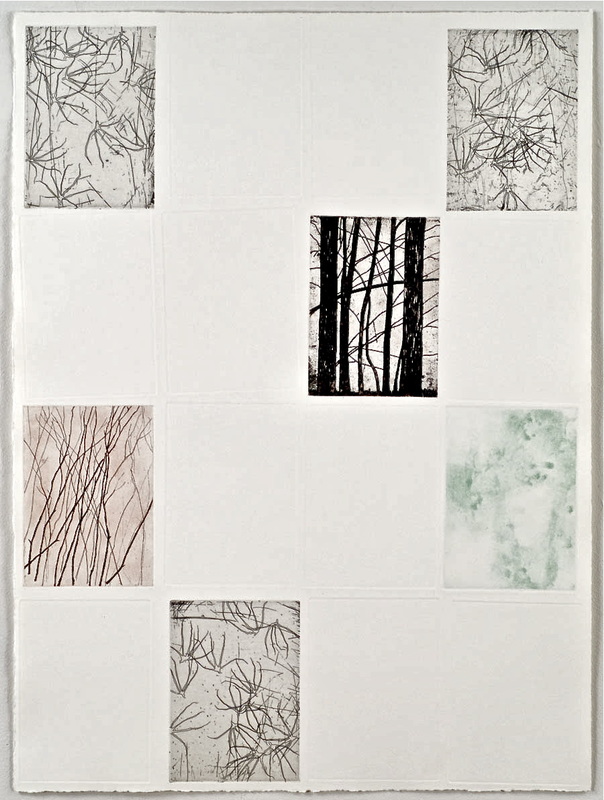
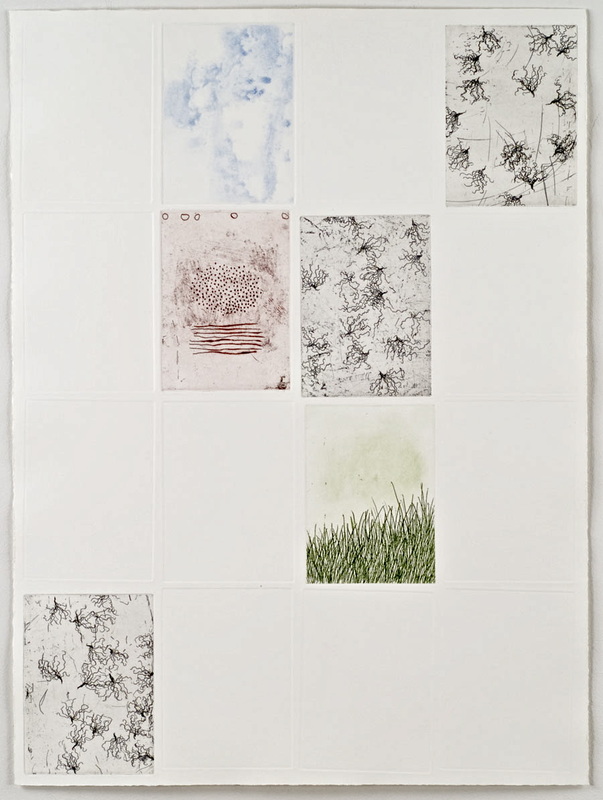
(Series of 12), 2007
Colors: Intaglio and embossing, Printed with Grafikwerkstatt, Dresden
22 x 30 inches
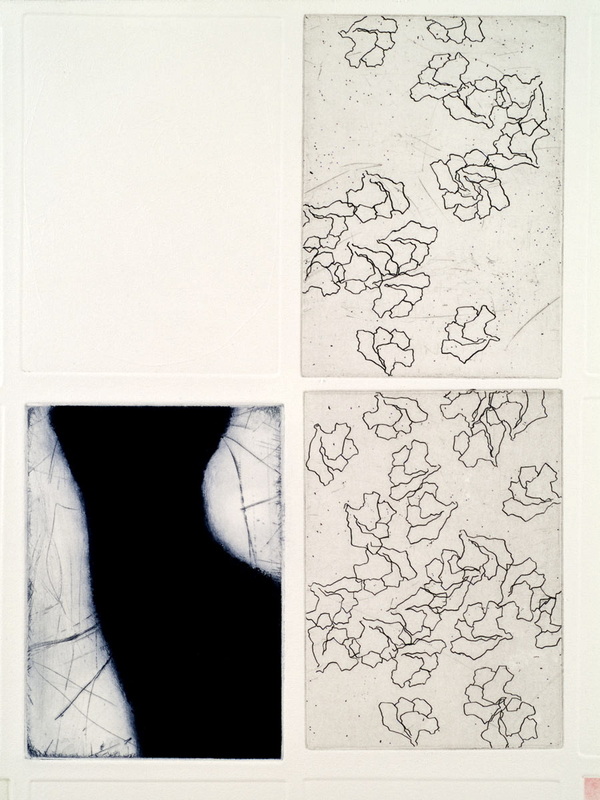
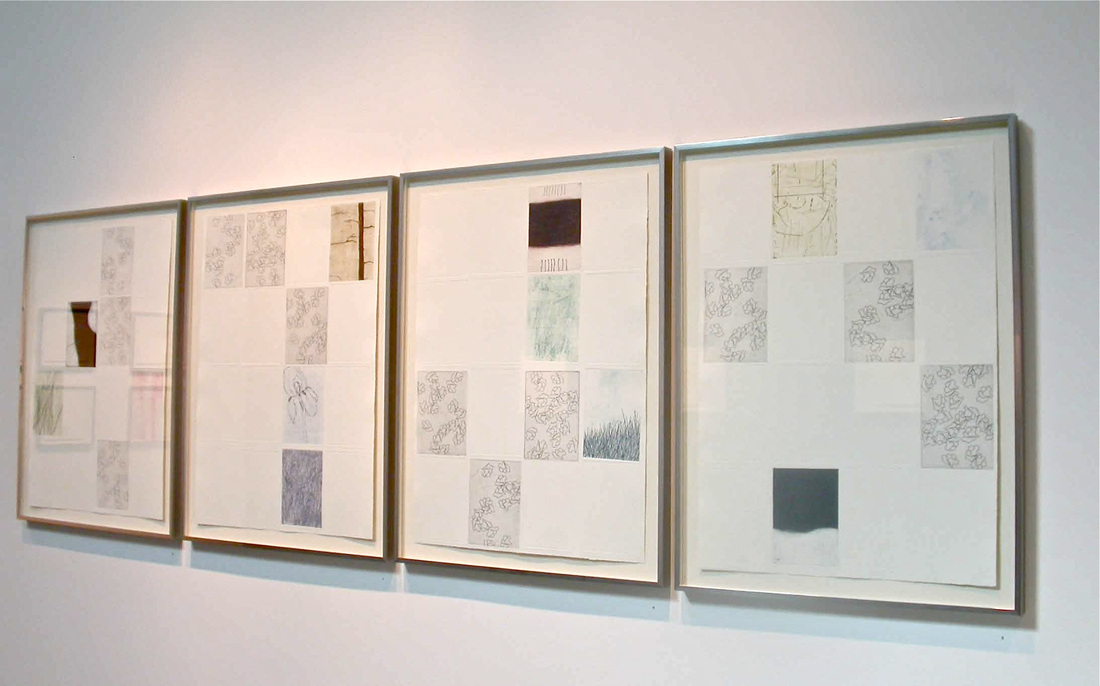
Herbaria are collections of preserved plant specimens used to study geographic distribution and taxonomy.
The 3 black botanical images in these prints represent plants in my former garden in Richmond, Virginia; they are presented in a flattened-out manner referencing herbarium specimens.
In Dresden, I developed the metal plates for the botanical images using traditional etching techniques and then gave them to the Intaglio printer at Grafikwerkstatt asking him to initiate 3 sets – 12 prints of each set of 3 plates. The placement of the images are different in each group of 12 because I’d asked him to change the position of the plates each time he printed them. I did not know or plan where the black imagery would be, I simply asked him to make random changes each time he printed. I then took the prints back to my studio and worked into the arrangements he’d started, developing the final compositions by using the color-printed plates and embossing. These other plates – also prepared in Dresden and printed in various colors – represent fragments of images from my work over the past 18 years. Self-quoting imagery has become a component in my work since.
At the time, I was looking for a way to invite Dresden into my work. Handing over the botanical plates to another printer and giving up control over their printed positions was analogous to relinquishing a degree of control over my circumstances as a result of moving to Germany in the summer of 2006.
It seemed like a literal way of letting Dresden have a hand in the development of these prints. Working with the imposed aspects of these compositions, and using a record of images from previous work, was parallel to the process of adaptation, and of finding a sense of self in circumstances not familiar and not fully of one’s own making.
‘The chief object of the present work is to describe and connect together several
large classes of movement common to almost all plants.‘
— Charles Darwin, The Power of Movement in Plants
Fossili: Motus
(Series of 12), 2007
Colors: Intaglio, embossing & watercolor
12 x 12 inches
Botanical gardens are institutions holding documented collections of living plants for the purposes of scientific research, conservation, display and education. Generally the collections include plants from all over the world, I’m fond of the indirect metaphor of a botanical garden as a place full of foreigners.
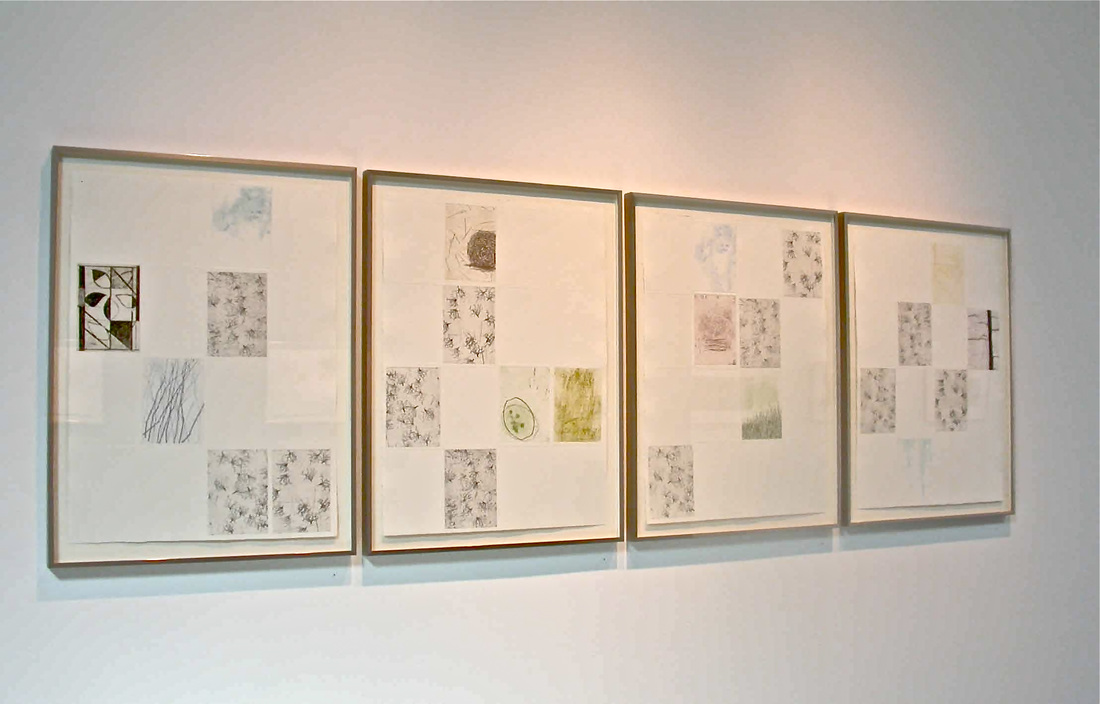
Fossils are naturally preserved remains of plants or animals;originally meaning any distinctive object that has been dug up, (‘having been dug up’ from Latin fossus). Not unlike Herbaria, they are also a kind of record keeping – nature’s record of earlier life buried in rock.
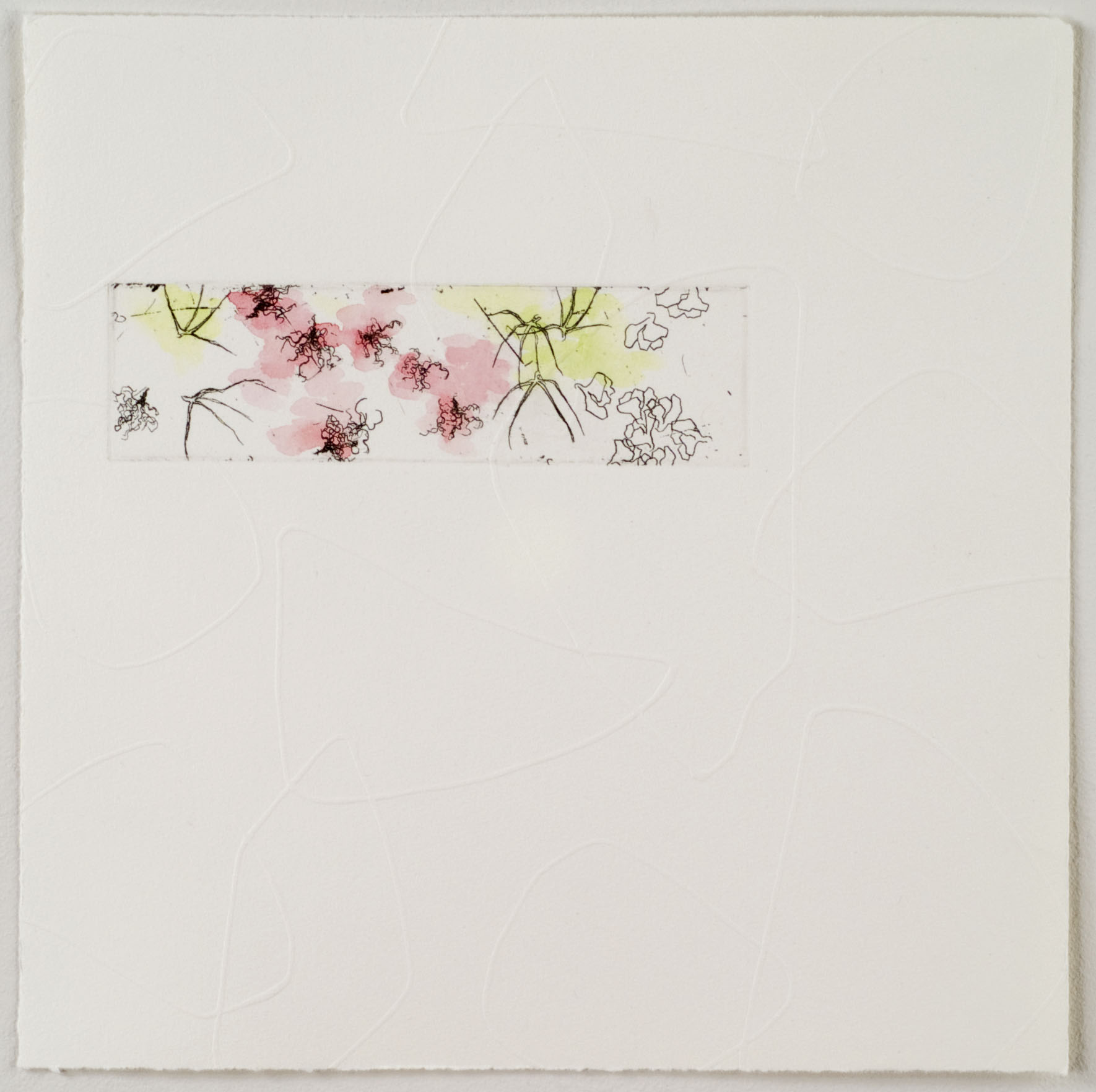
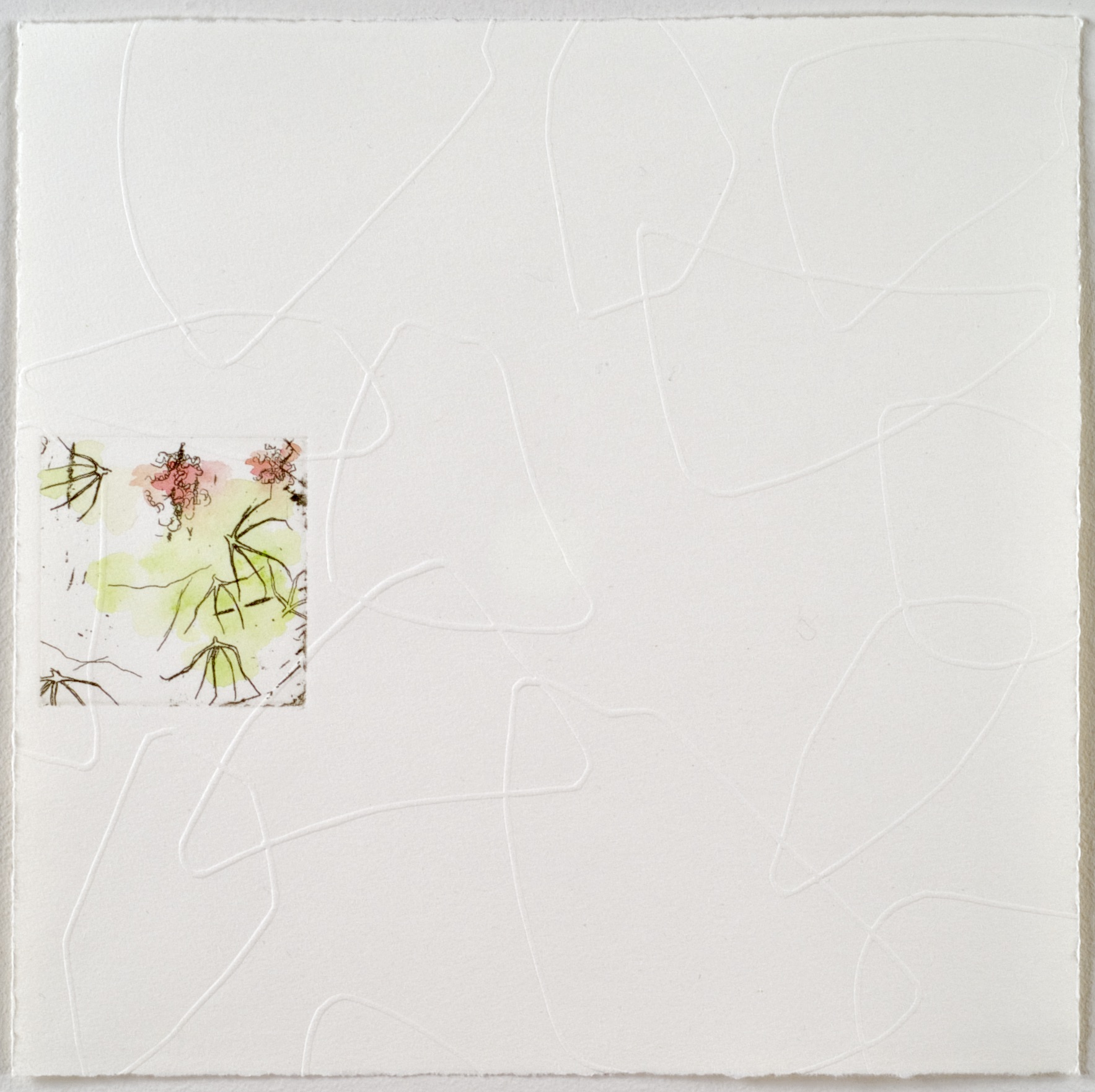
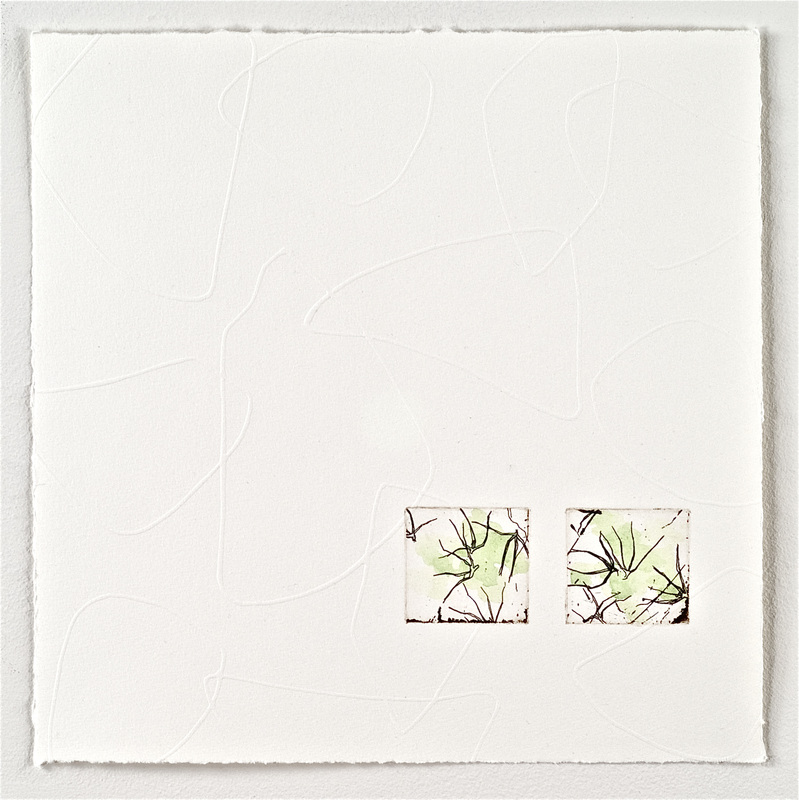
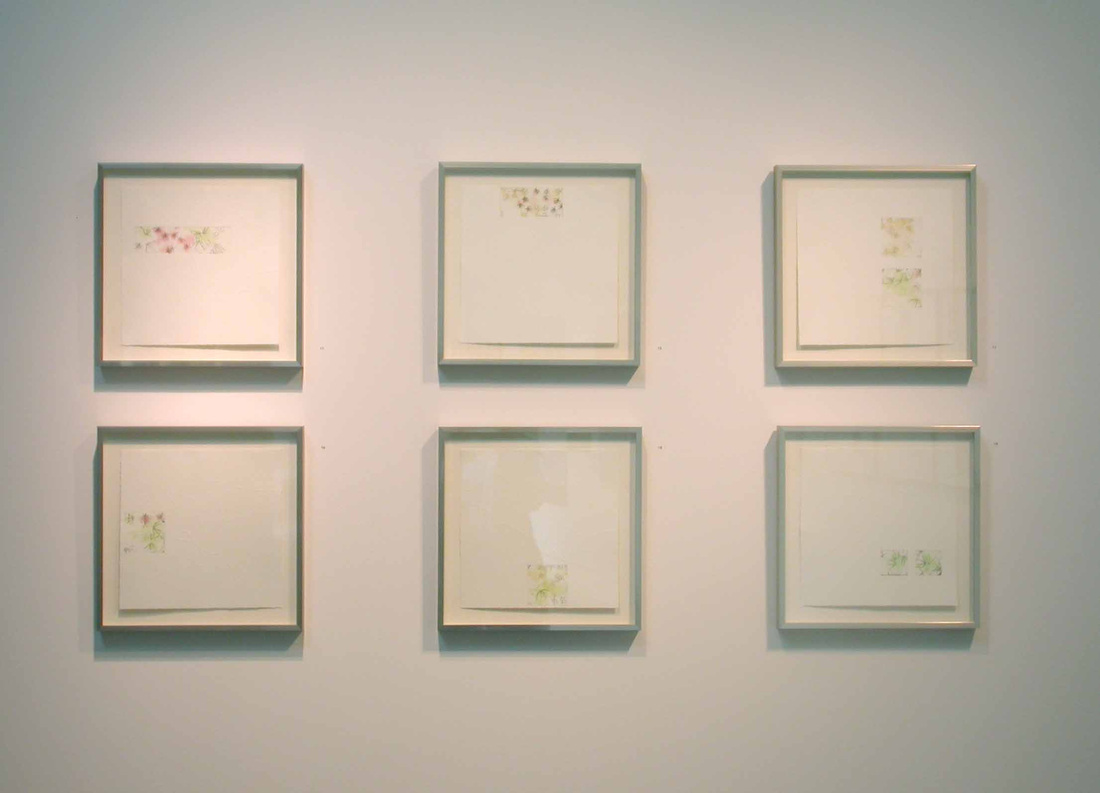
In the Fossili: motus group there are 6 pieces with printed shapes and 6 with embossed shapes. These shapes were derived from the map of the planting beds at the Dresden Botanical Garden and the plant images are the same ones used in the Herbaria: locus series. In the group with the printed beds, the plant images are all printed from the same copper plate that has been selectively inked and wiped and turned with each printing to vary the placement of the plants. The planting beds are printed from a second copper plate rotated so the beds appear in different positions. In the six prints with embossed beds, the small rectangular and square plates bear a loose reference to the practice of roping off areas for archeological digging. They were printed first and then the embossed lines were printed from cut linoleum plates.
As with the Herbaria: locus series, I was interested in expressing something about movement and memory with these prints, and to have the work in some way move. Through varied placement of image and plate in the printing process, the work is a record of change in position and the eyes of a viewer literally move as one takes in shifting images and moments of color.
‘The most widely prevalent movement is essentially of the same nature as that of the stem of a climbing plant, which bends successively to all points of the compass.’
— Charles Darwin, The Power of Movement in Plants